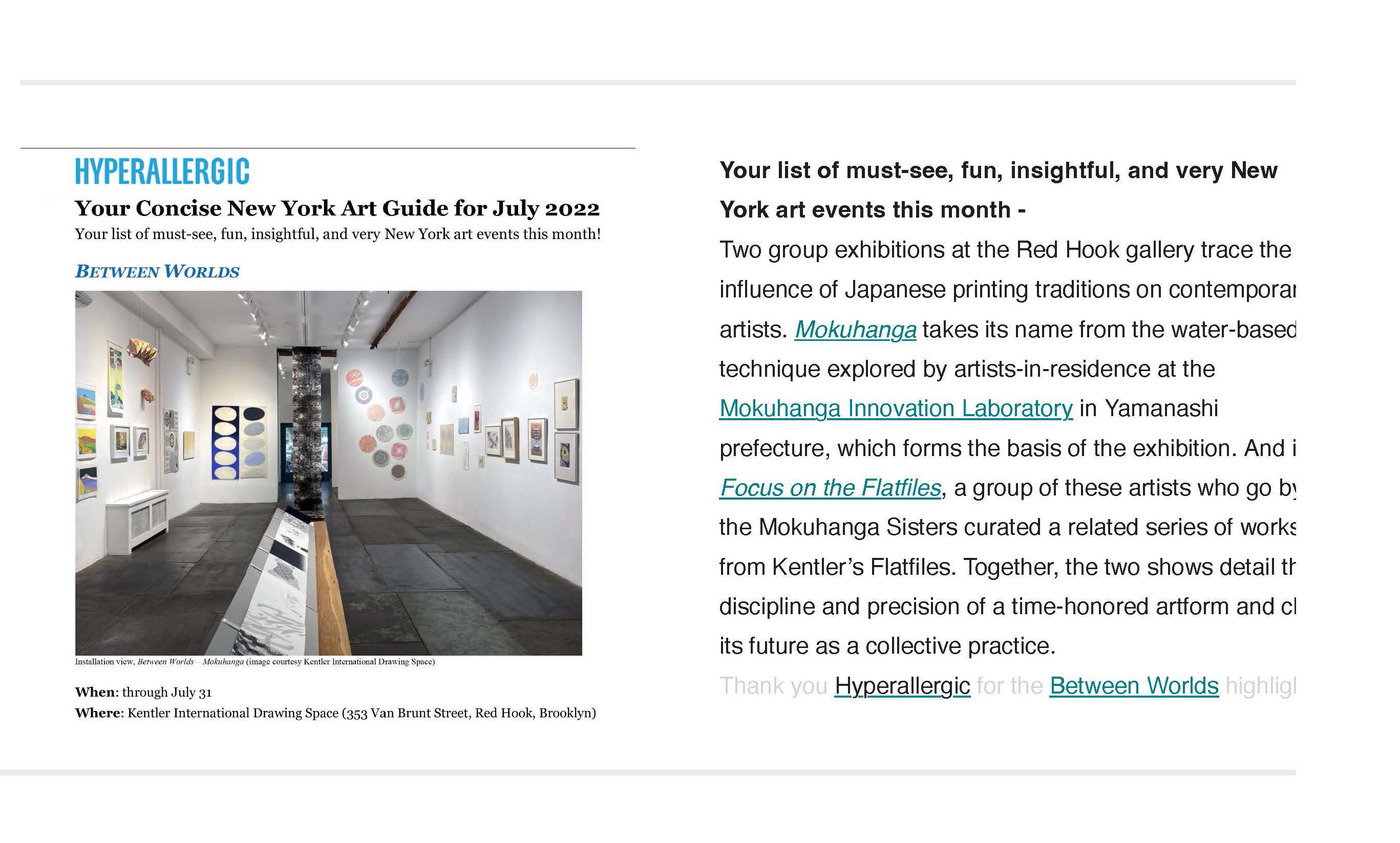
Between Worlds: Mokuhanga
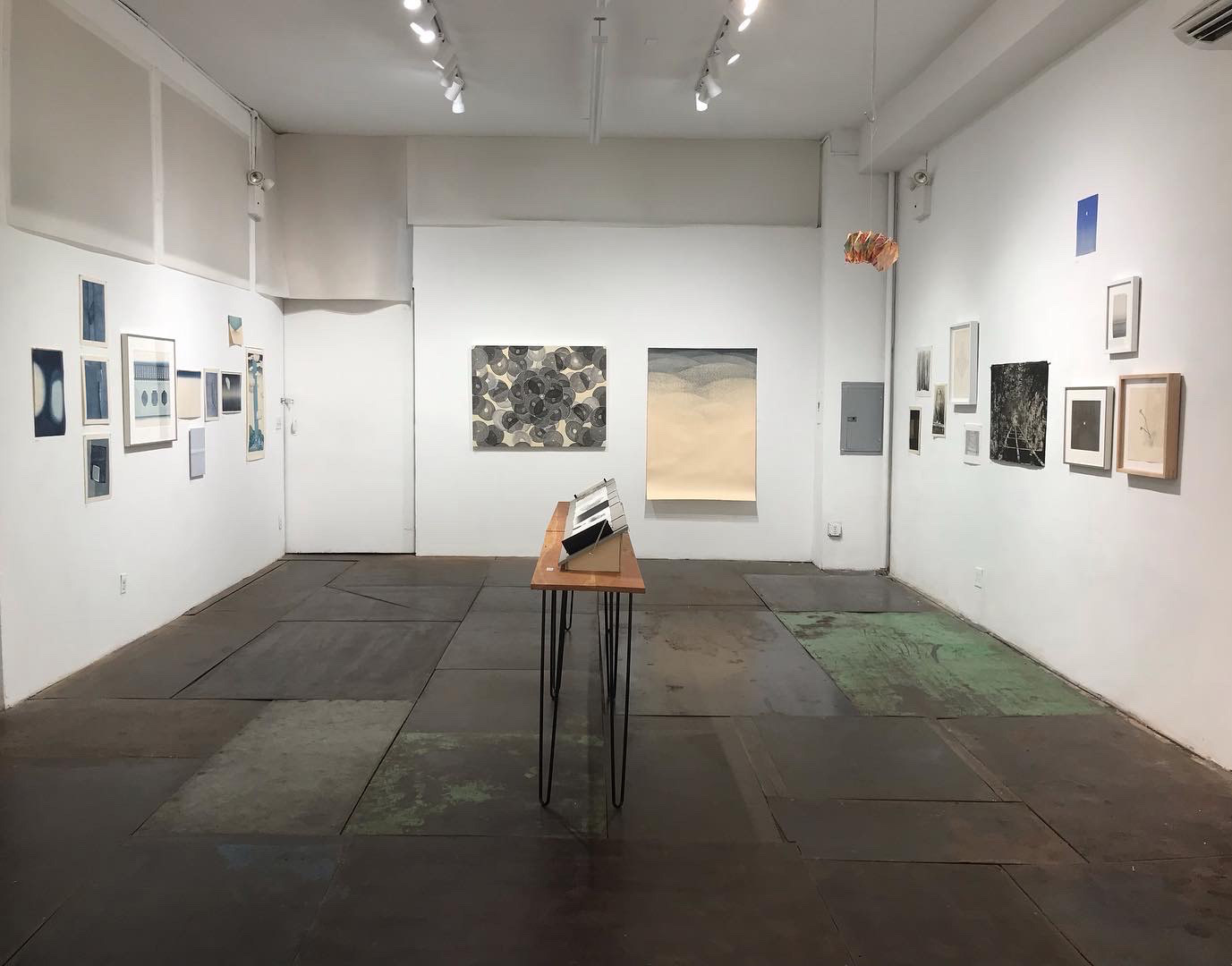
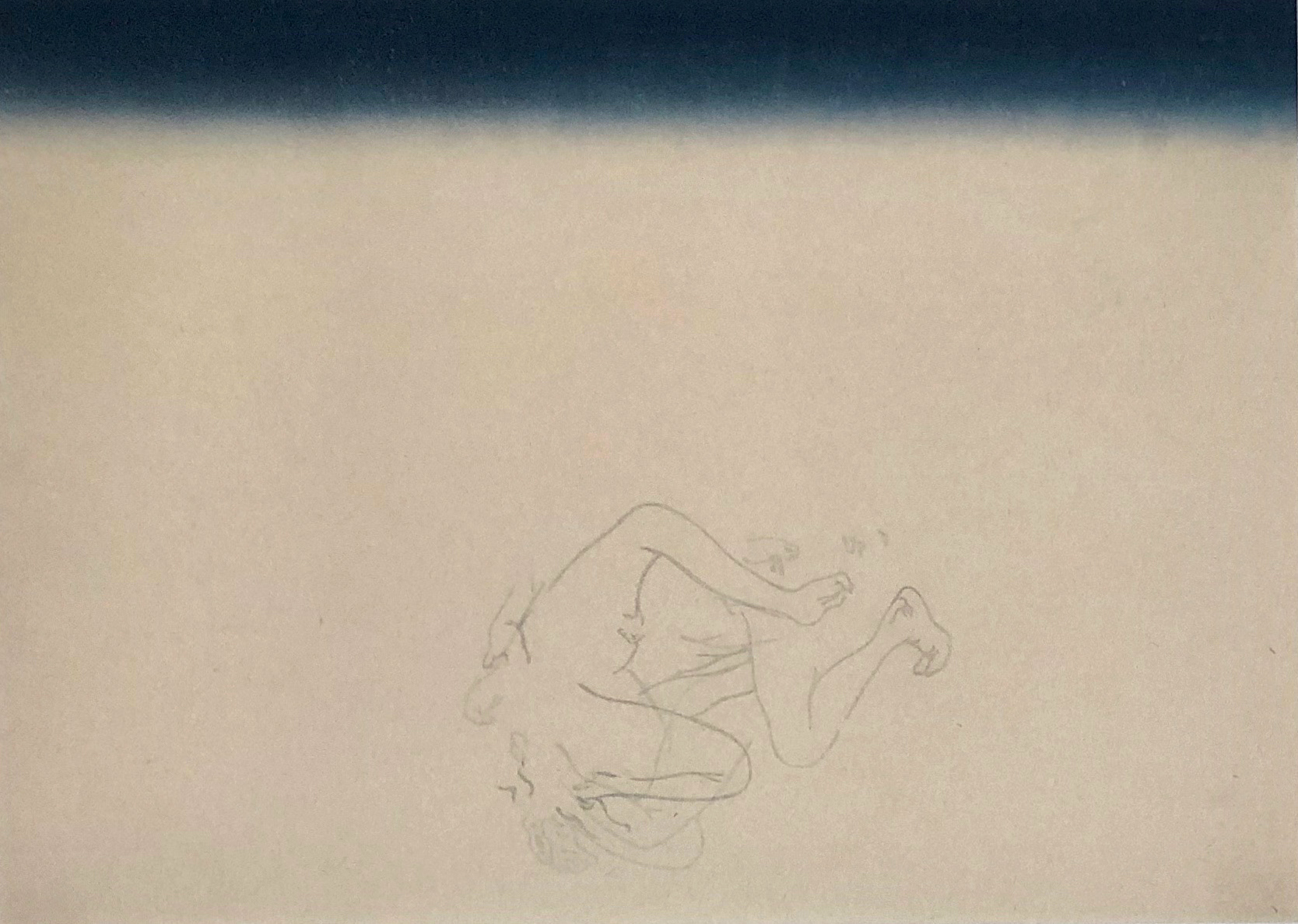
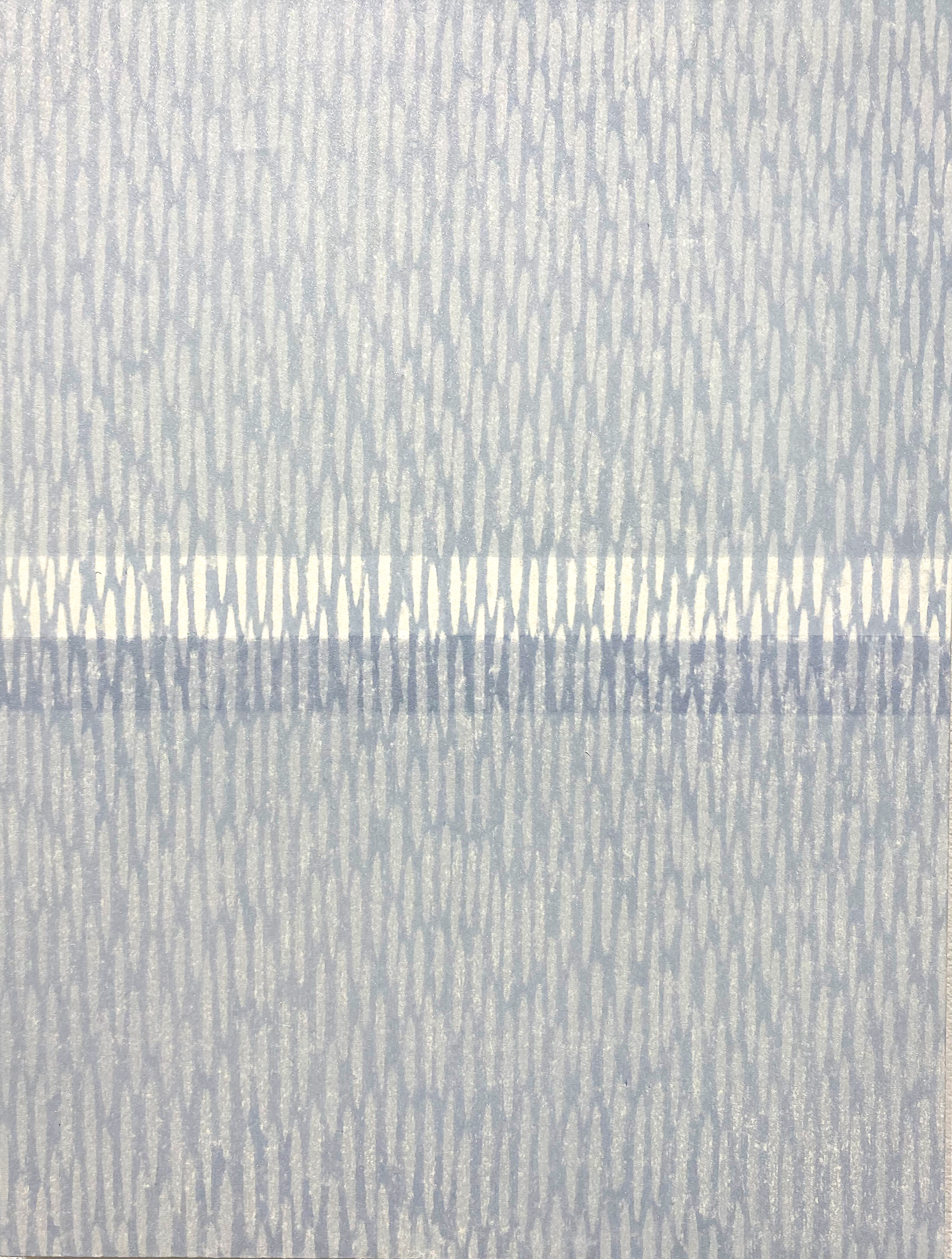
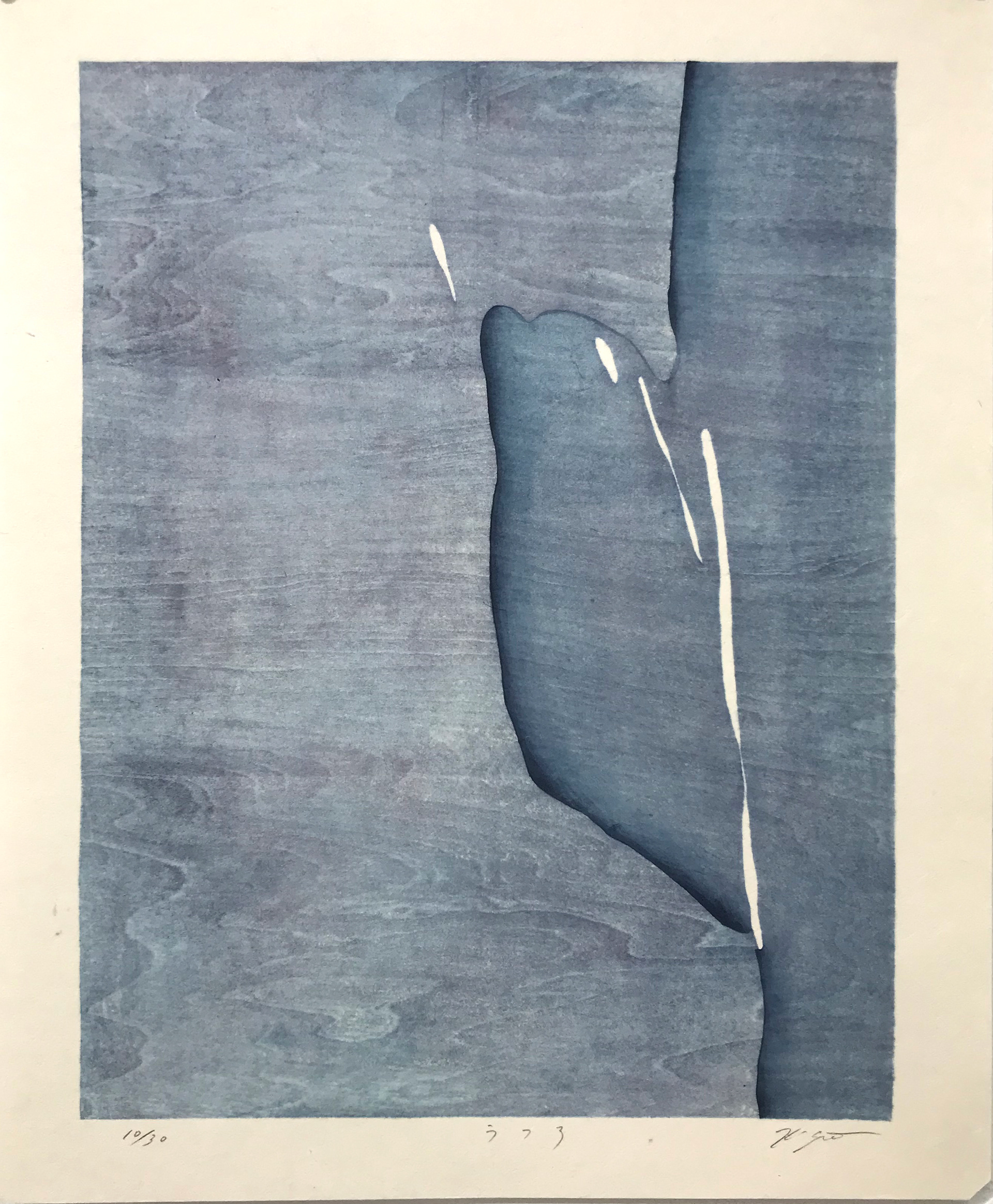
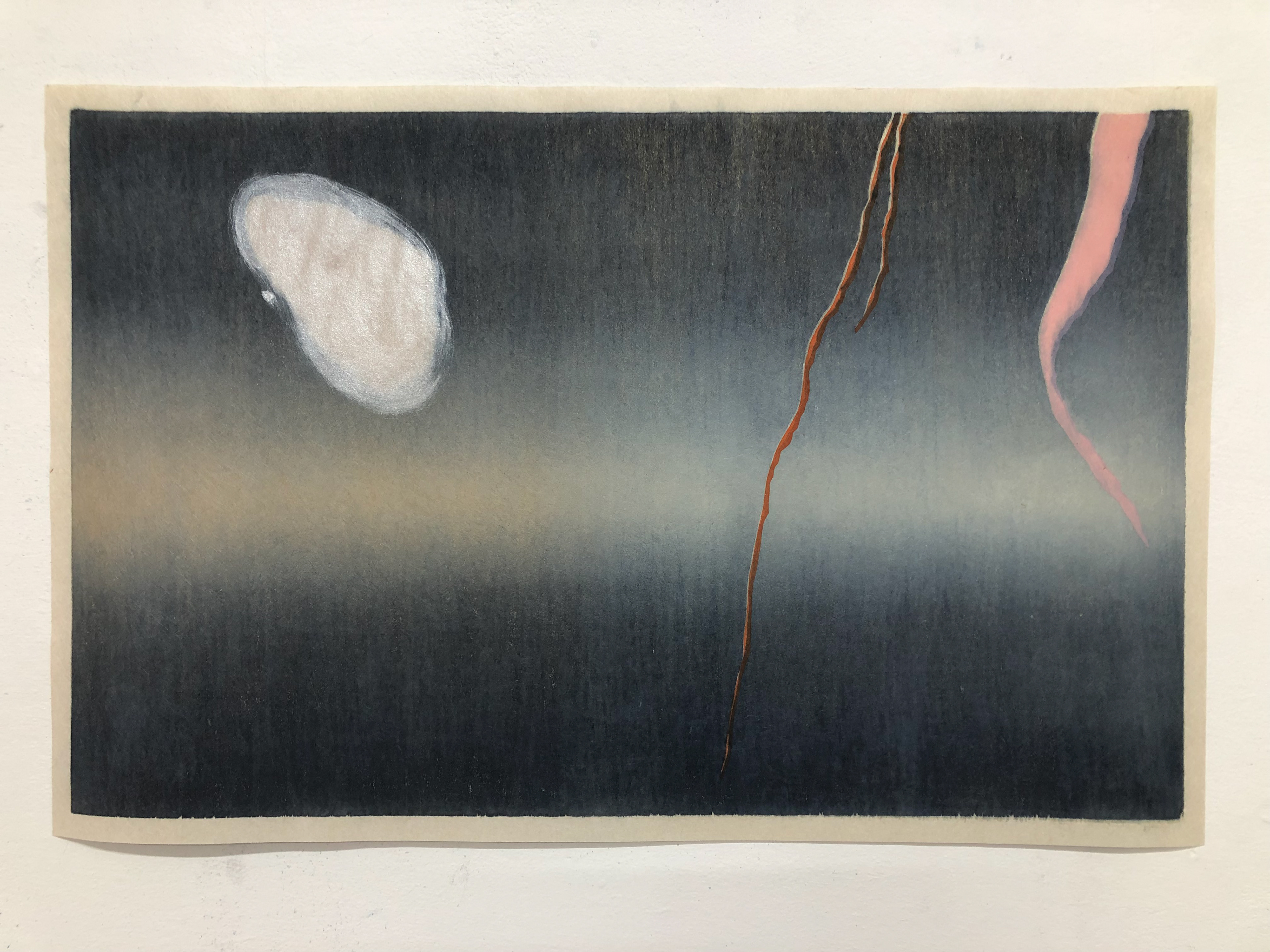
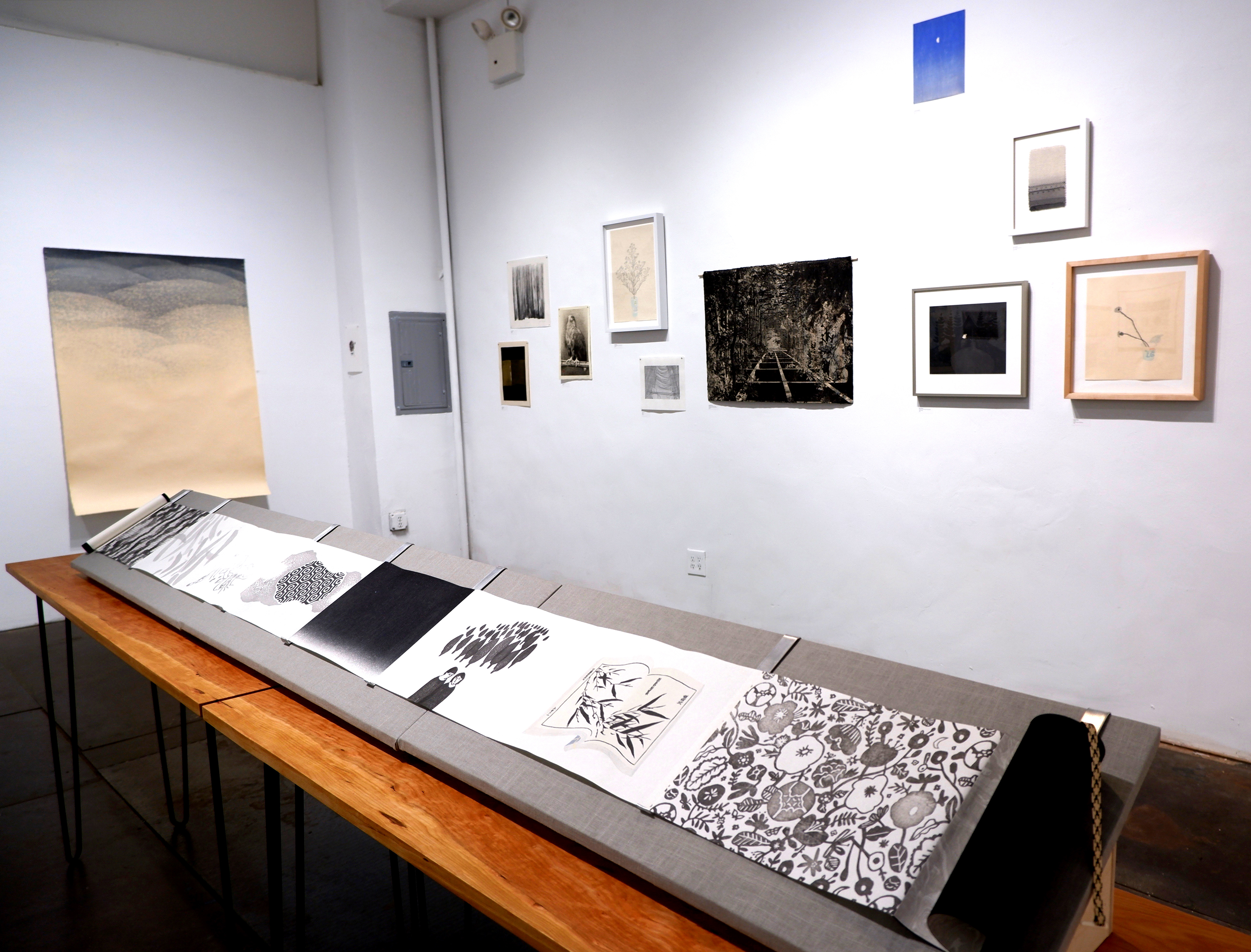
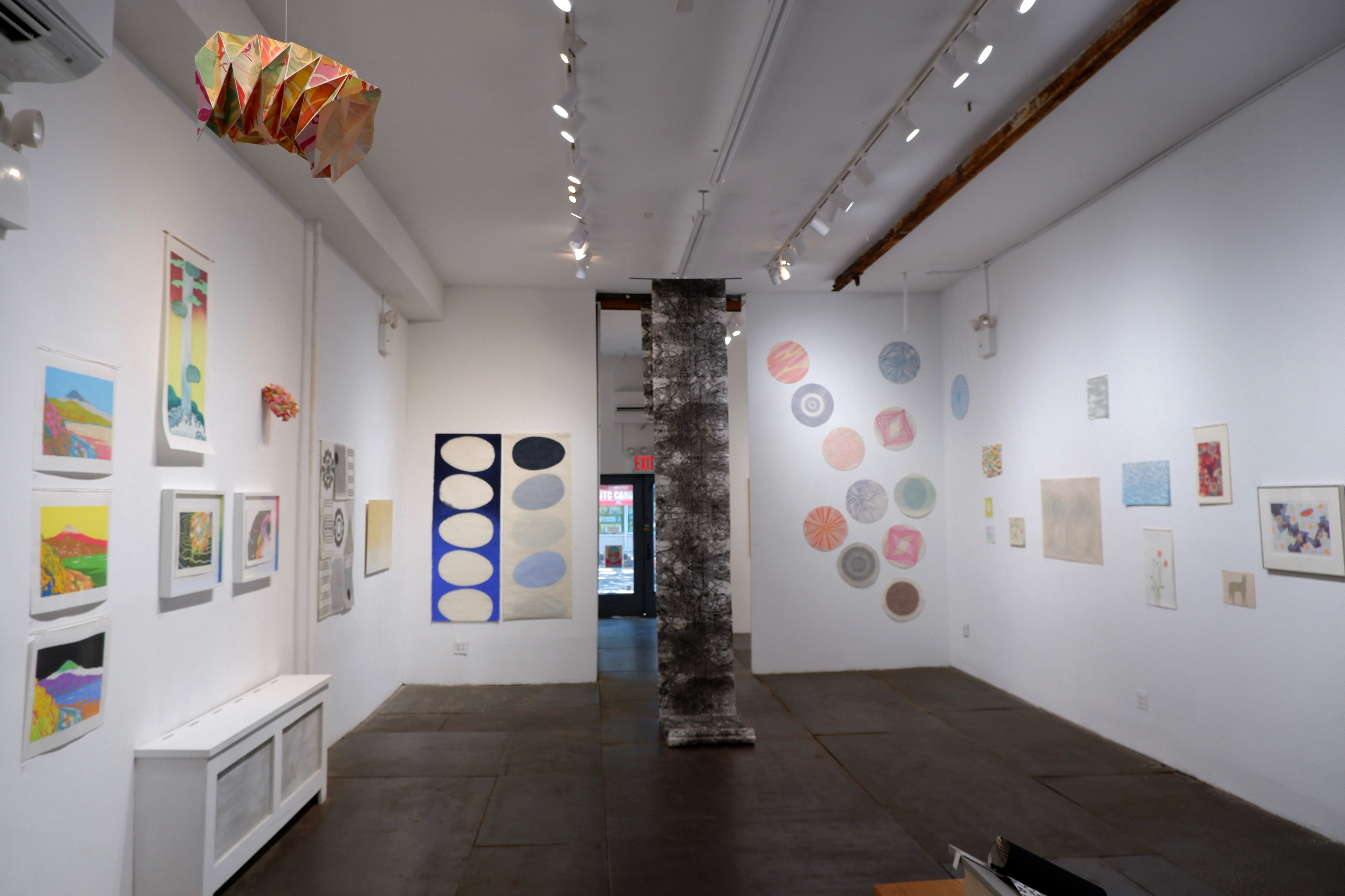
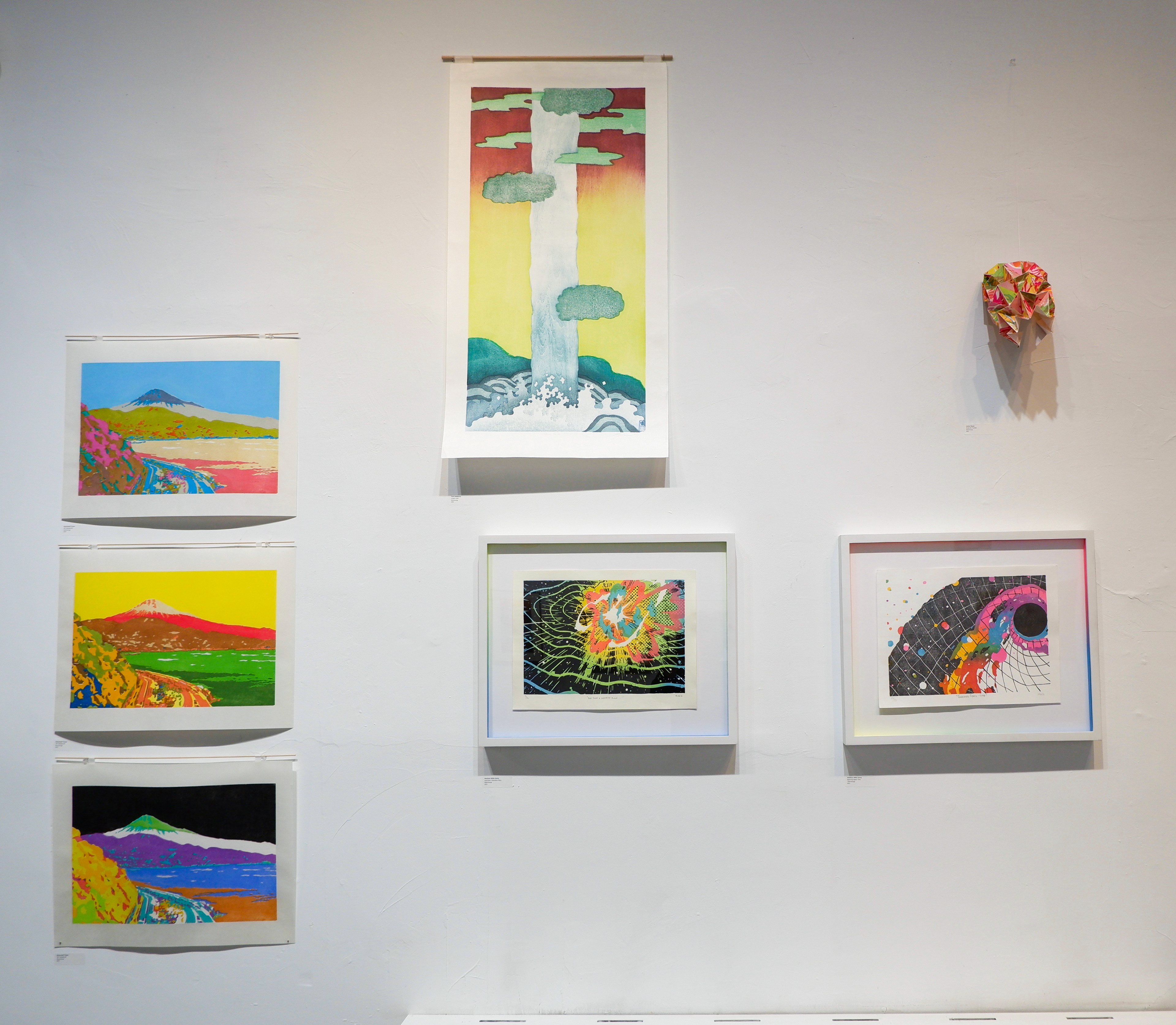
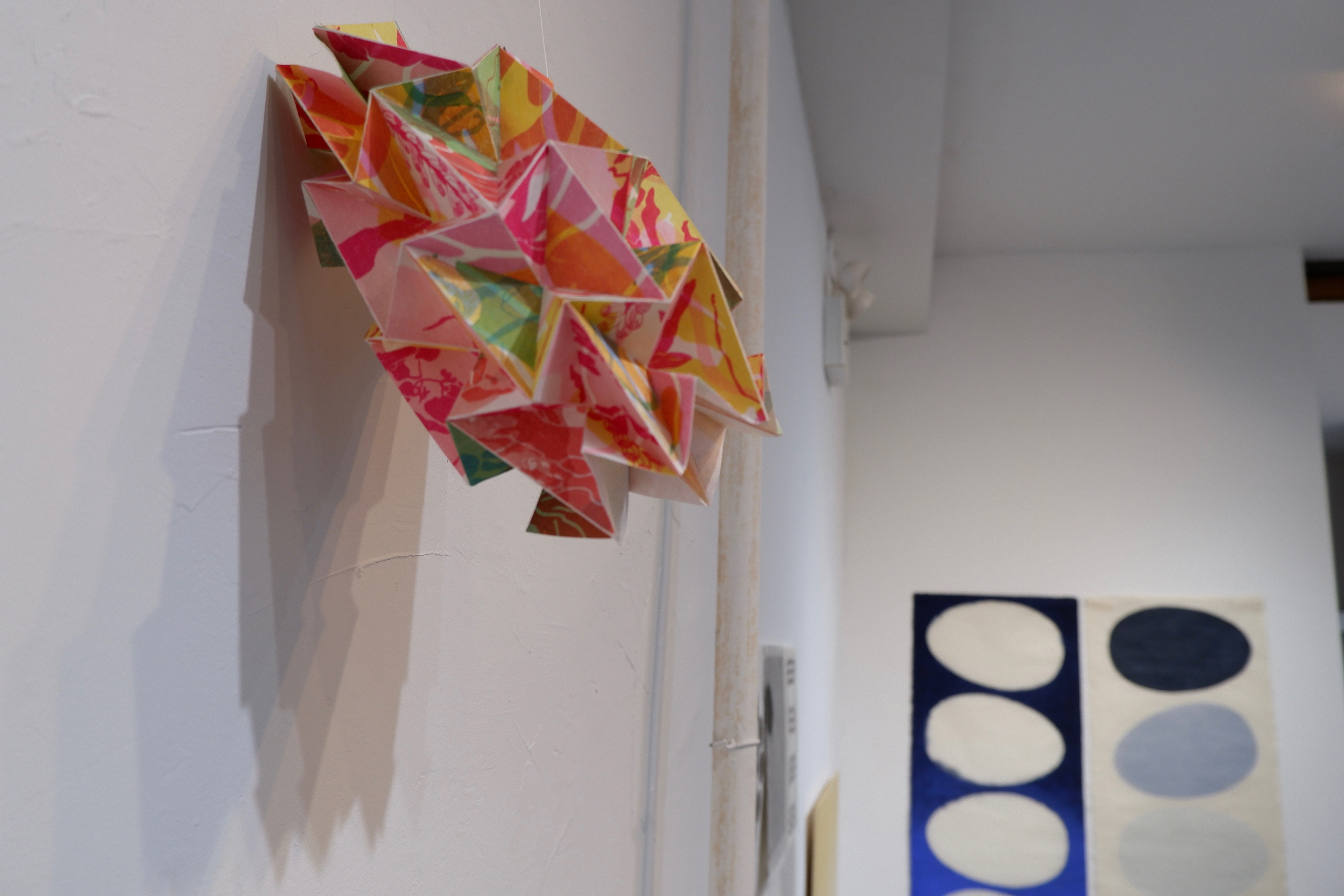
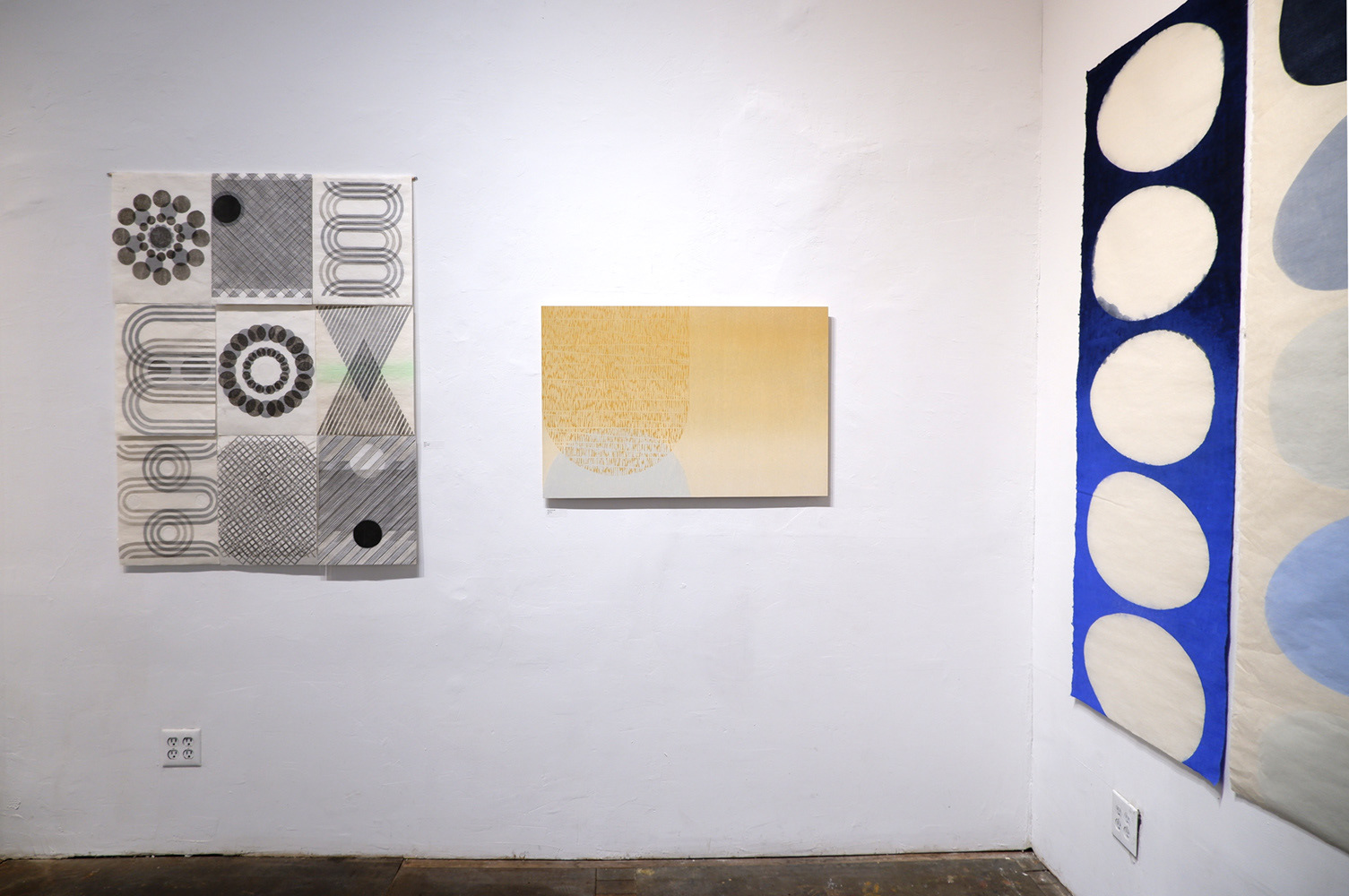
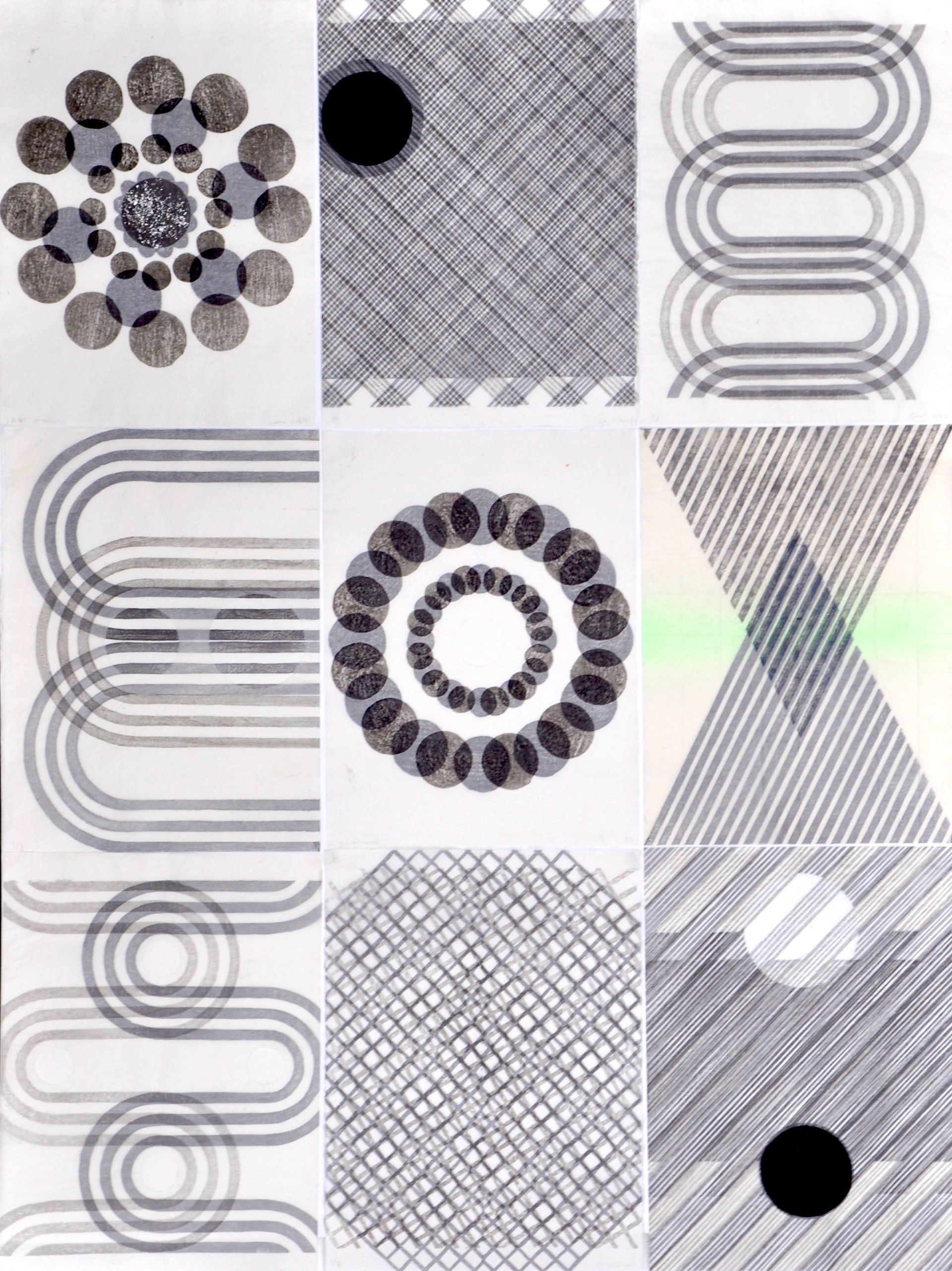
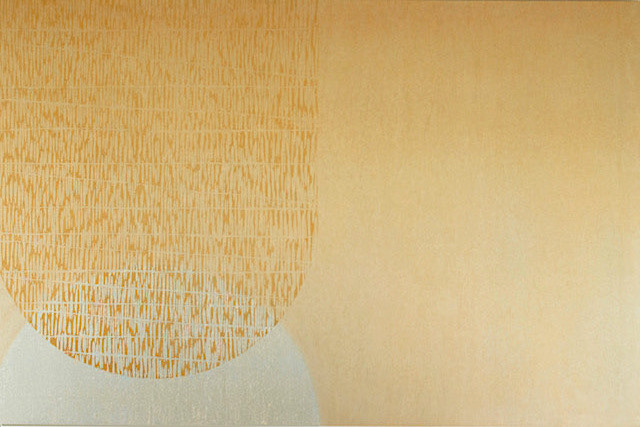
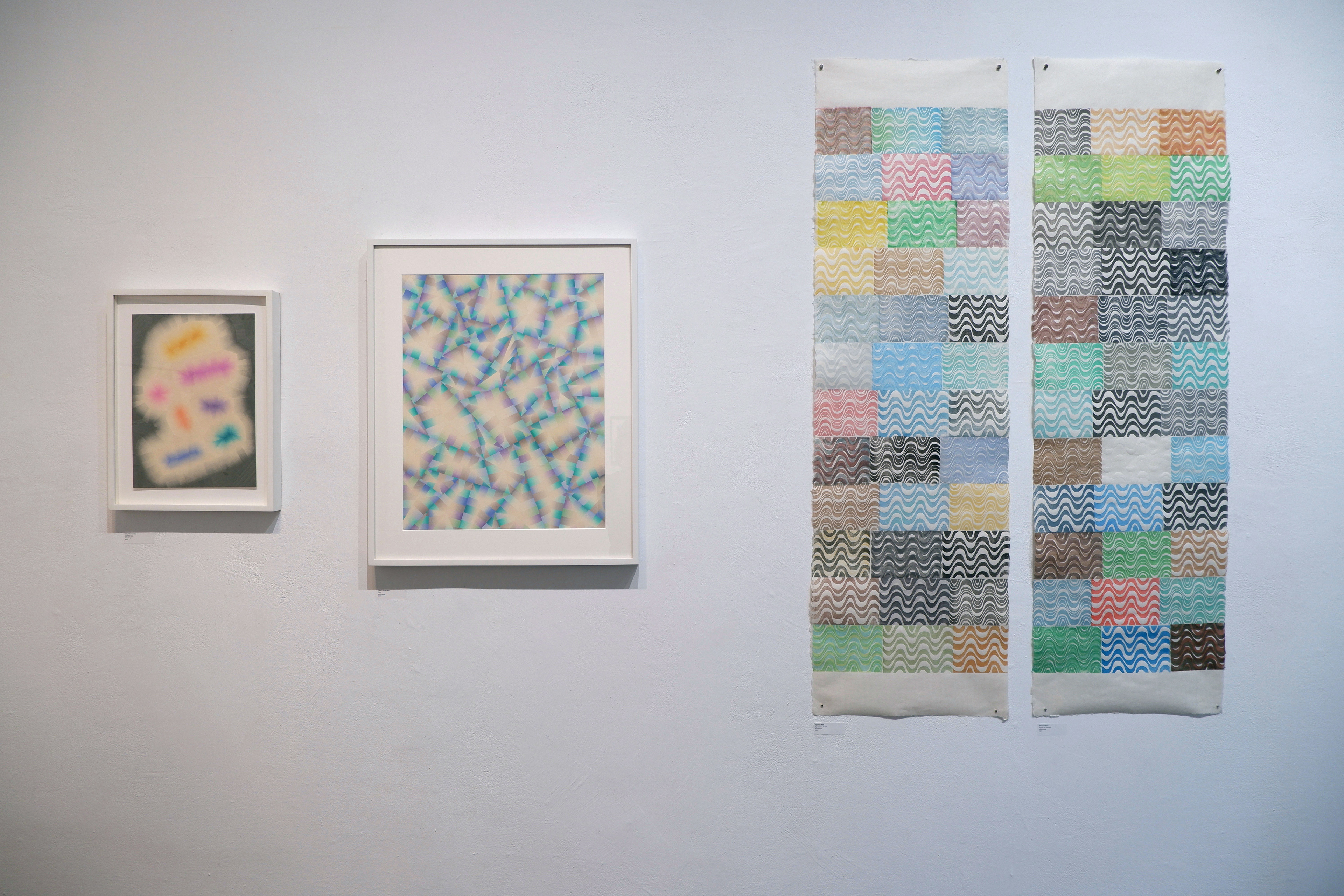
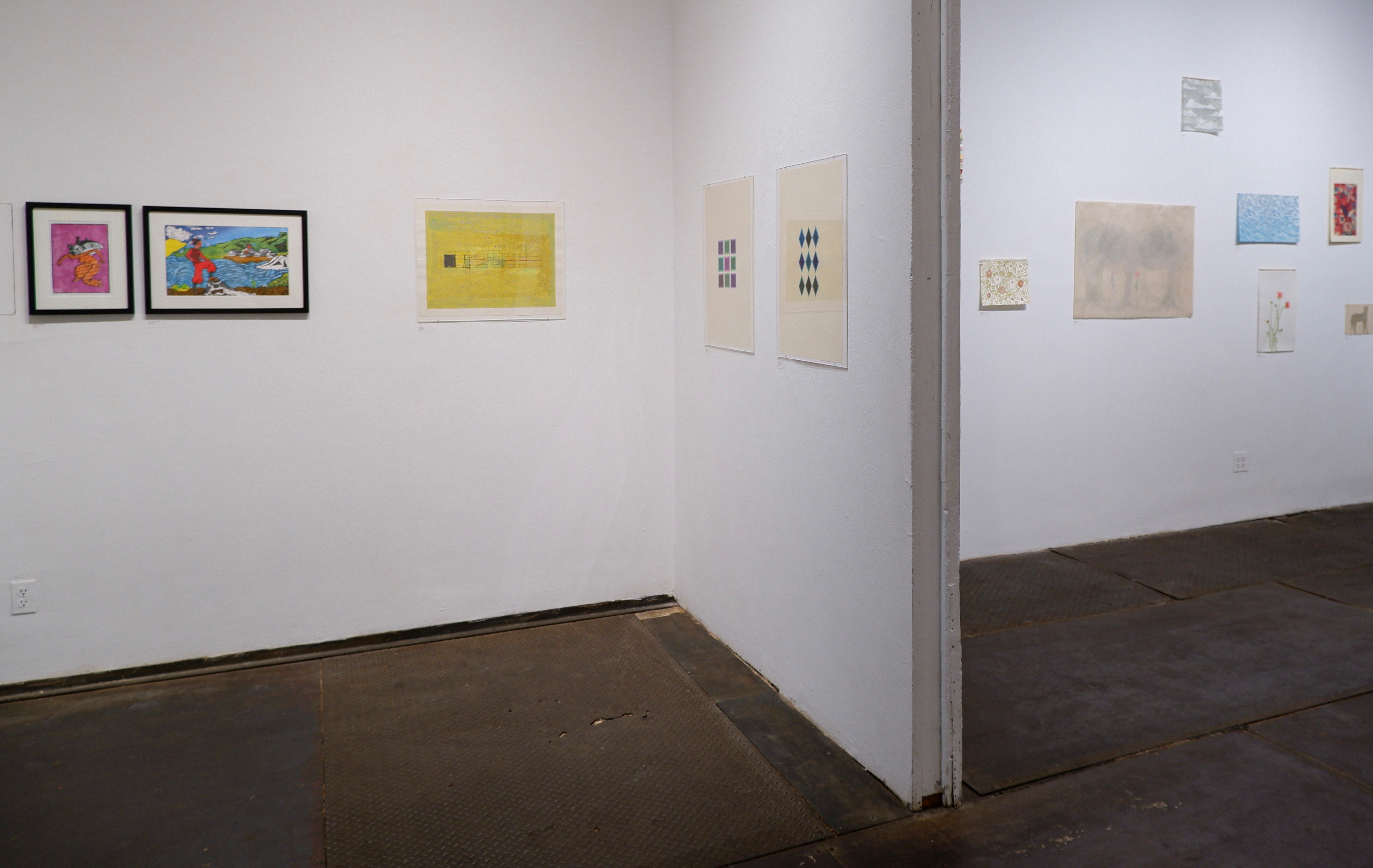
Mokuhanga Sisters and the Kentler International Drawing Space present an exhibition of contemporary mokuhanga prints at the Kentler International Drawing Space in Red Hook, Brooklyn from June 17- July 31, 2022.
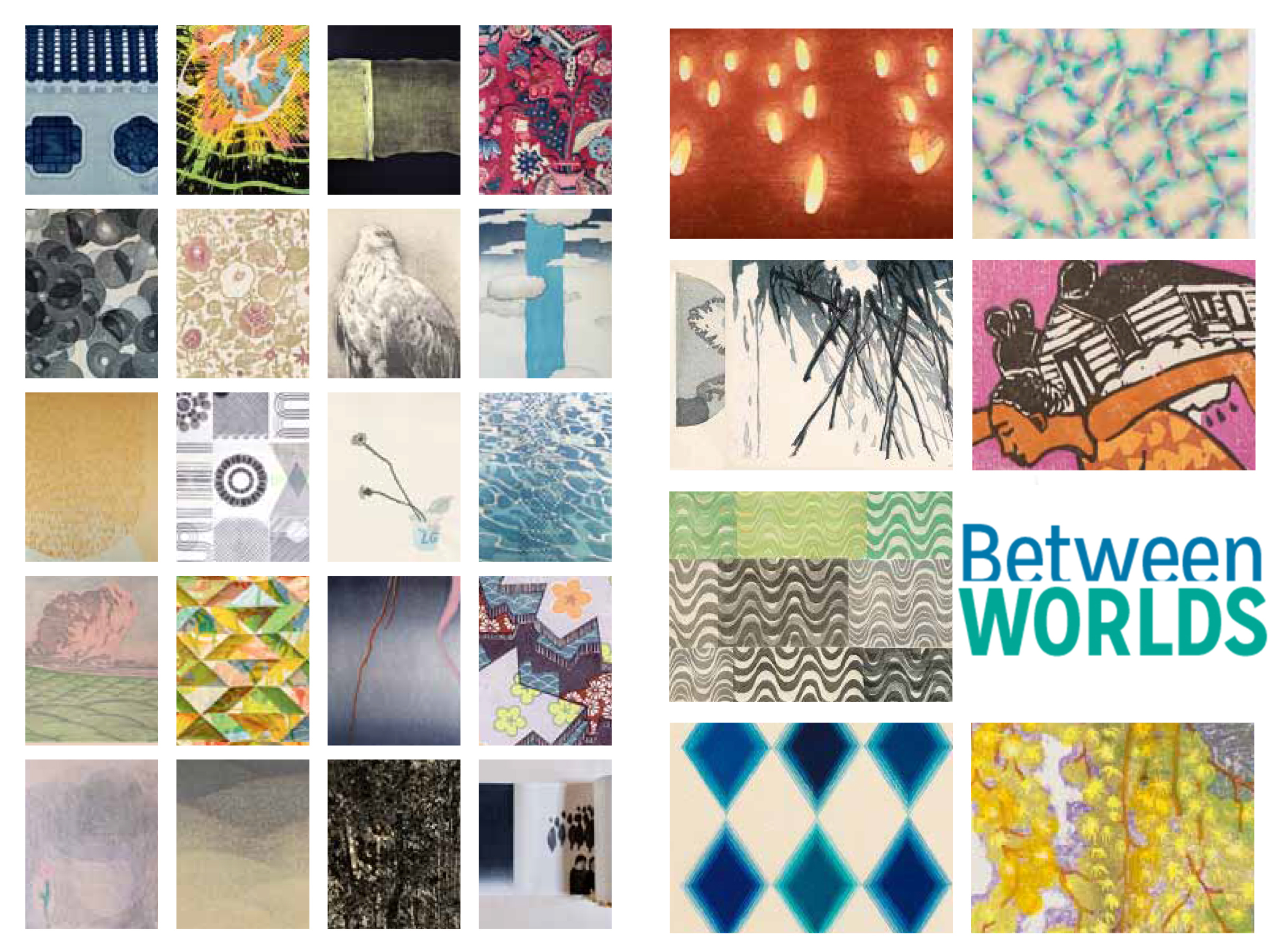
Katie Baldwin,
Patty Hudak,
Mariko Jesse,
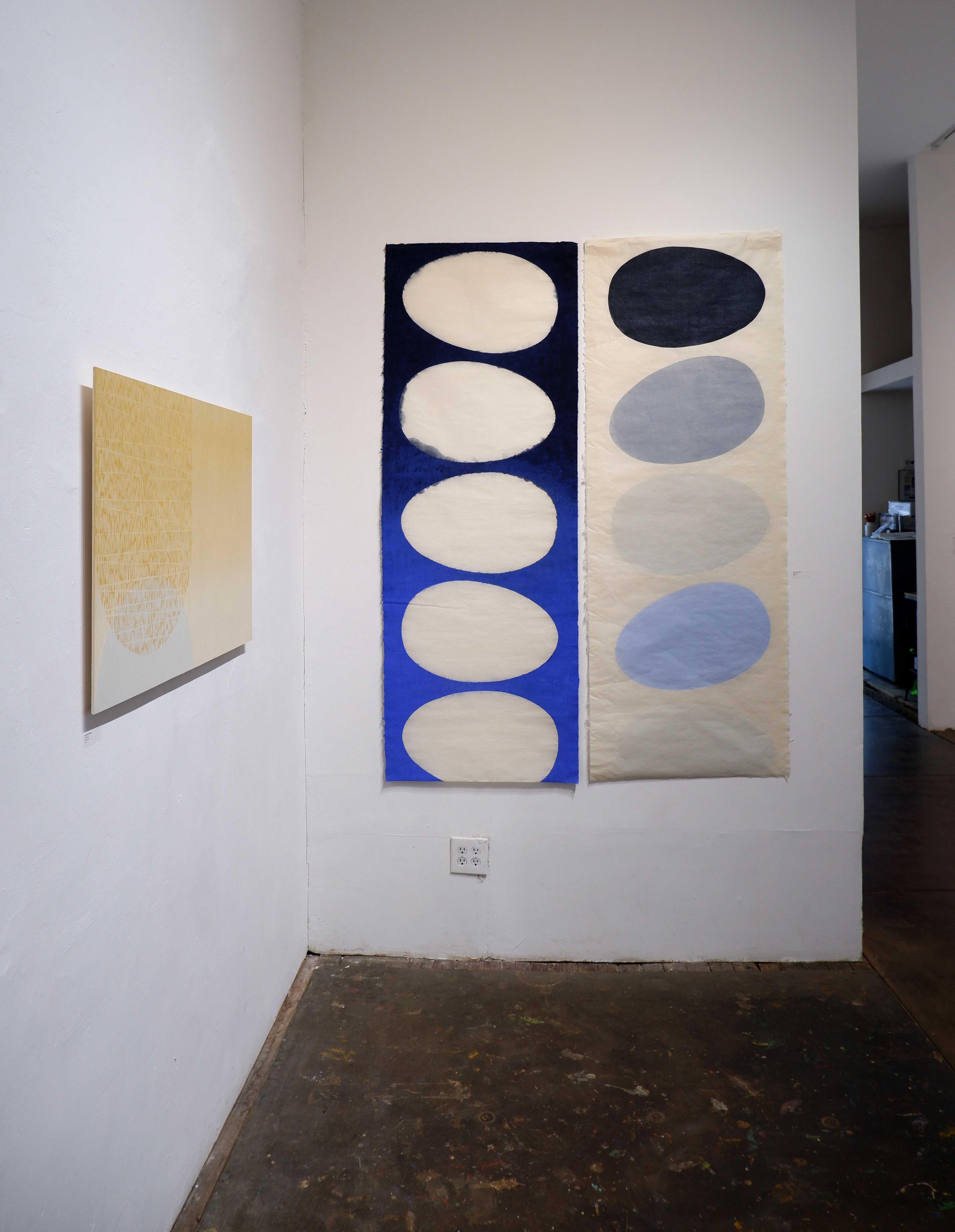
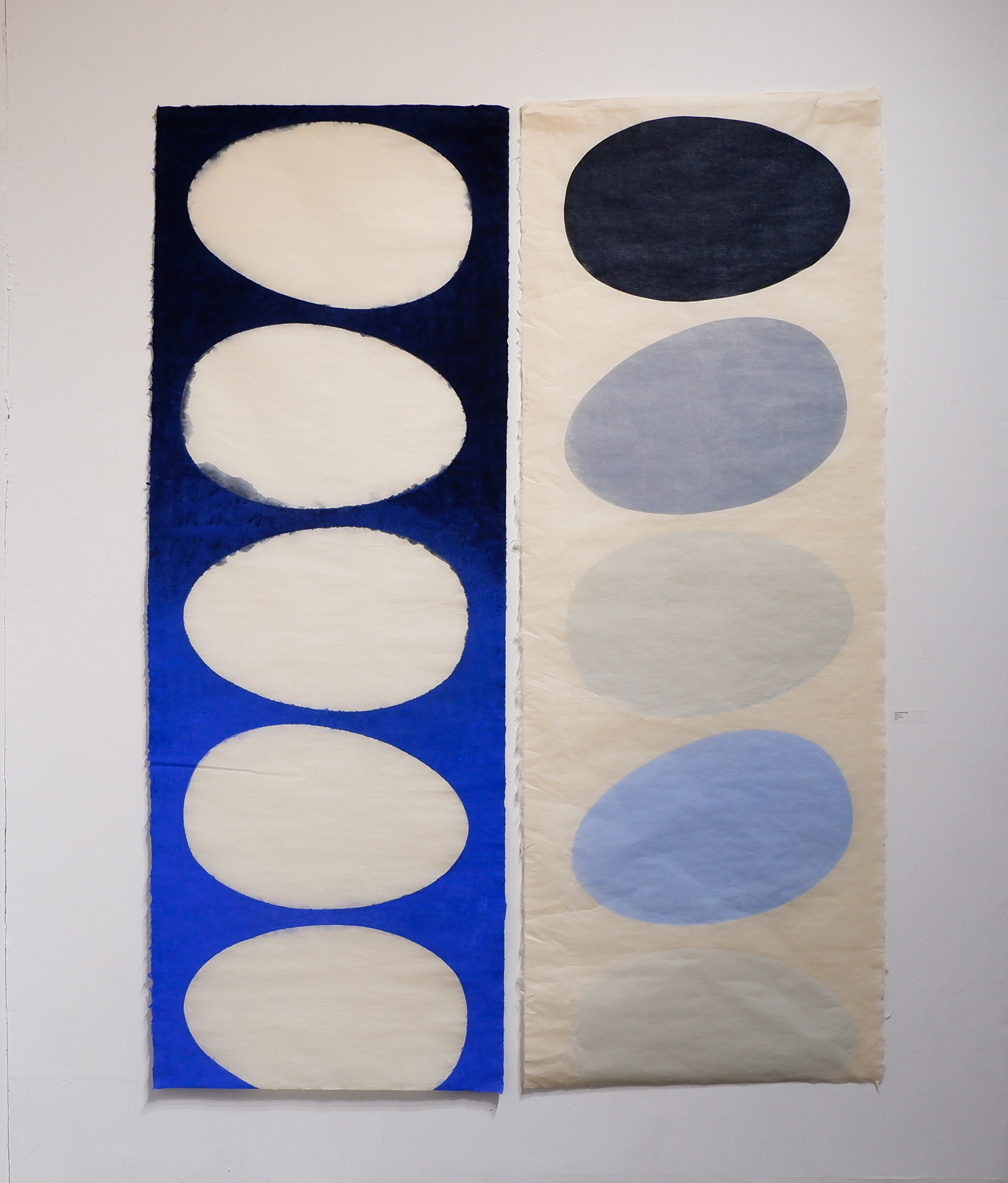
Kate MacDonagh,
Yoonmi Nam,
Natasha Norman, Mia O, Lucy May Schofield, Melissa Schulenberg, Matthew Willie Garcia,
Hidehiko Gotou,
Kyoko Hirai, Shoichi Kitamura,
Terry McKenna, Brendan Reilly,
Louise Rouse, Ayao Shiokawa, Chihiro Taki, Katsutoshi Yuasa
Annie Bissett, Takuji Hamanaka,
Keiko Hara, Jennifer Mack-Watkins, Florence Neal,
Yusu Shibata, April Vollmer
We are thankful to the
Japan Foundation New York, the Southern Vermont Arts Center,
St Lawrence University Art Department, Culture Ireland and
April Vollmer for
supporting the presentation of these prints.
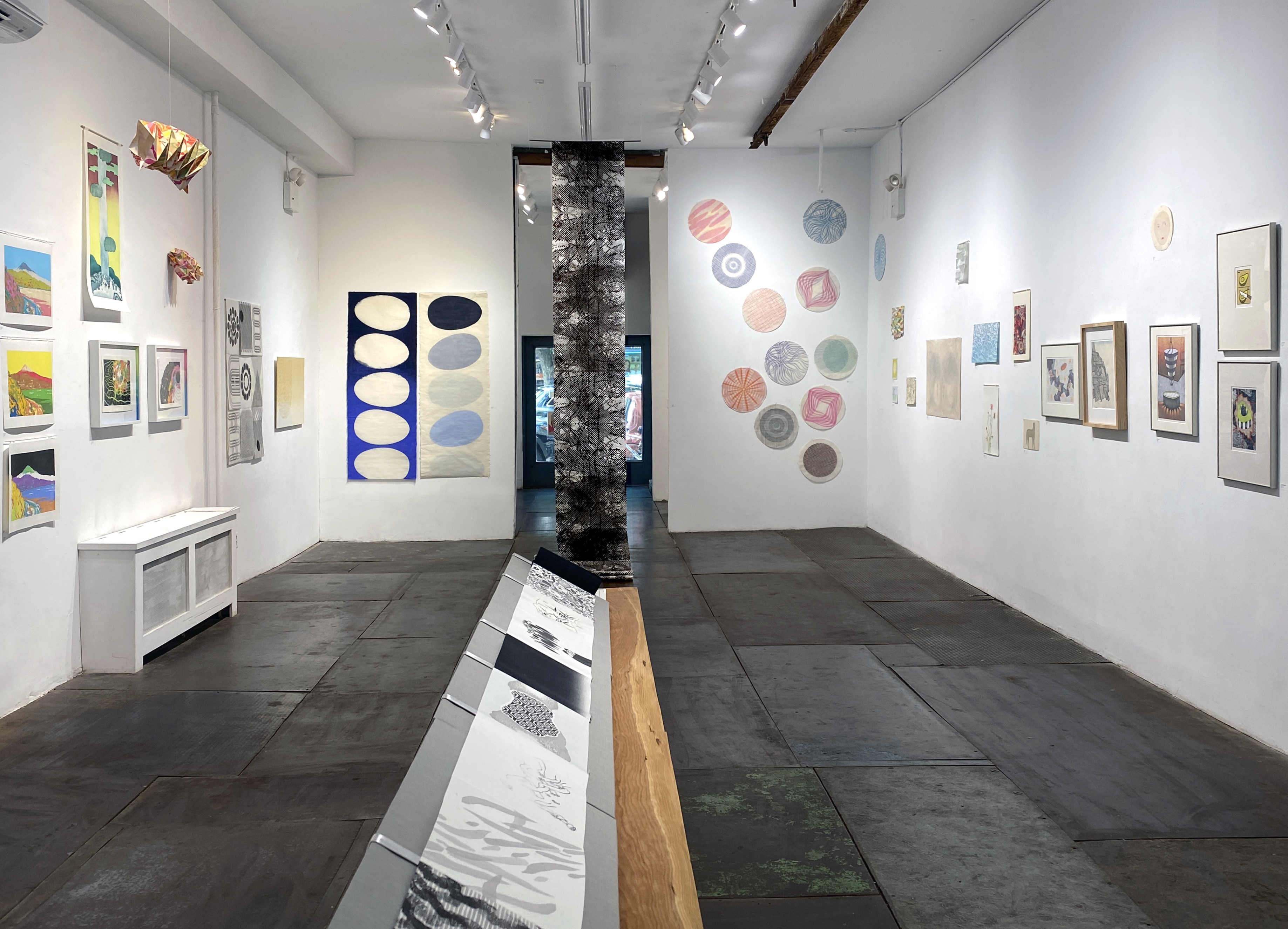
BETWEEN WORLDS: PROGRAMMING AND INFORMATION:
LOCATION:
Exhibition Dates: June 17 - July 31, 2022
Opening Reception: Friday, June 17, 6-8 pm
Gallery Hours: Thurs-Sun, 12-5 pm
Opening Reception: Friday, June 17, 6-8 pm
Gallery Hours: Thurs-Sun, 12-5 pm
A SUMMER GARDEN in the CITY
Date: June 18, 2022
Time: 10am-12:00pm
Teaching Artists:
Kate MacDonagh
Lucy May Schofield
Date: June 18, 2022
Time: 10am-12:00pm
Teaching Artists:
Kate MacDonagh
Lucy May Schofield
THREE COLOR WORKSTATIONS with pre-cut blocks of:
1. Circles (center of the flower)
2. Rectangular shapes (to be cut into stem shapes when dry)
3. Ovals (petals)
1. Circles (center of the flower)
2. Rectangular shapes (to be cut into stem shapes when dry)
3. Ovals (petals)
Nori stations with room to play around with shapes before sticking
them together to make all sorts and shapes and sizes of flowers.
Various colored shapes will be collaged together, overlapping (using
Nori) to see how colors mix. A whole garden, an installation will be
created and can be pasted to the door or window, or outside in the
garden.
Teaching Artists:
Katie Baldwin
Melissa Schulenberg
Katie Baldwin
Melissa Schulenberg
Children will work with balsa wood, ballpoint pens, and water-based
paint to create a mokuhanga woodblock print.
All materials will be supplied.
This demonstration will be an introduction to the printing process
of mokuhanga, which uses water-based pigments, a kento registration
method, and hand printing with a baren. Participants will learn
about tools, materials, as well as the carving sequence and printing
methods associated with this multiple woodblock printing processes.
At the end of the demonstration, participants will have the
opportunity to experience printing off of the woodblocks.
Date: Sunday, July 17, 2022
Time: 1-2pm
Time: 1-2pm
Date: Sunday, July 24, 2022
Time: 1-2pm
Time: 1-2pm
Patty Hudak will give tours to the public, introducing the work of
each exhibiting artist, as well as the history of mokuhanga. She
will note the supply chain of artisans, toolmakers, bladesmiths,
barren makers, and paper makers, whose traditional knowledge
supplies these artists with the tools of their trade. She will
present philosophies of Japanese aesthetics, and the relevance of
mokuhanga printmaking to 21st-century artmaking.
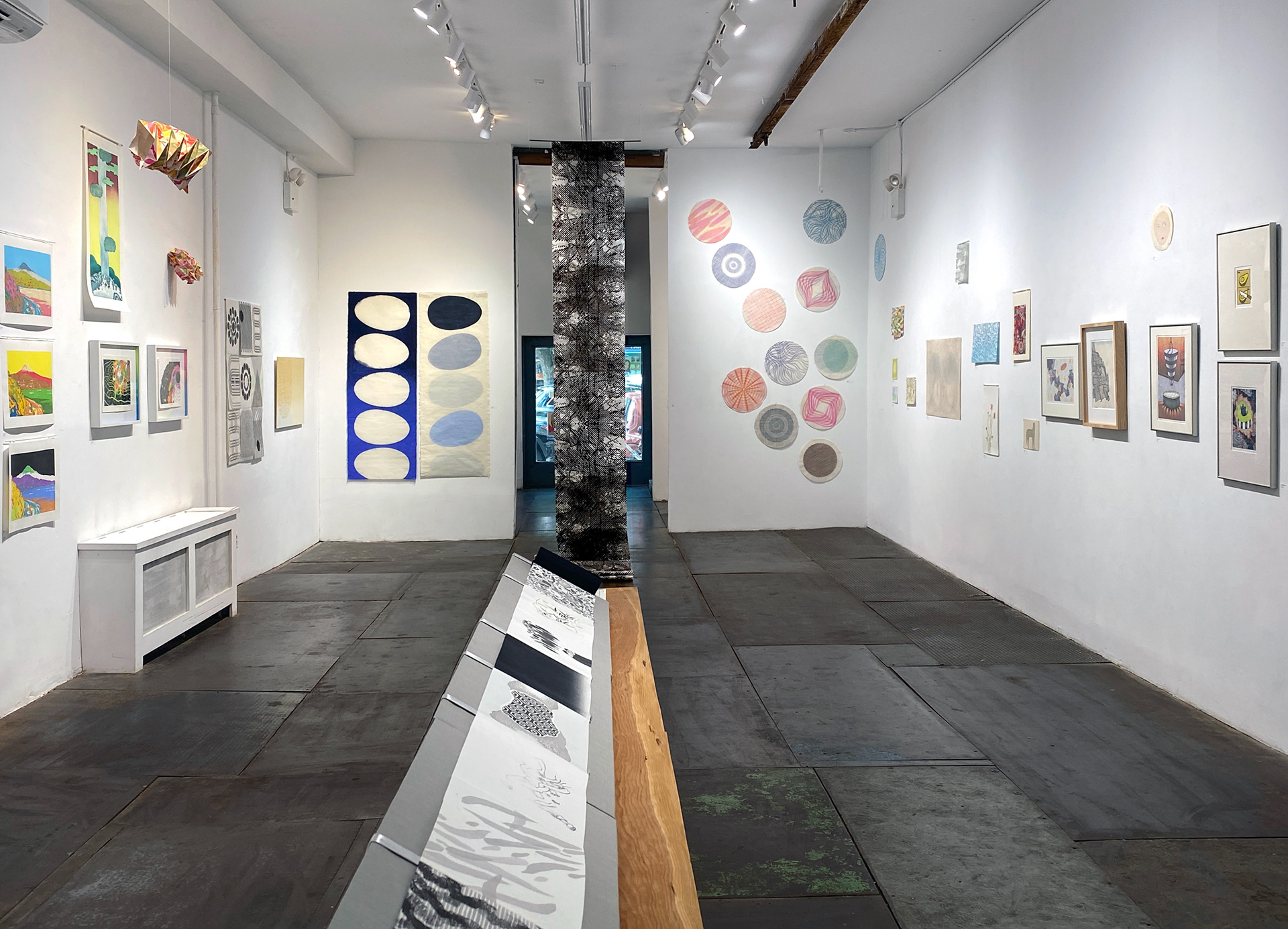
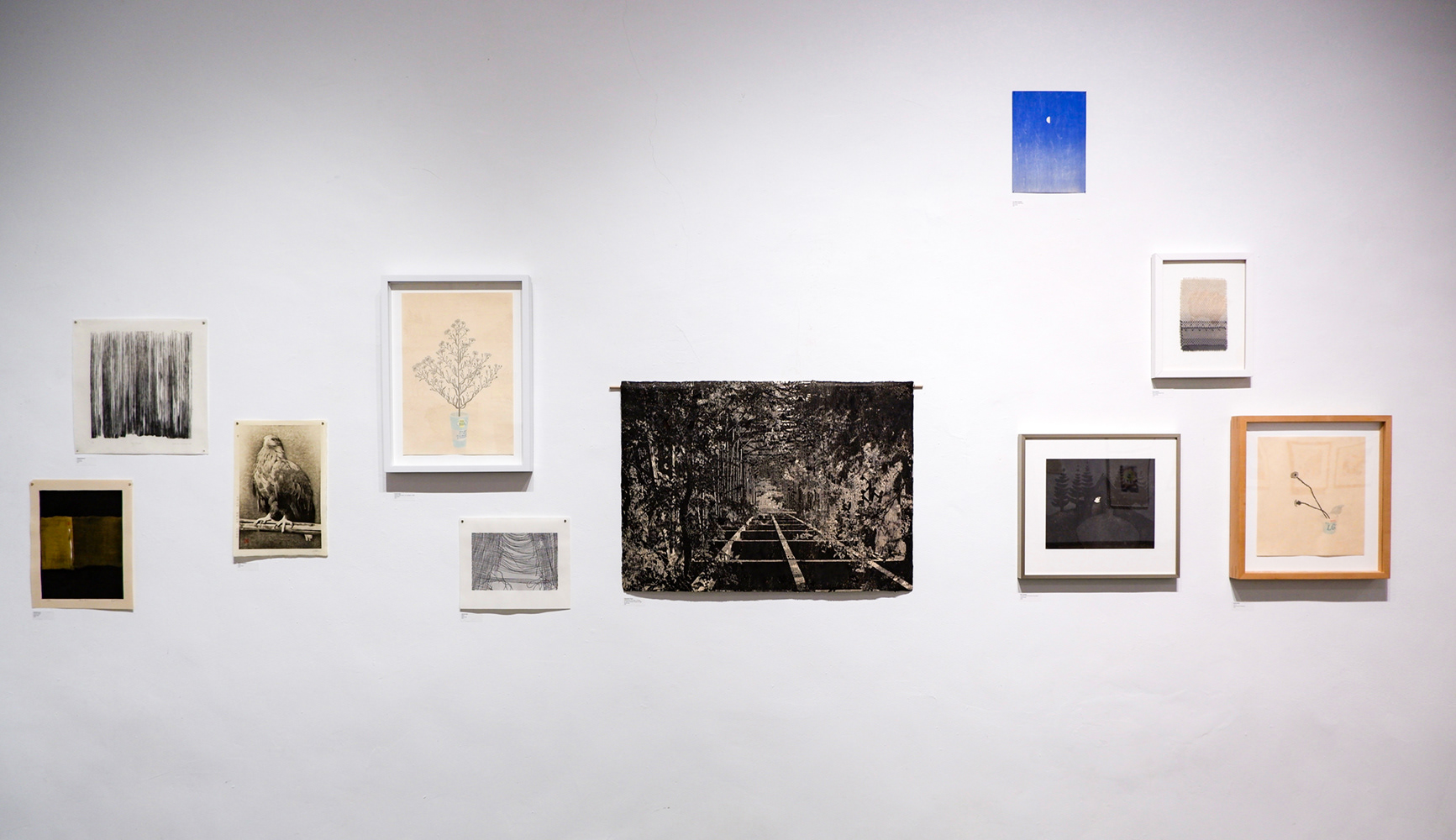
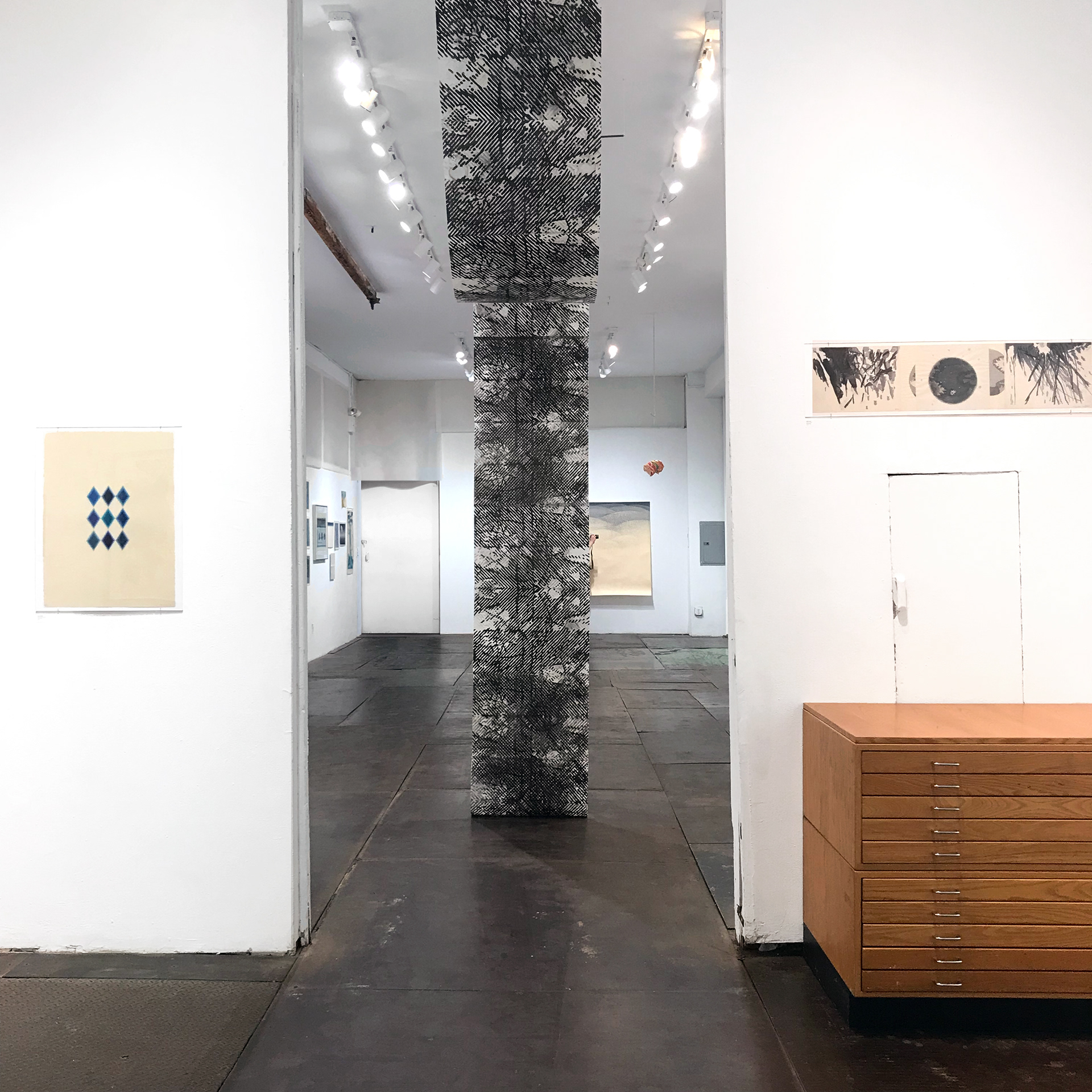
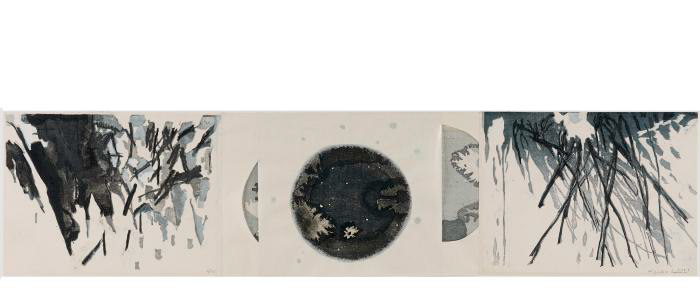
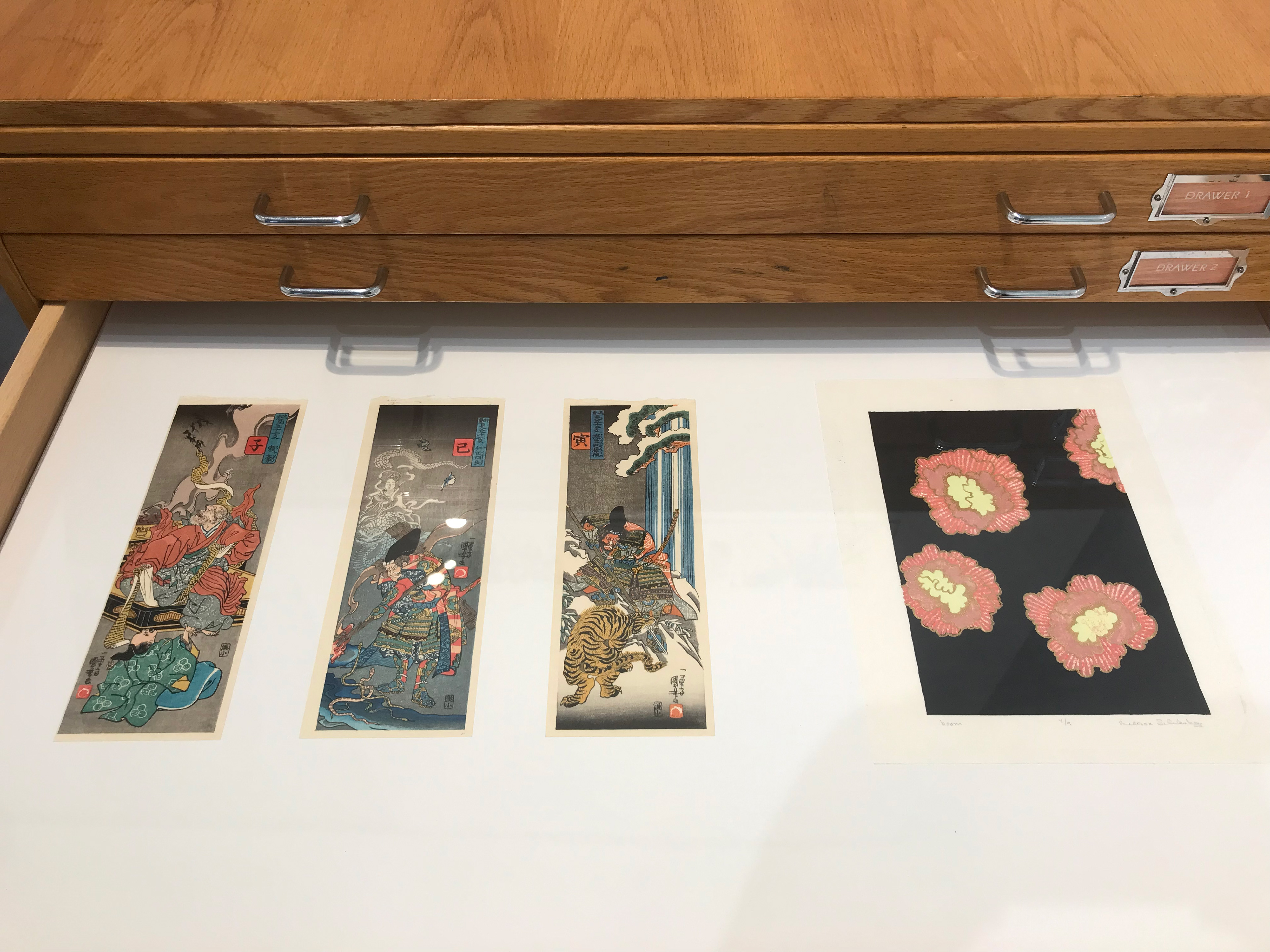
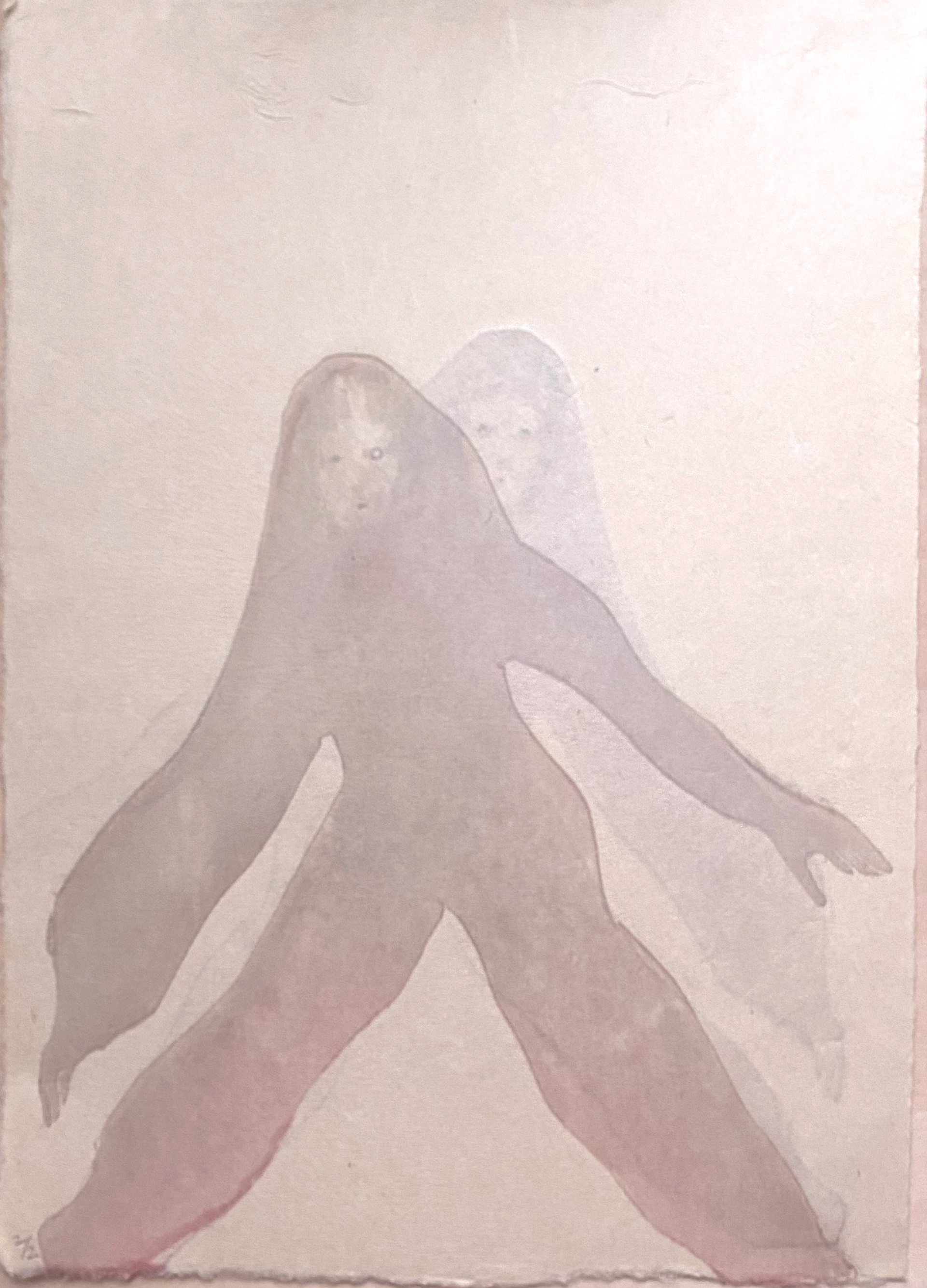
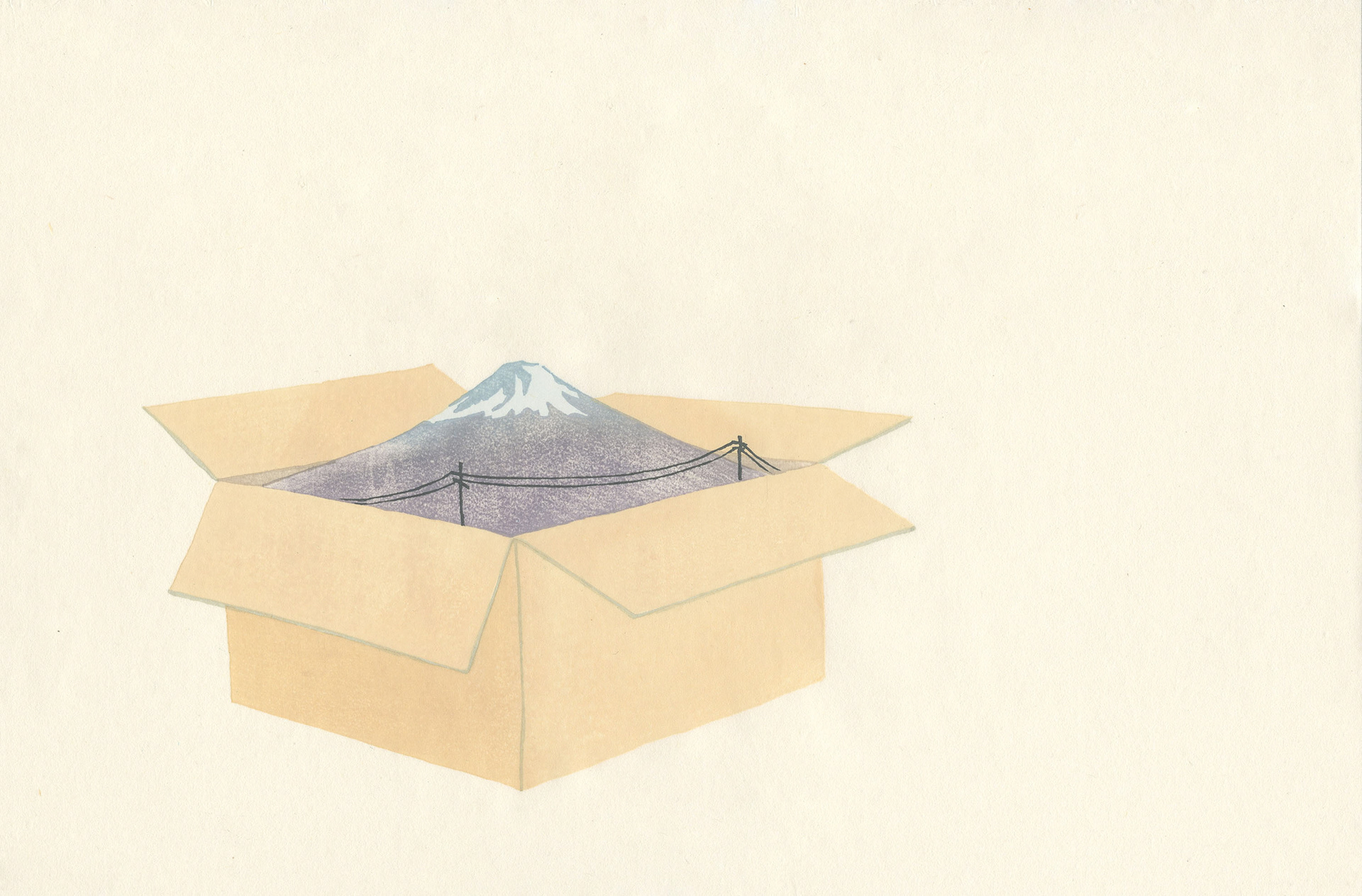
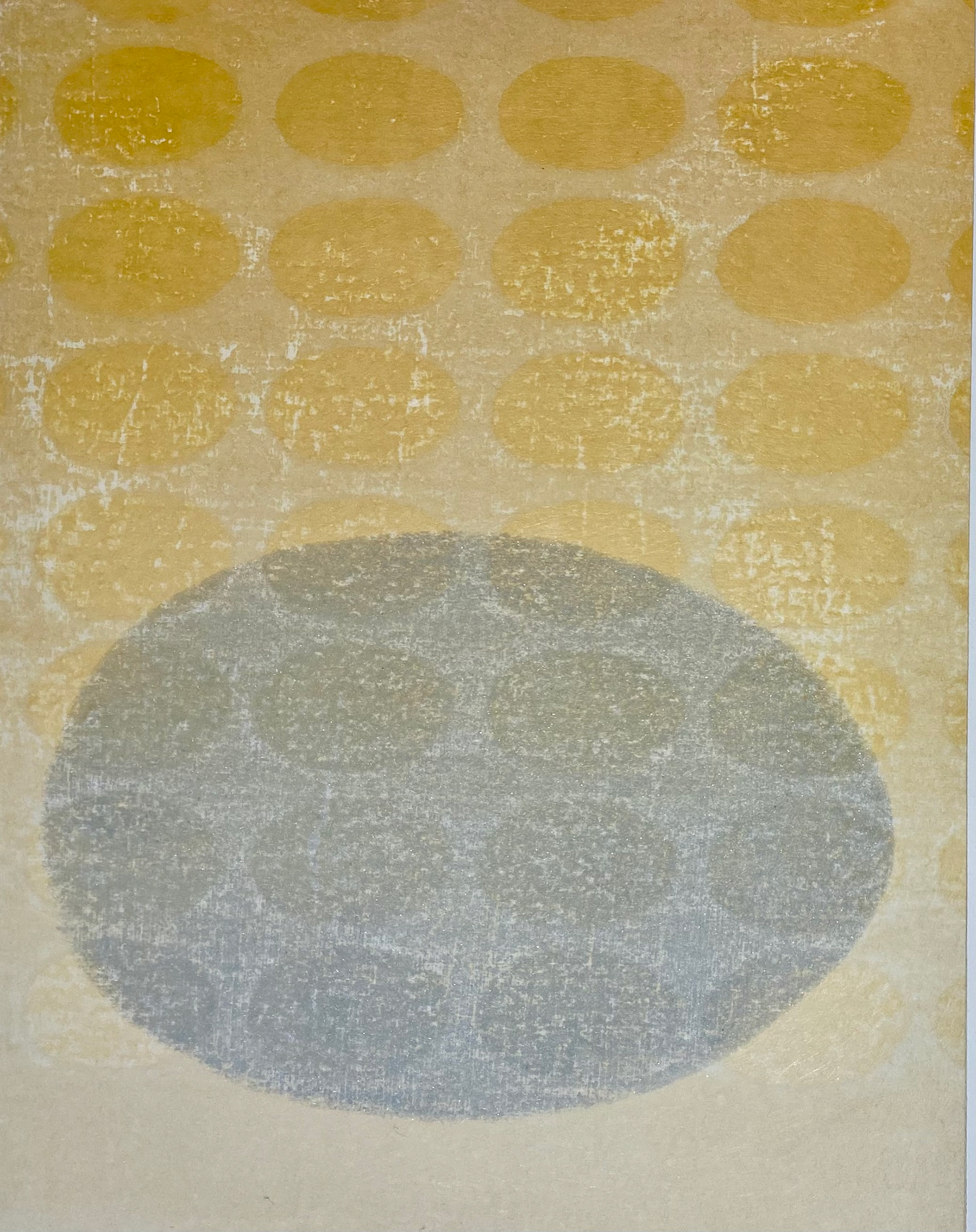
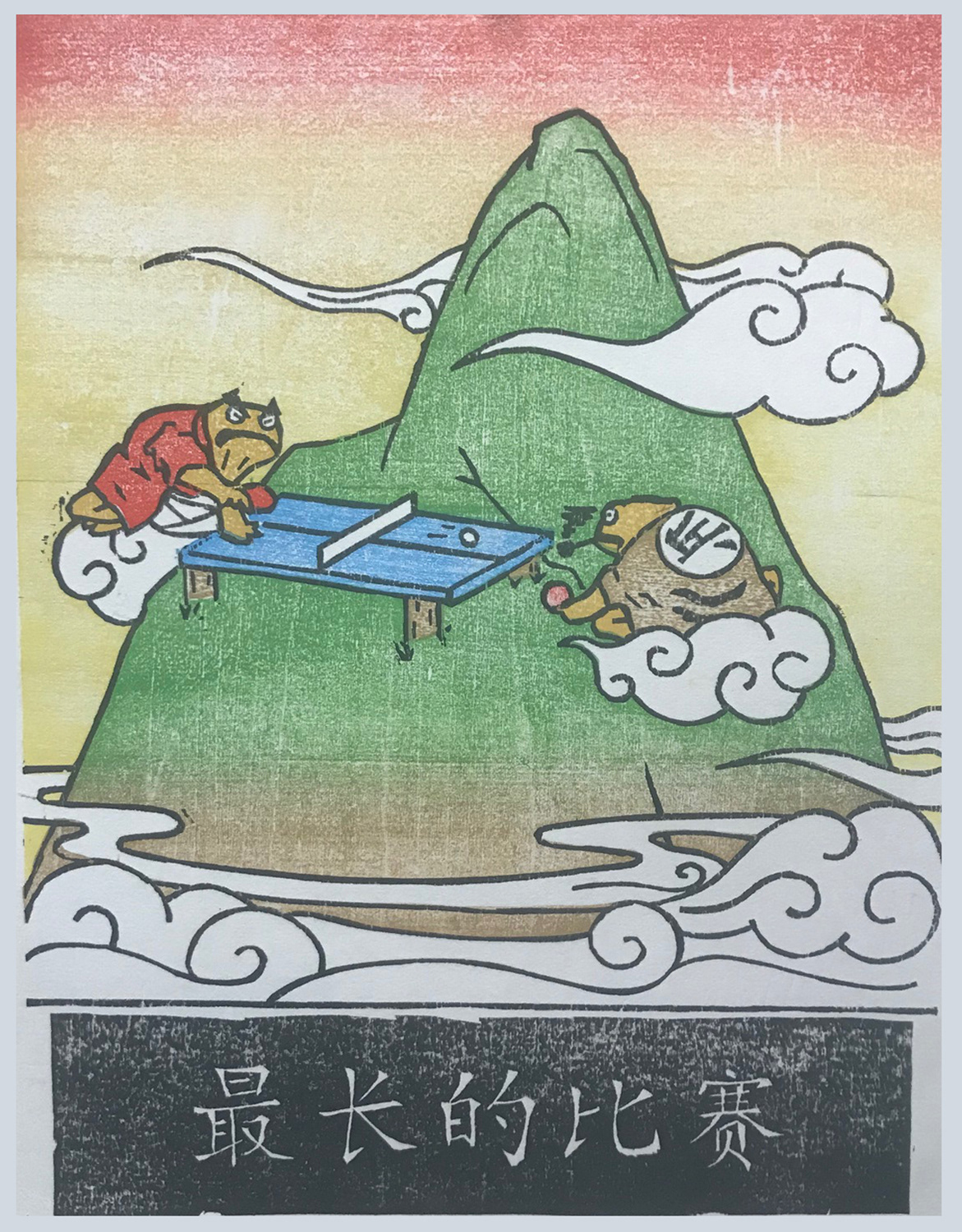
BETWEEN WORLDS - MOKUHANGA
Introduction
—April Vollmer, author of Japanese Woodblock Print Workshop
—April Vollmer, author of Japanese Woodblock Print Workshop
Between Worlds brings together artists who developed strong
connections during shared residencies at the Mokuhanga Innovation
Laboratory (MI-LAB) in Japan. As participants in the “Upper Advanced
Residency” the Mokuhanga Sisters, as they became known, all had
previous mokuhanga experience. The group includes Katie Baldwin, Patty
Hudak, Mariko Jesse, Kate MacDonagh, Yoonmi Nam, Natasha Norman, Mia
O, Lucy May Schofield, and Melissa Schulenberg. At the residency, they
refined their technique and built a strong network that has resulted
in many shared projects and exhibitions. Between Worlds highlights
connections between group members, their teachers, their students, and
the community of mokuhanga artists centered around this international
training program.
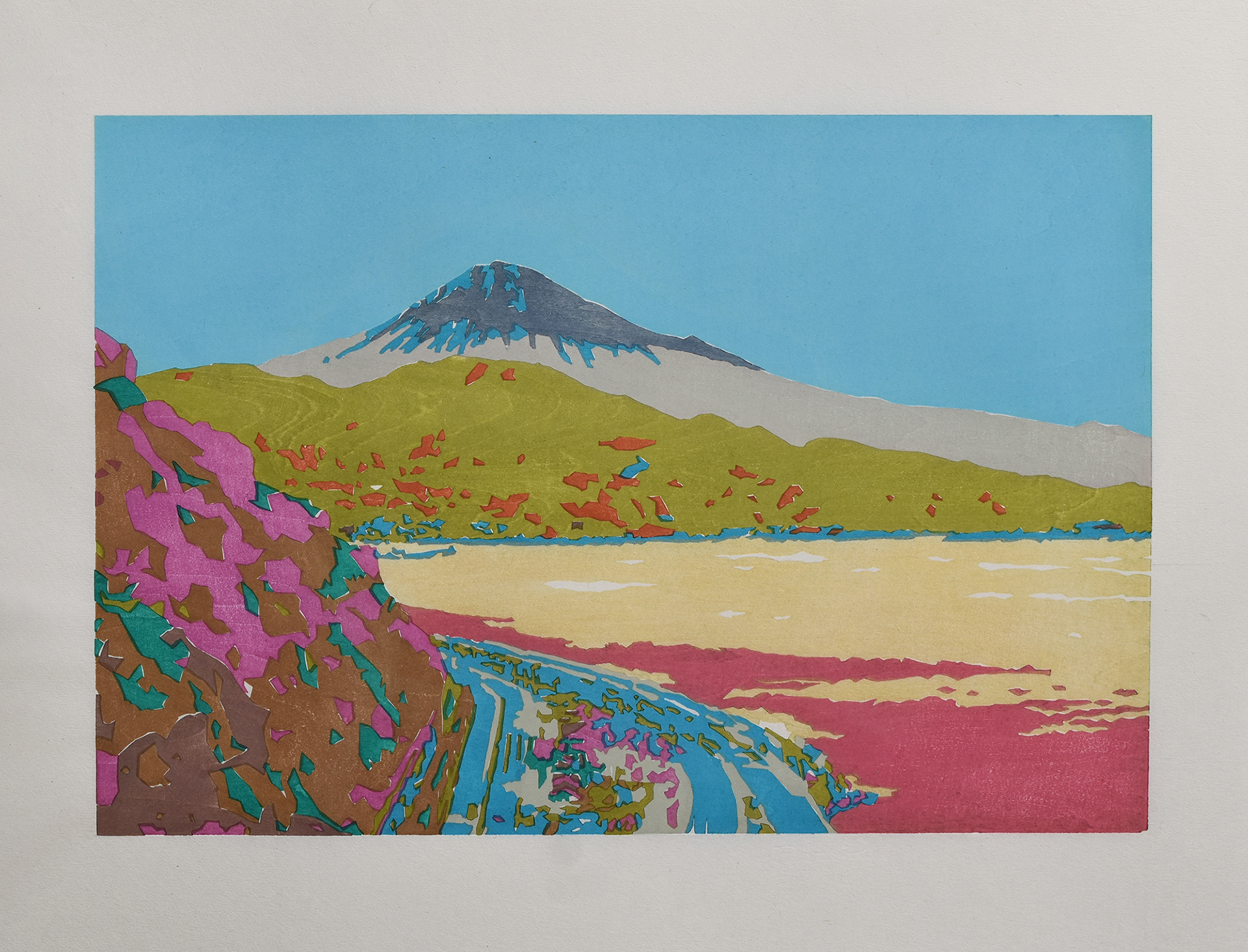
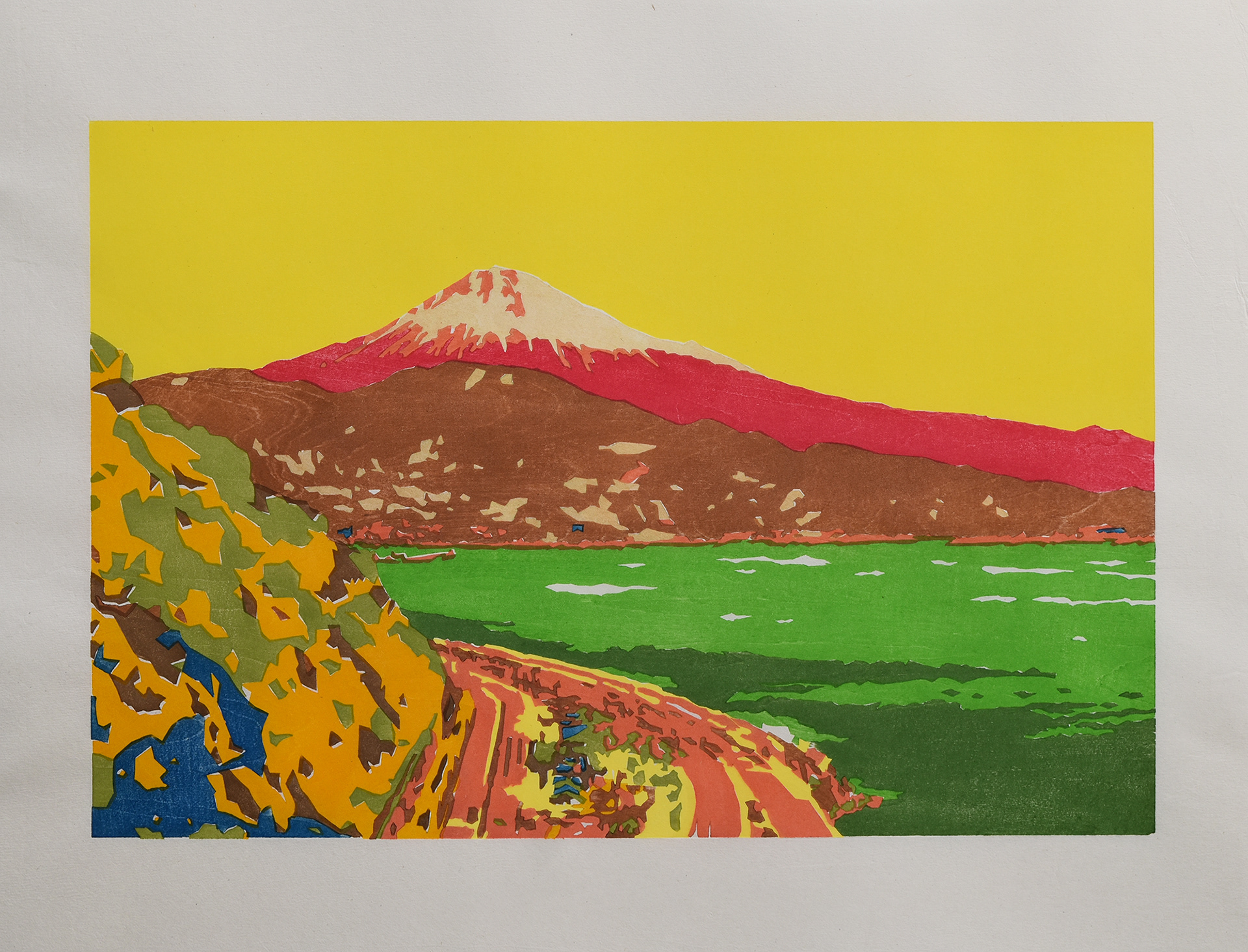
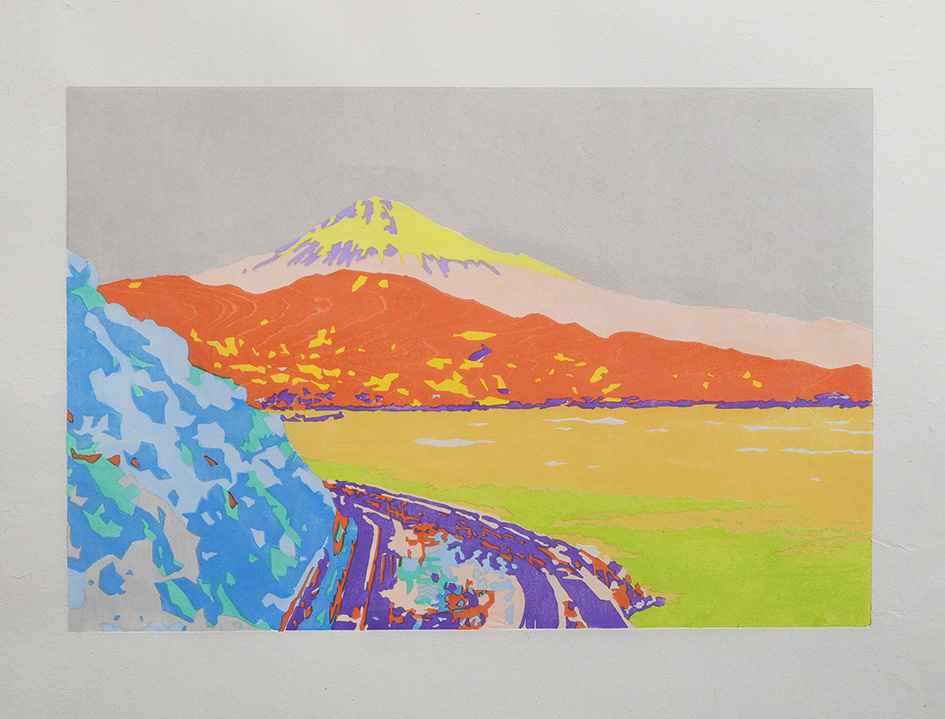
MI-LAB, conveniently located two hours from Tokyo at the foot of Mt.
Fuji grew from the Nagasawa Art Park program initiated by Keiko Kadota
in 1998. It opened in 2011 when the earlier program closed. In
addition to the residency programs, Keiko Kadota established her head
office and gallery at 3331 Arts Chiyoda art center in Tokyo to promote
mokuhanga through exhibitions and short-term classes. An important
initiative was establishing the triennial International Mokuhanga
Conference to include a diversity of international artists and to
provide a forum for maintaining contact among past residency
participants. The first IMC was held in Kyoto and Awajishima; the
second in Tokyo; the third in Hawaii; and the fourth, in 2021, had
exhibitions and events in Nara, with international presentations and
discussions online.
Keiko Kadota’s programs are unique in their personal flavor and
international reach. She died in 2017, but her desire to promote world
peace through the shared understanding of arts and culture lives on in
the work of the many artists who participated in her programs. Artists
who benefitted from her work have gone on to teach at universities and
workshops around the world, written books, organized exhibitions, and
published research on the history and materials of mokuhanga. Her
success in fostering understanding through cooperative international
friendships is epitomized by the strong bonds of the Mokuhanga Sisters
and their work maintaining and strengthening the international
mokuhanga network.
Curatorial Statement
—Mokuhanga Sisters
—Mokuhanga Sisters
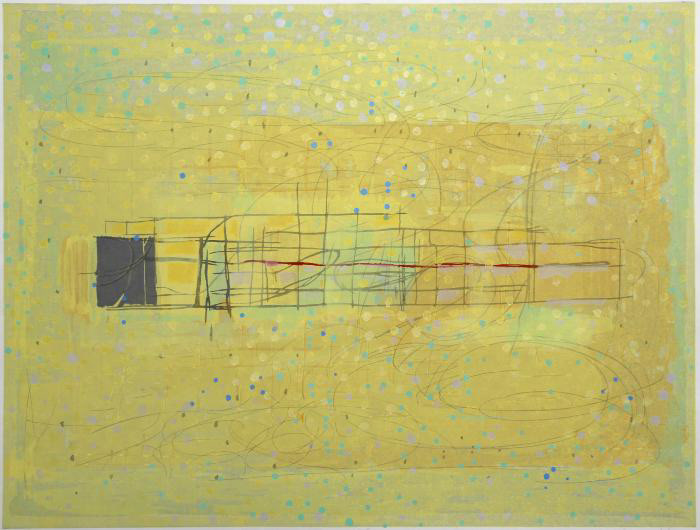
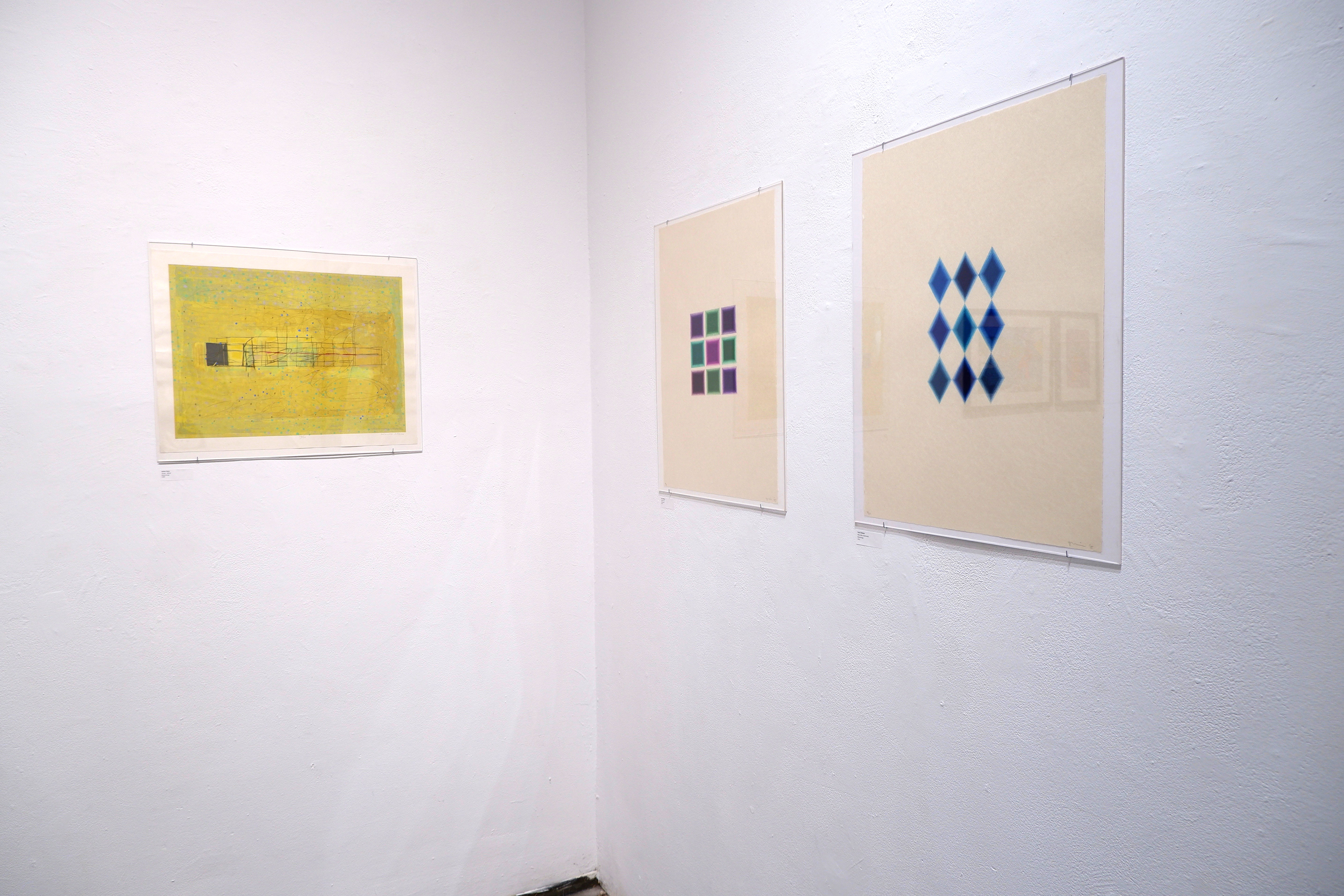
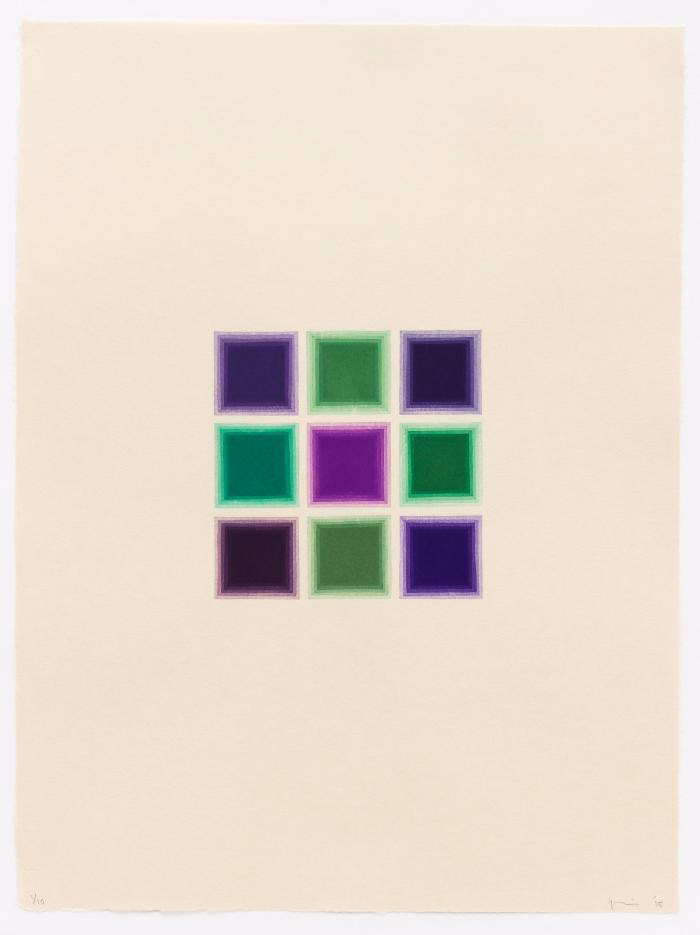
Between Worlds explores the expansion of traditional Japanese
woodblock printing (mokuhanga) from Japan into the global world of
contemporary art. Organized by the Mokuhanga Sisters and the Kentler
International Drawing Space, the exhibition presents contemporary
examples of this environmentally sustainable printmaking process.
The Mokuhanga Sisters, a print collective of nine women, met at the
Mokuhanga Innovation Laboratory (MI-LAB) between 2017-2019 and forged
friendships through their practice of mokuhanga. These artists have
invited their teachers, students, and community members to honor the
past and explore the future of mokuhanga.
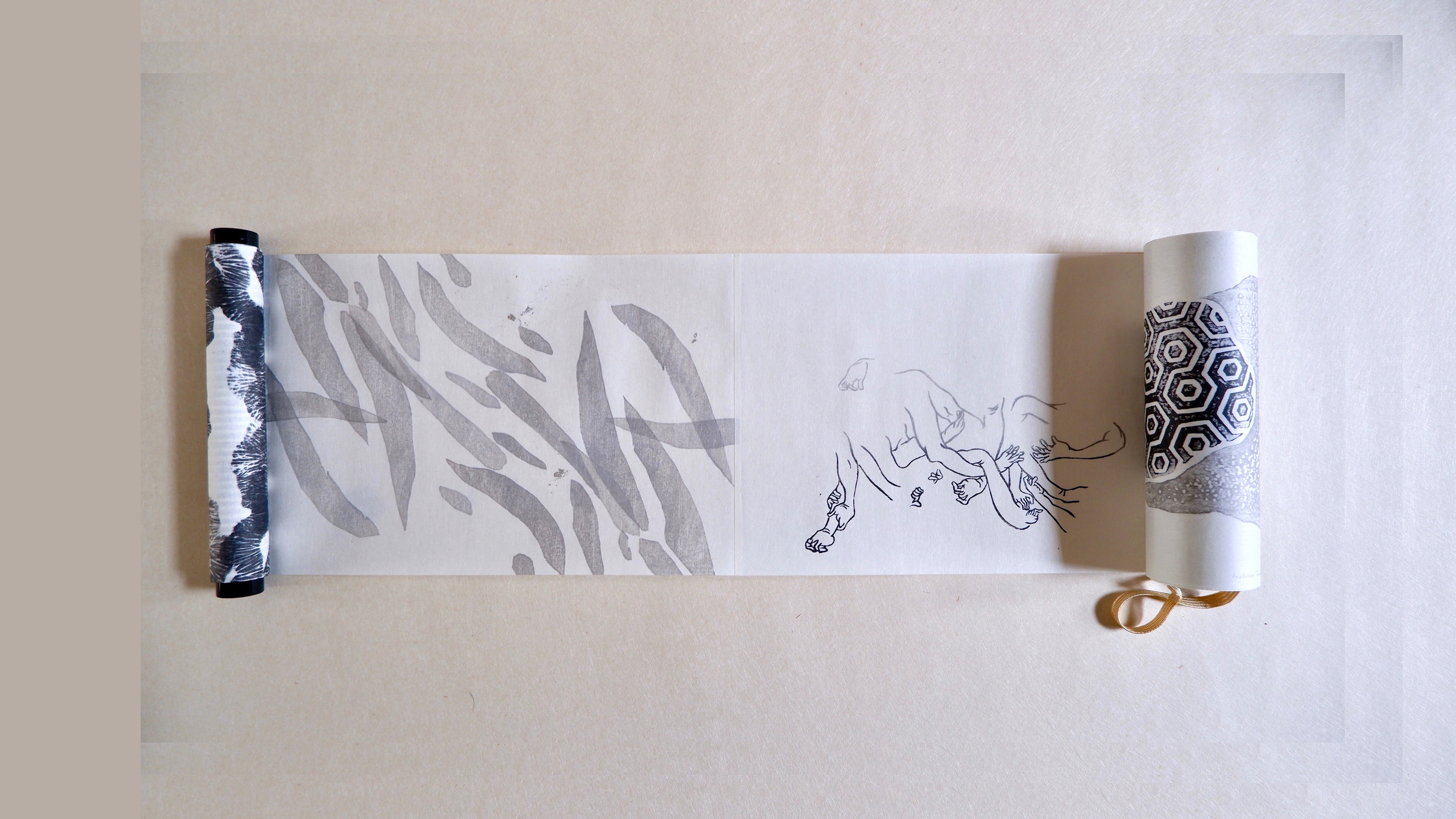
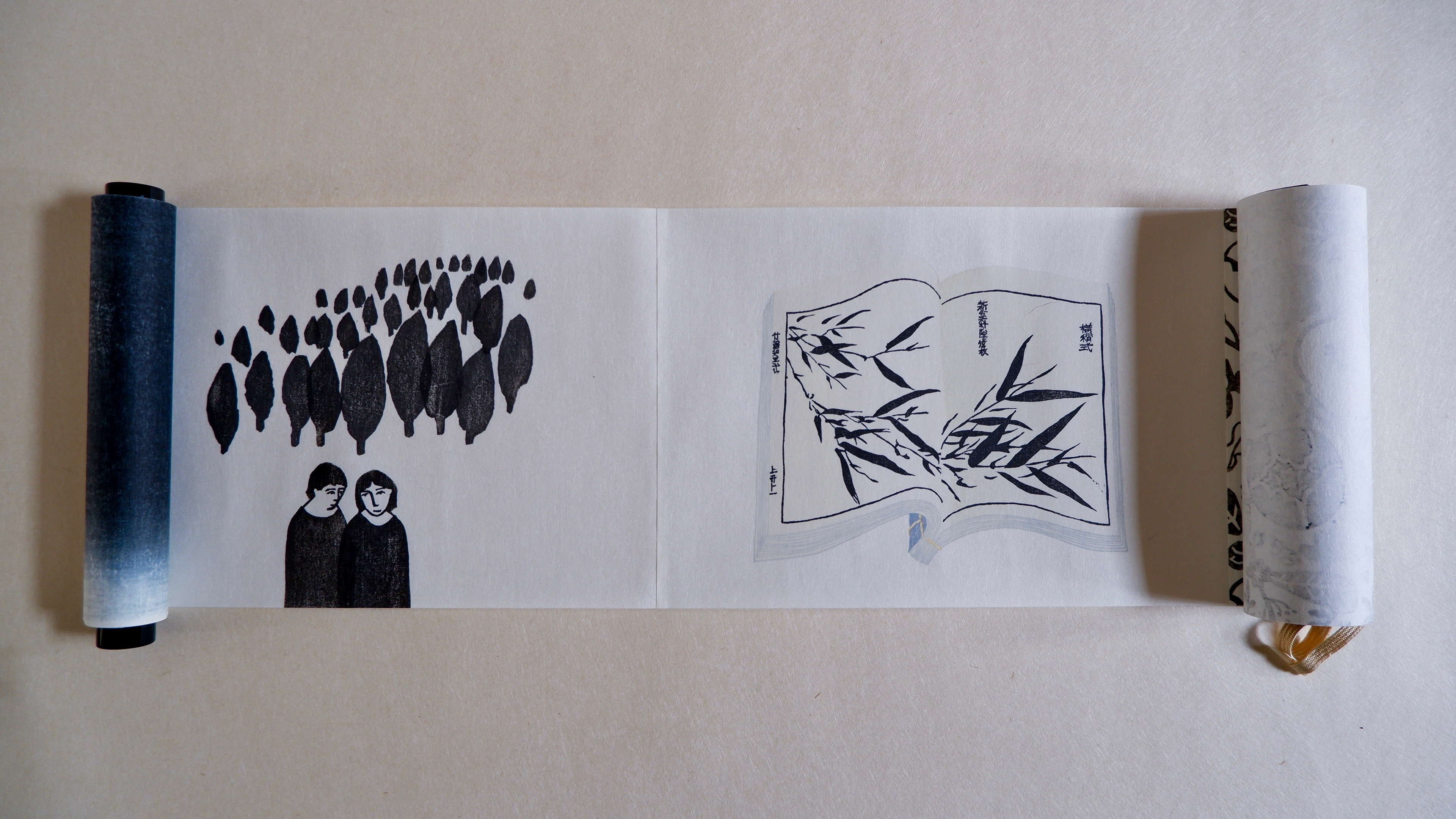
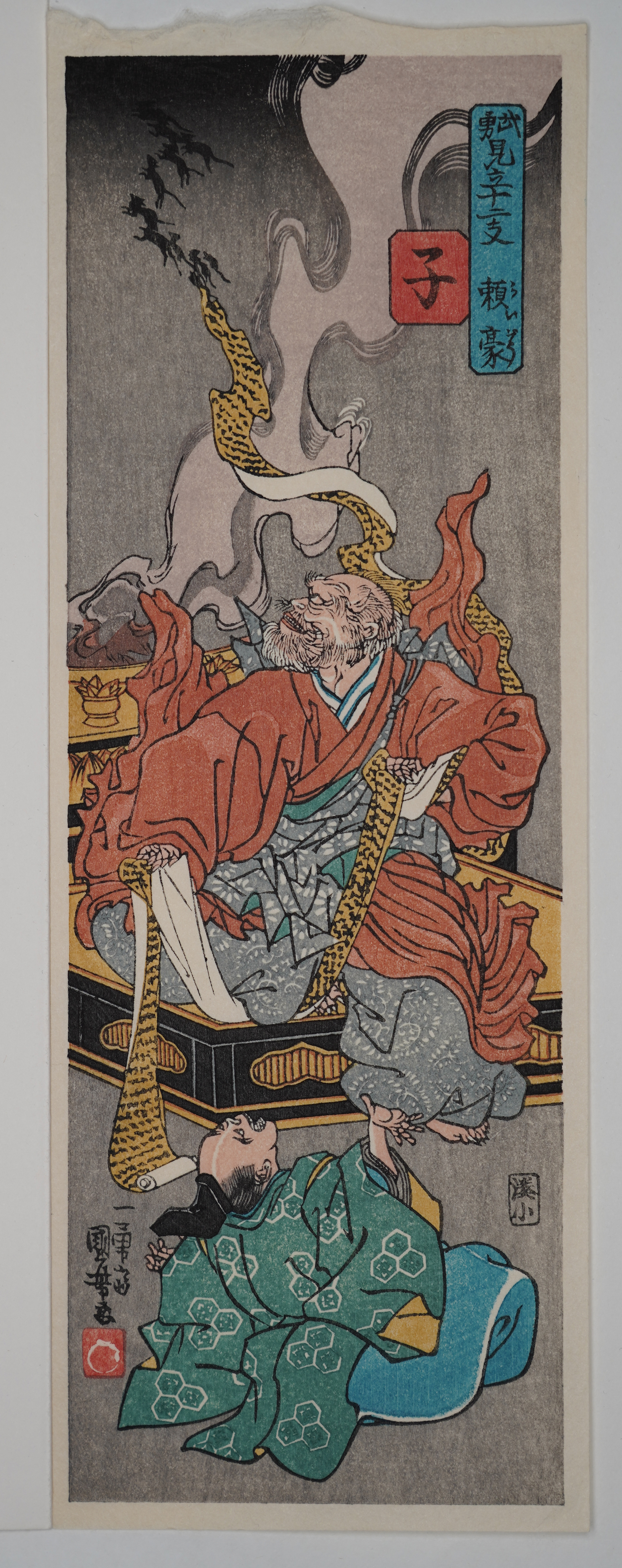
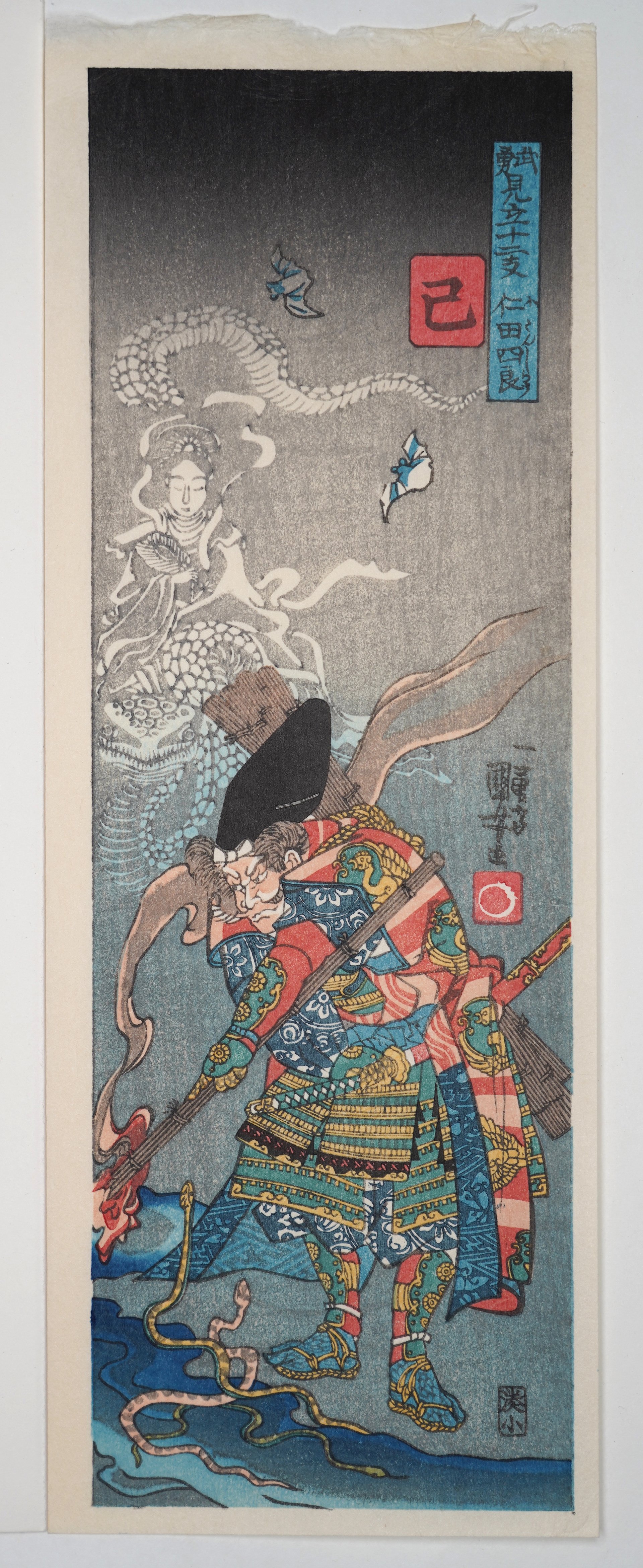
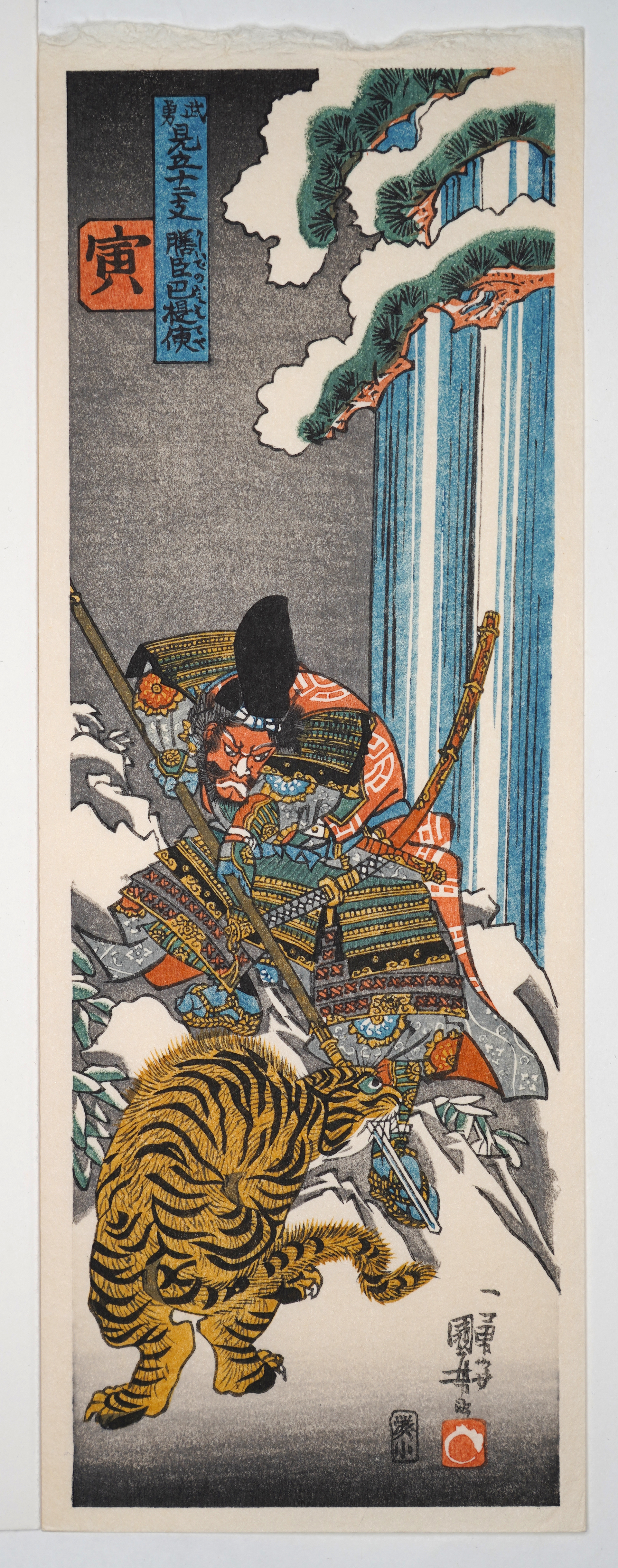
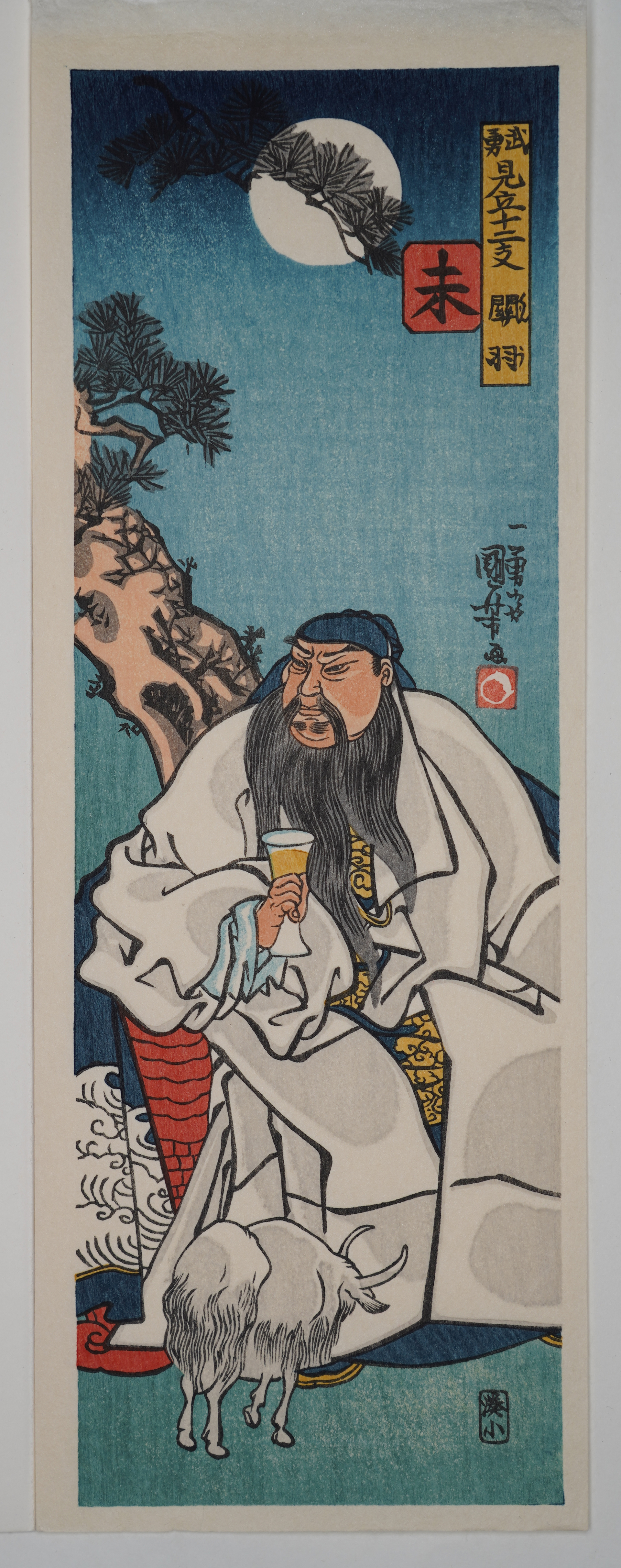
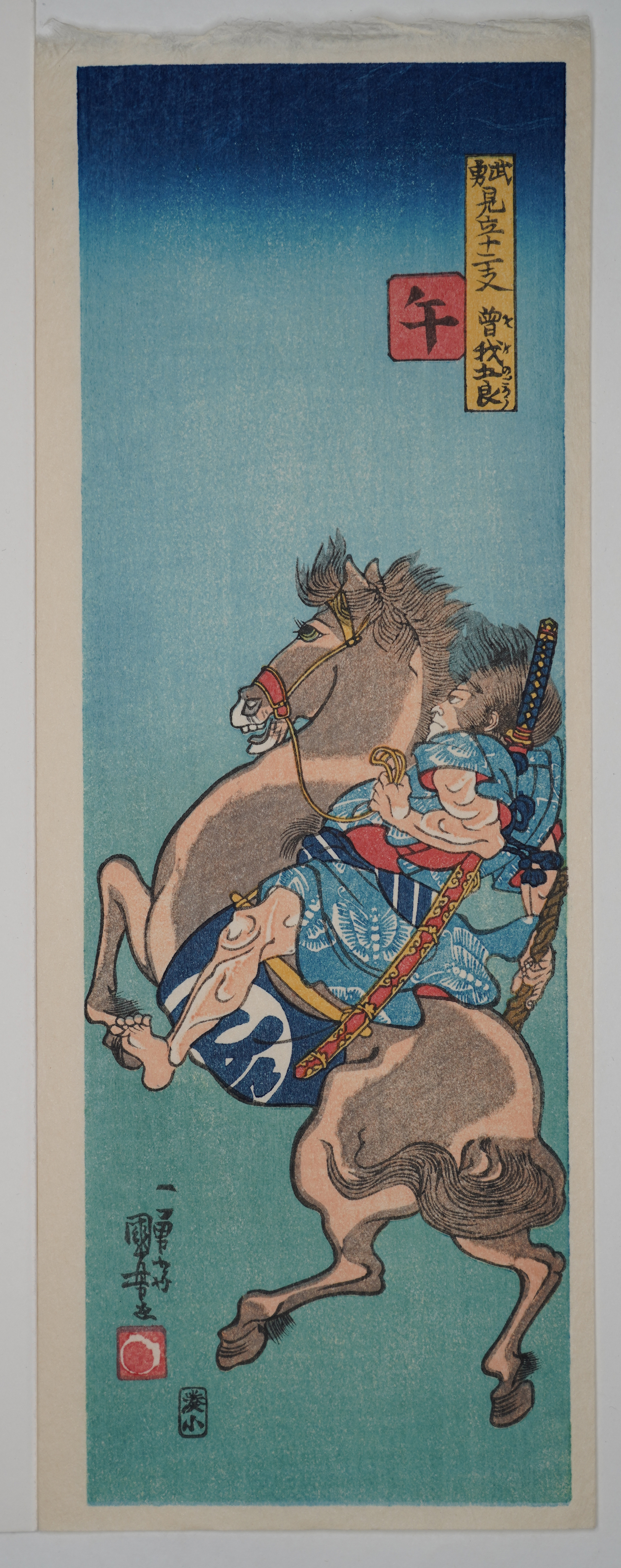
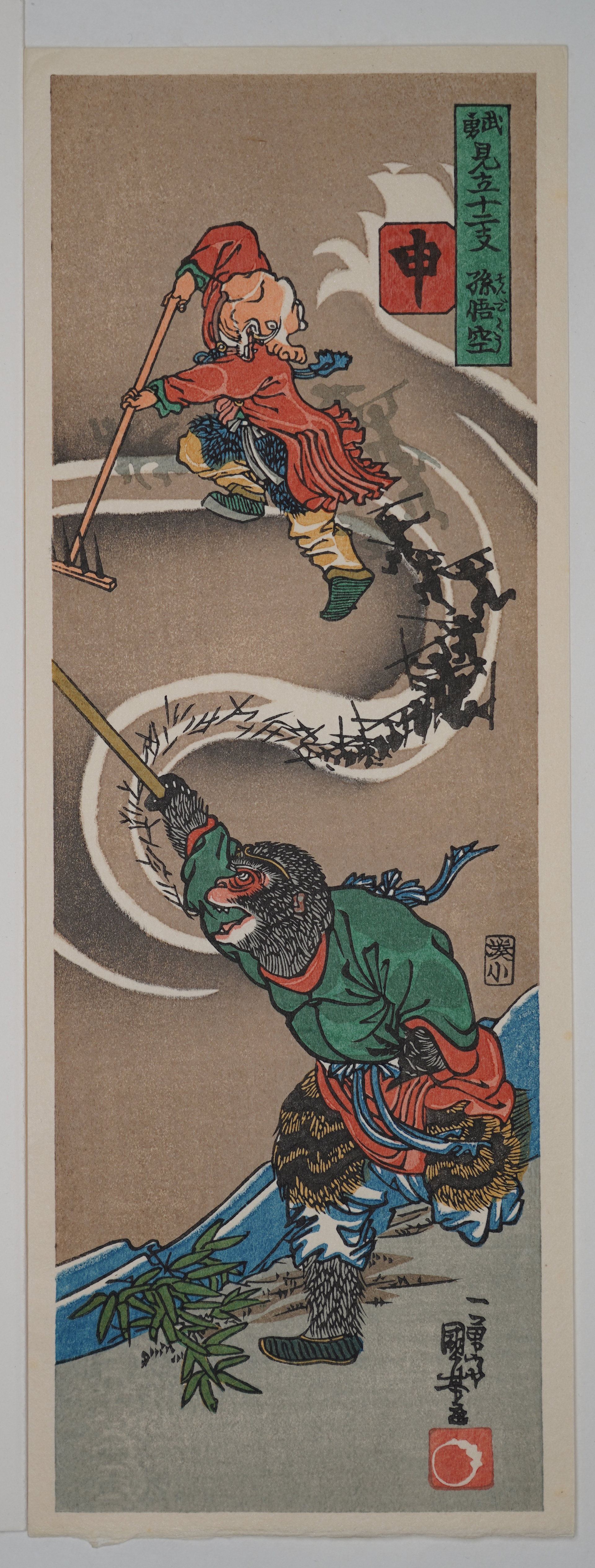
Mokuhanga literally translates to “wood print” in Japanese. It
originated in China and developed into a popular art form during the
Edo Period (1603-1867). These ukiyo-e prints were profoundly
influential on European artists in the 1800s. Though a traditional
medium, ukiyo-e thrives on innovation, and has influenced both
Japanese and global traditions.
Traditional Training
During the Edo period, craftspeople trained in an apprenticeship
system where prints were produced in separate carving and printing
studios. Accomplished artisans passed down their evolving knowledge so
the process has accumulated subtle changes over the years. Both
Shoichi Kitamura and Kyoko Hirai trained this way.
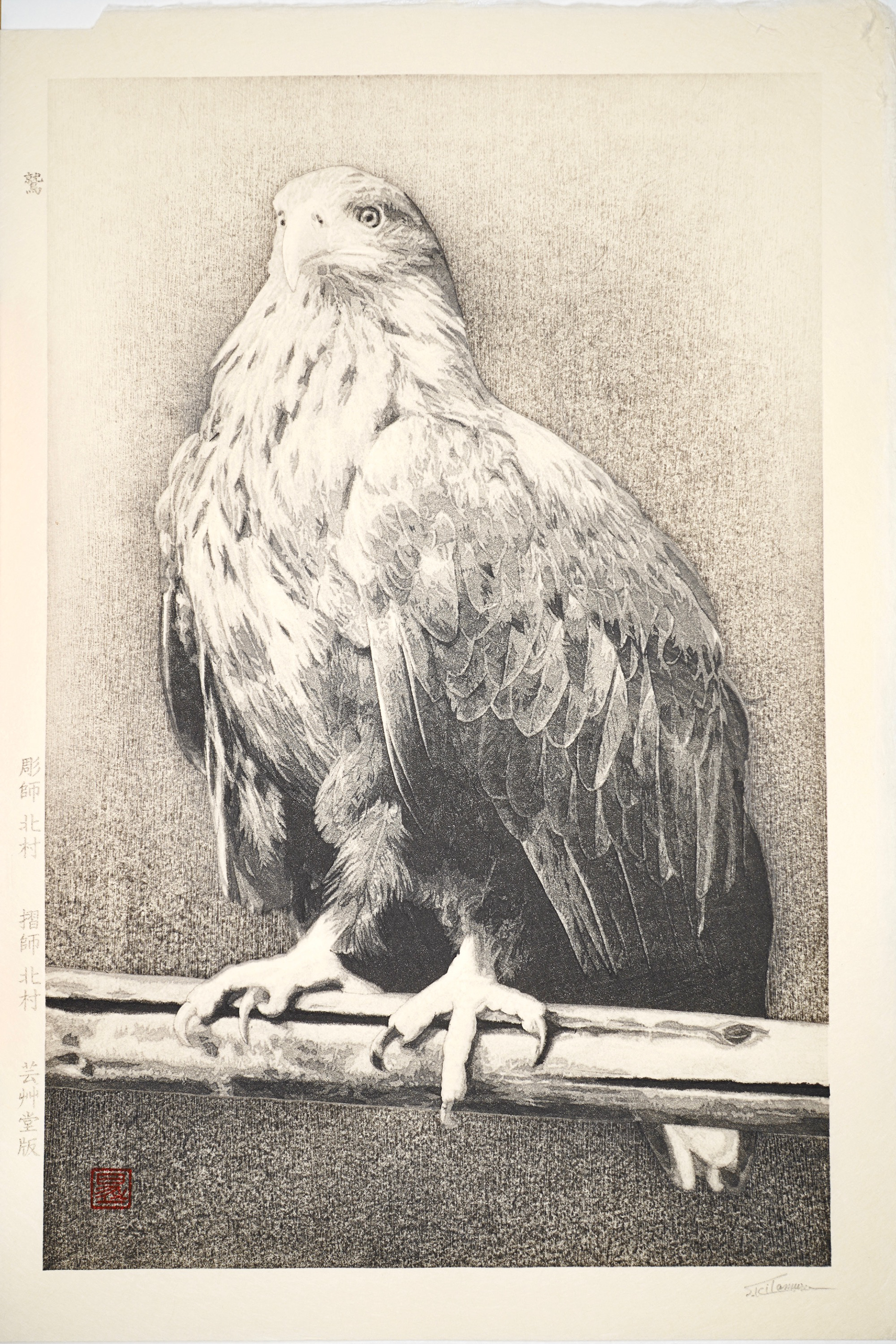
Shoichi Kitamura learned by working in a traditional carving studio
alongside a master carver. His techniques in carving contemporary
ukiyo-e prints and the development of his own artistic expression can
be seen in his work Eagle, where he reproduces a photographic image
using layers of sumi ink.
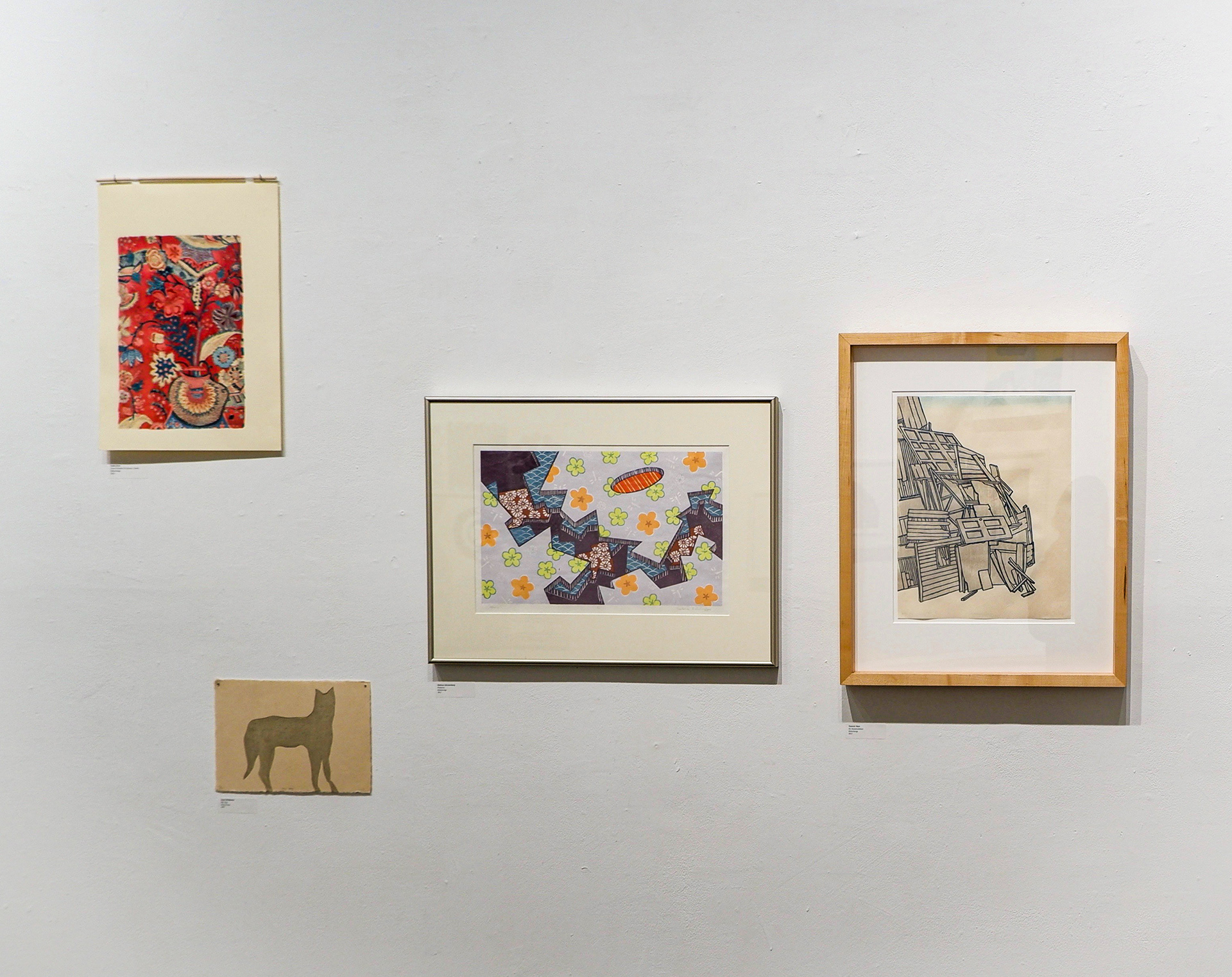
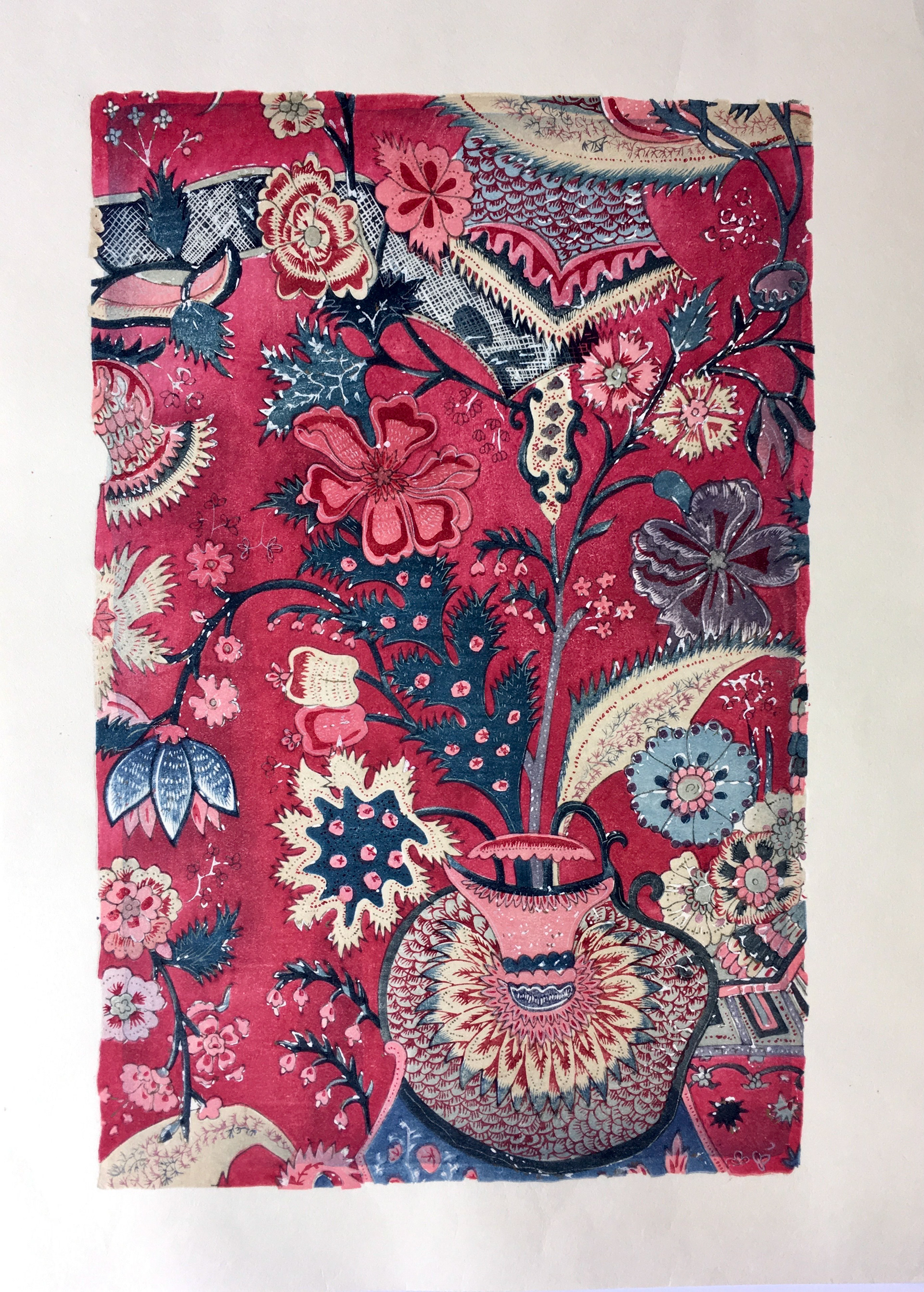
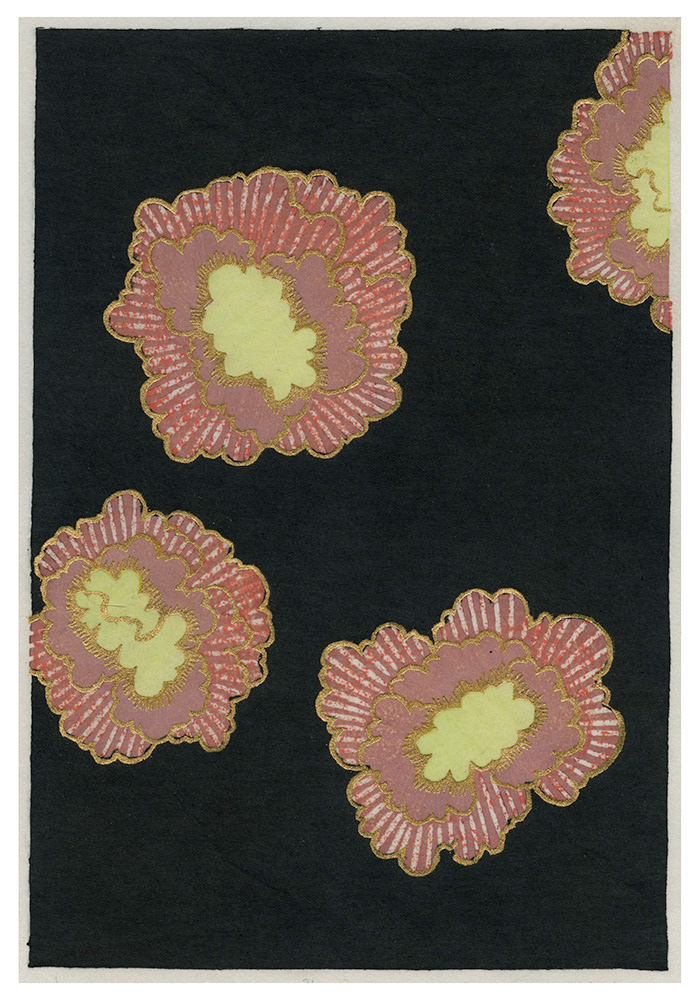
Kyoko Hirai’s Kawatari Kin Sarasa, Textile, is an example of the
decorative catalogs that were printed in Kyoto at the end of the 19th
century. This style of printing imitated the complexity of richly
colored kimono fabrics. Hirai’s position as a master printer is unique
because the profession has historically been occupied exclusively by
men.
A Sense of Place
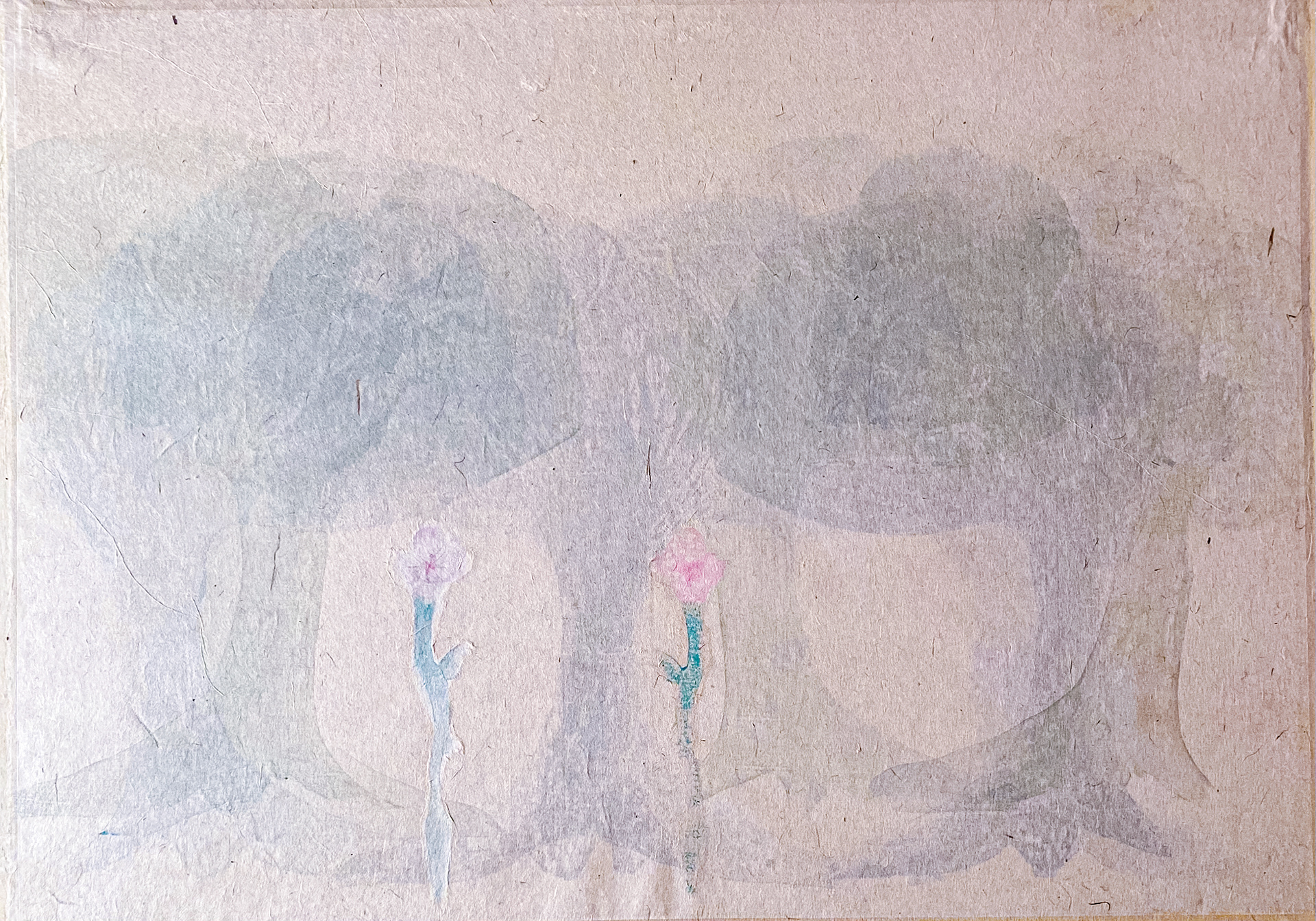
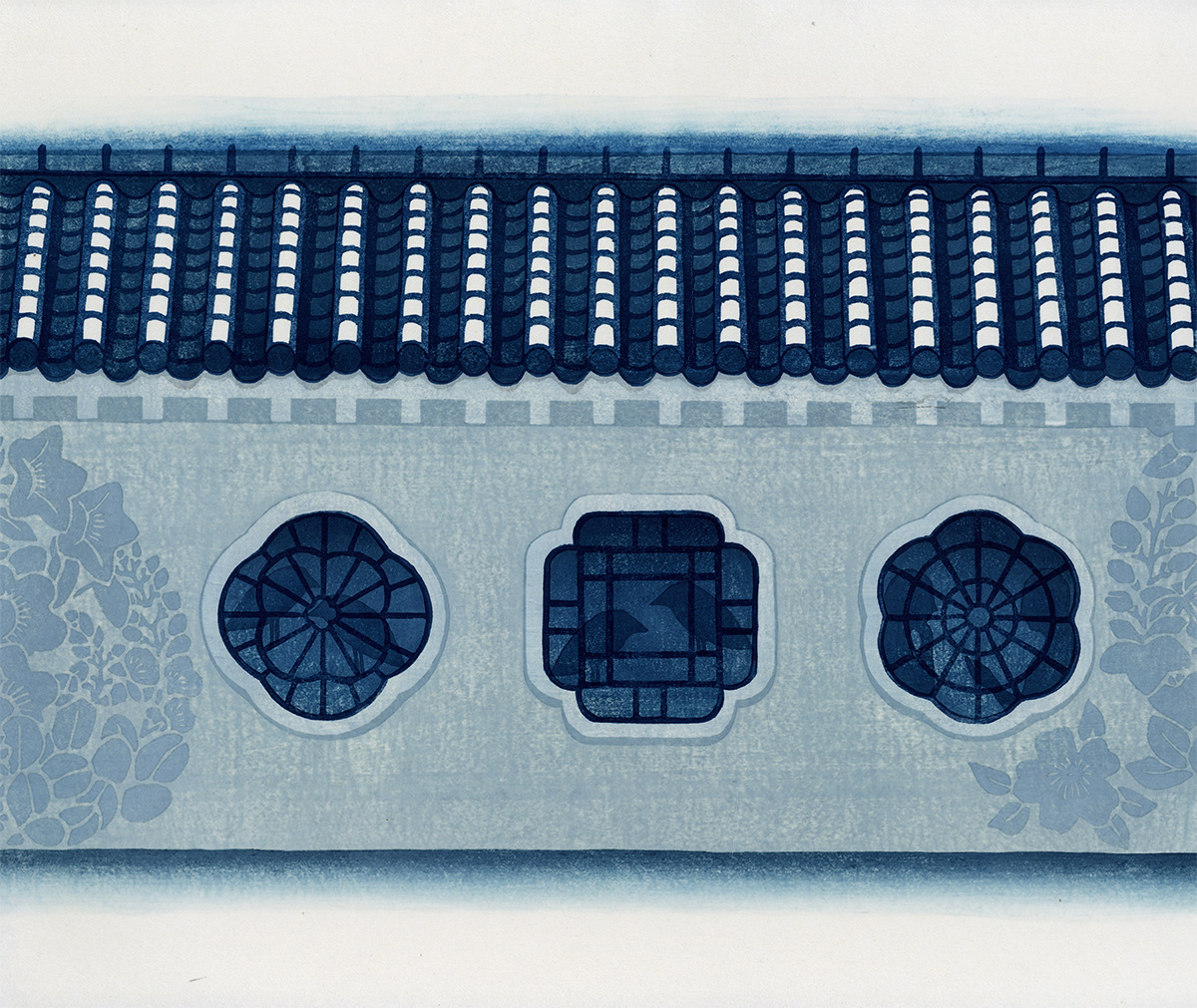
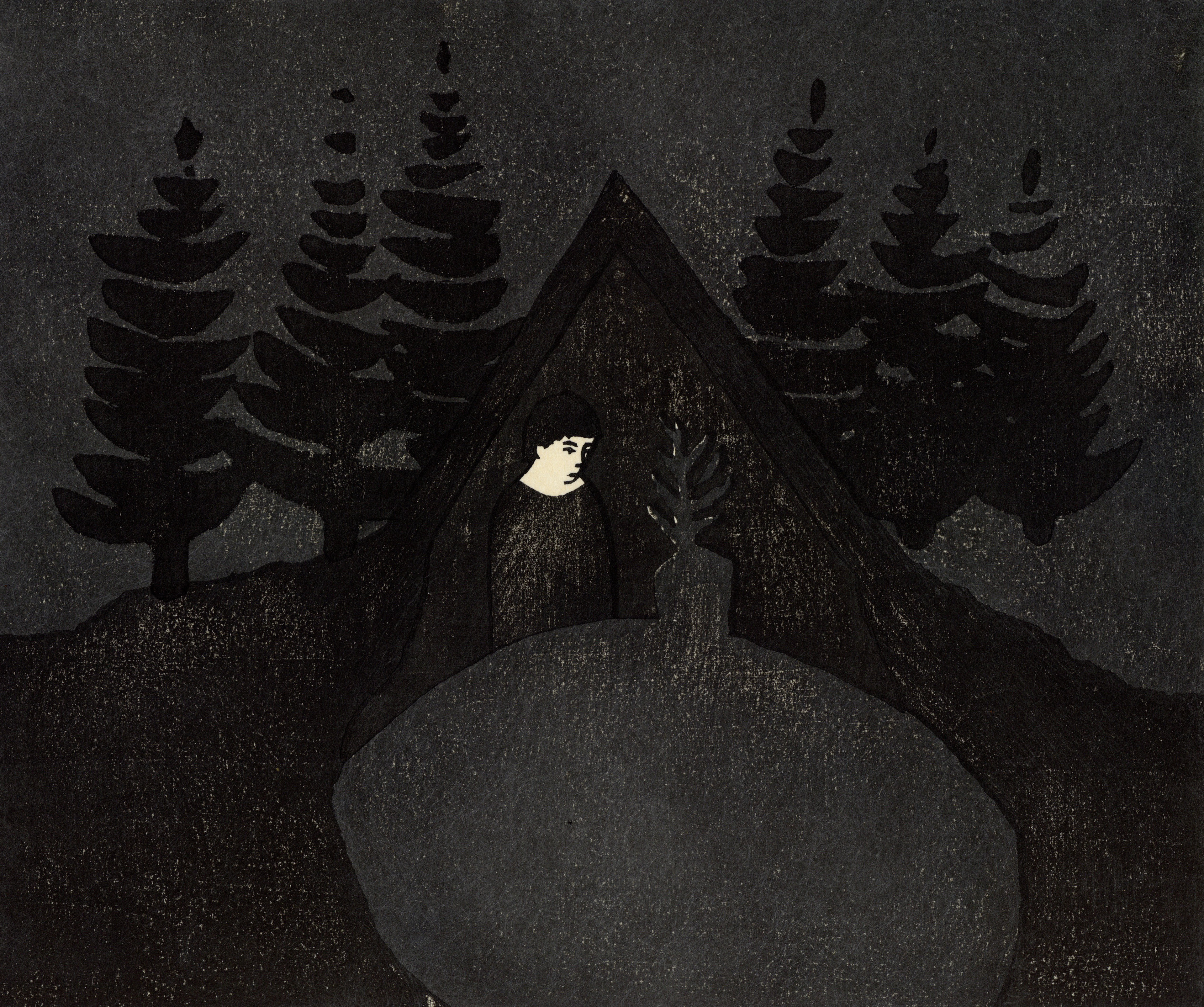
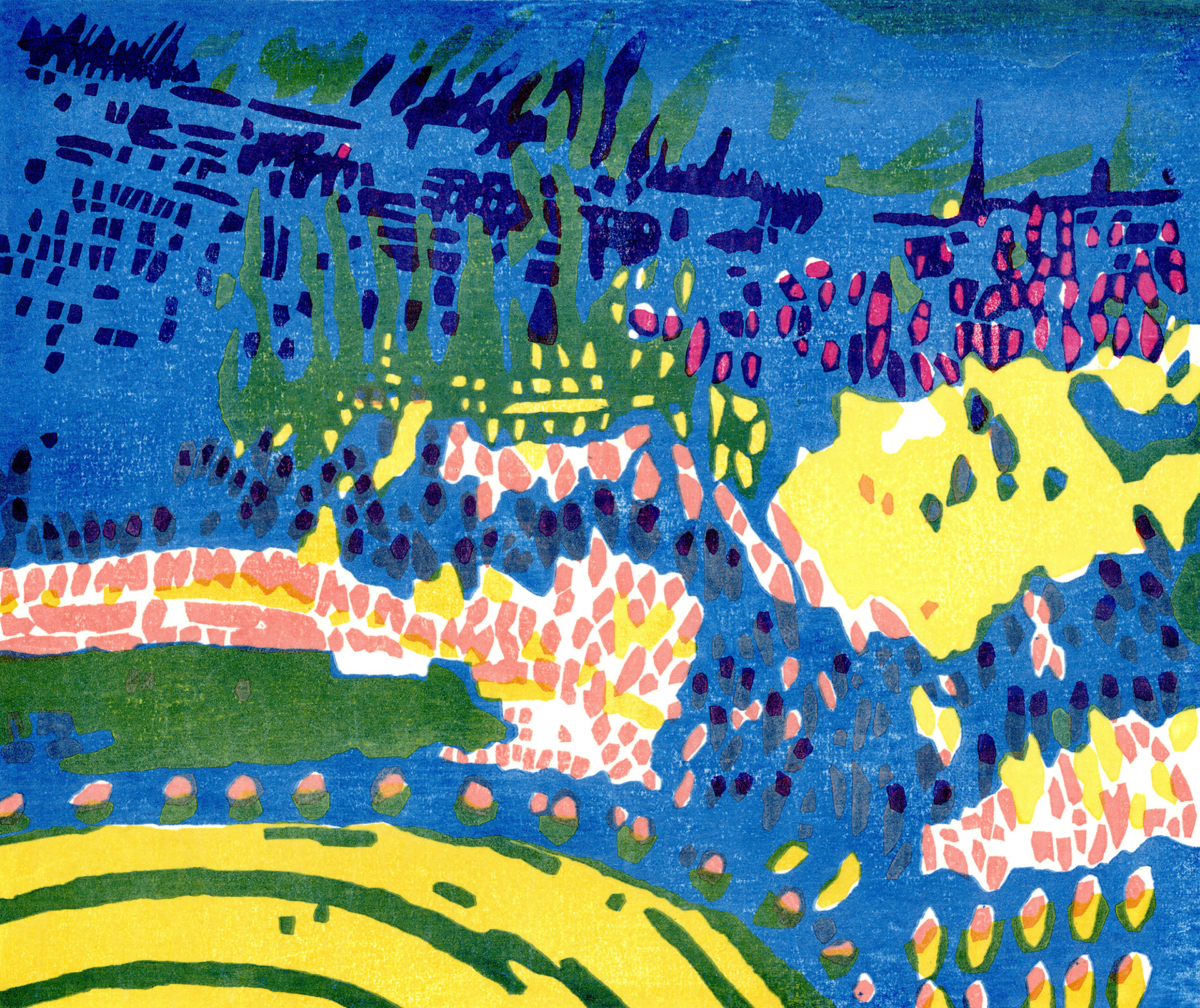
Katie Baldwin’s print Meeting Place (garden), completed during her
Fulbright fellowship in Taiwan, depicts the intimacy found within an
enclosed space she is observing, yet not part of. The pair of birds
echo the silhouette of the couple and the monochromatic image printed
in shades of blue is richly melancholy.
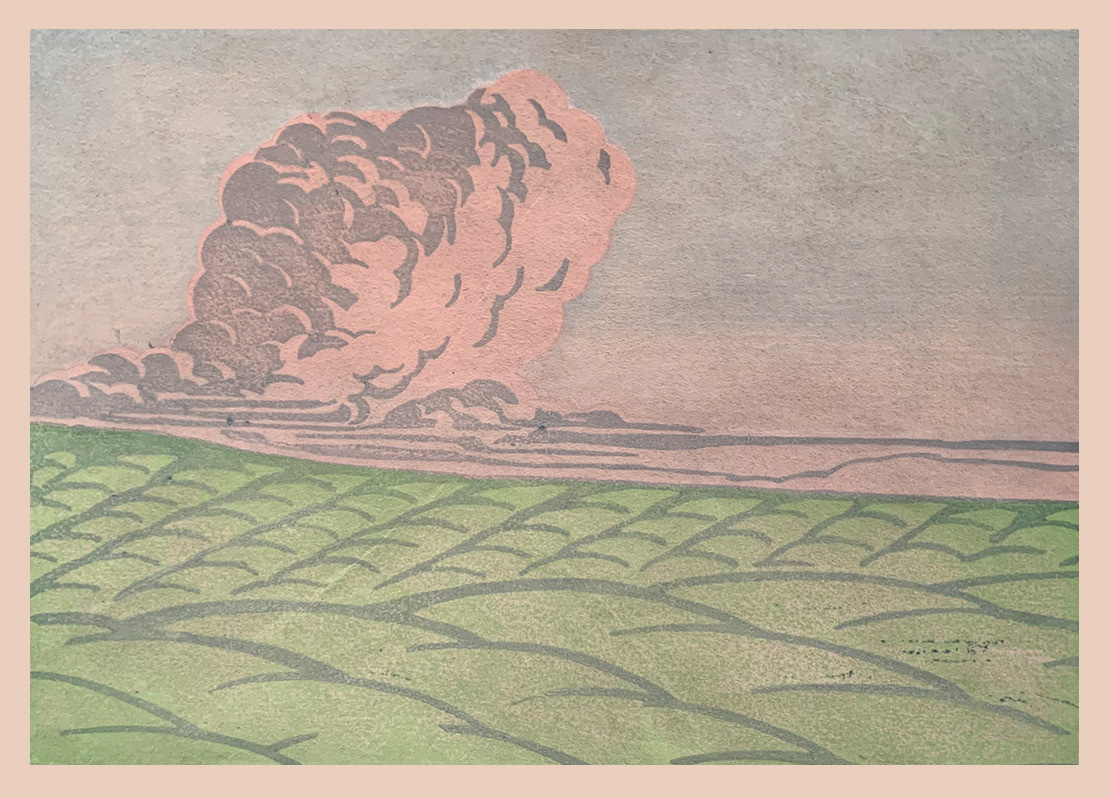
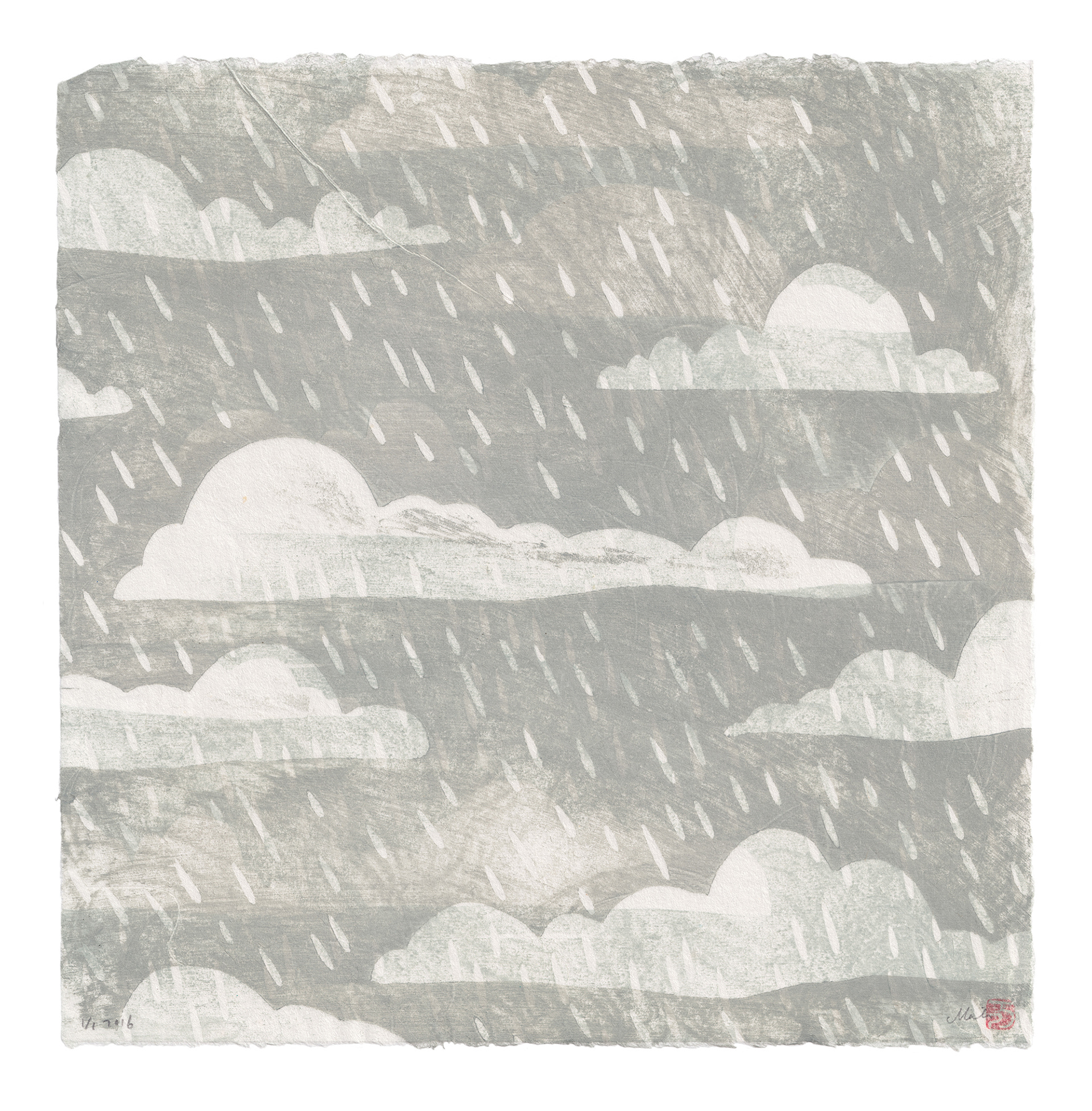
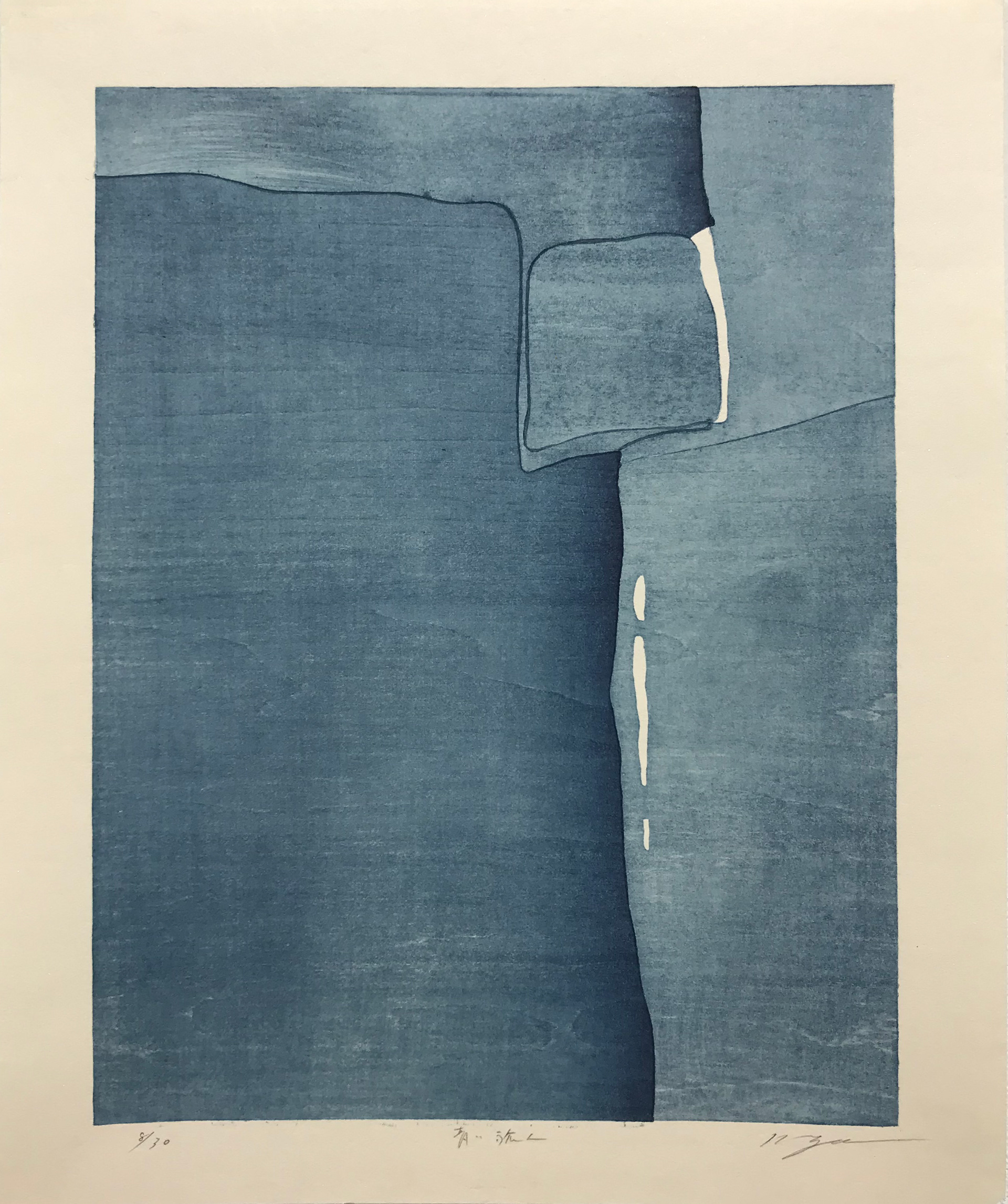
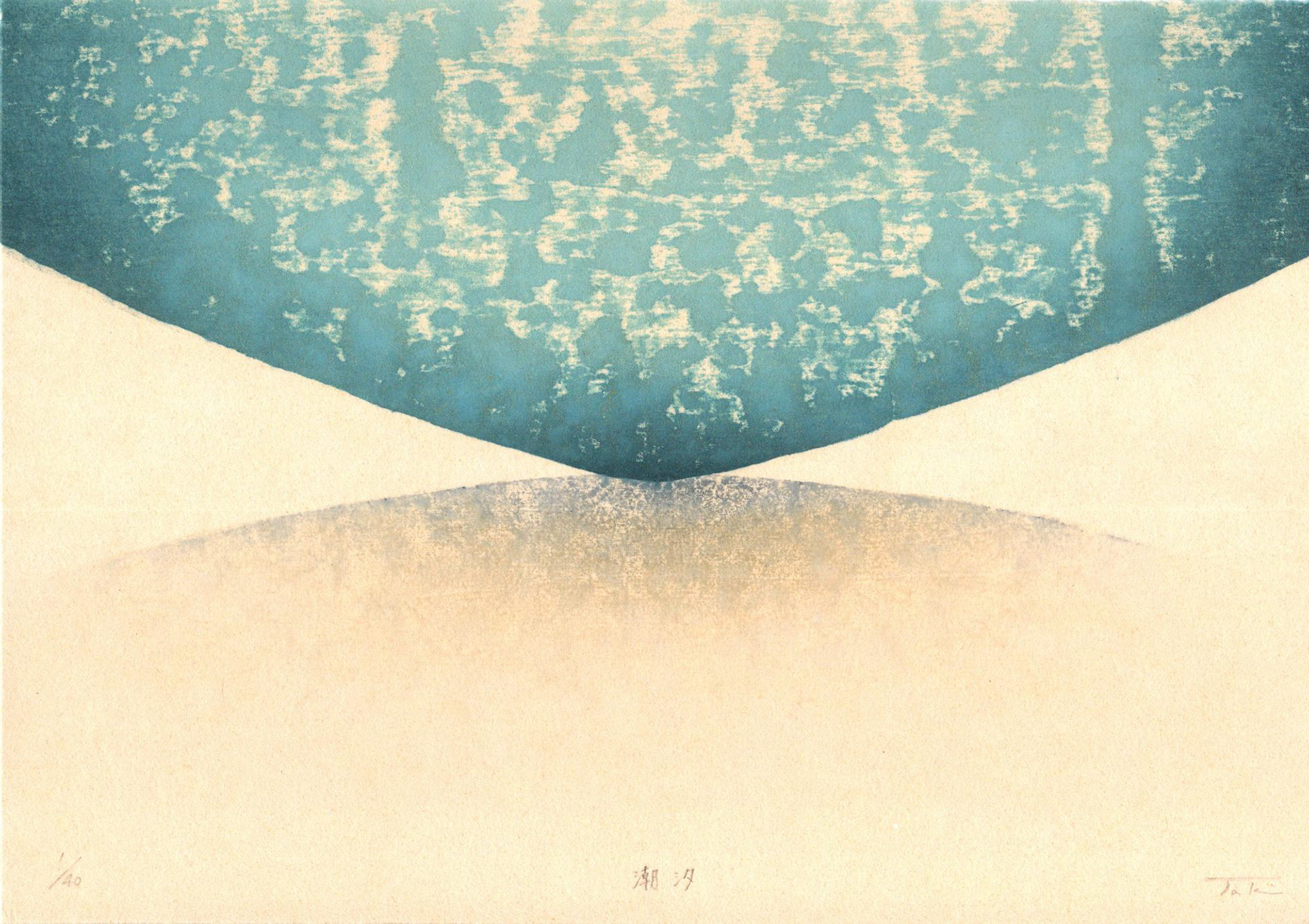
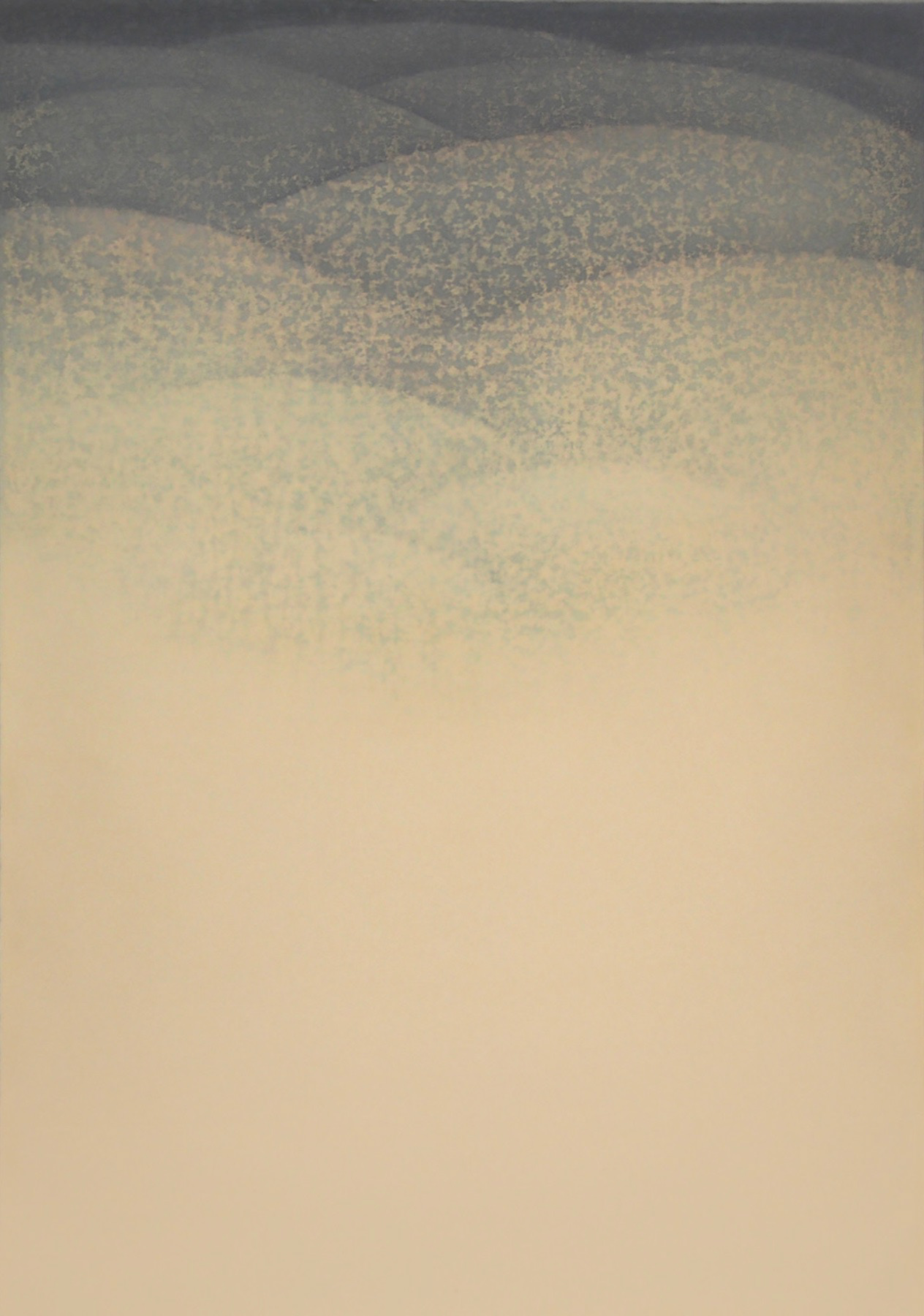
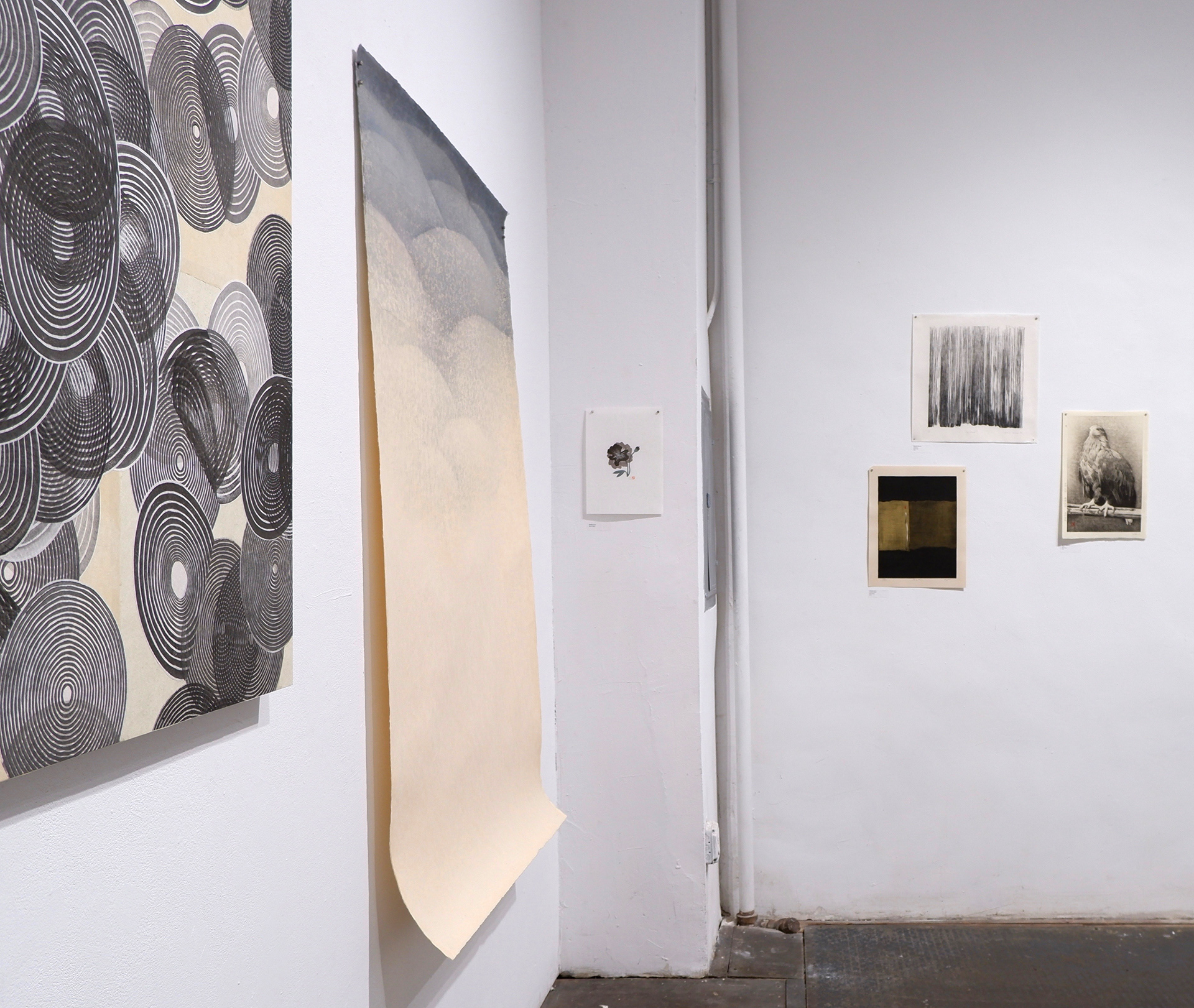
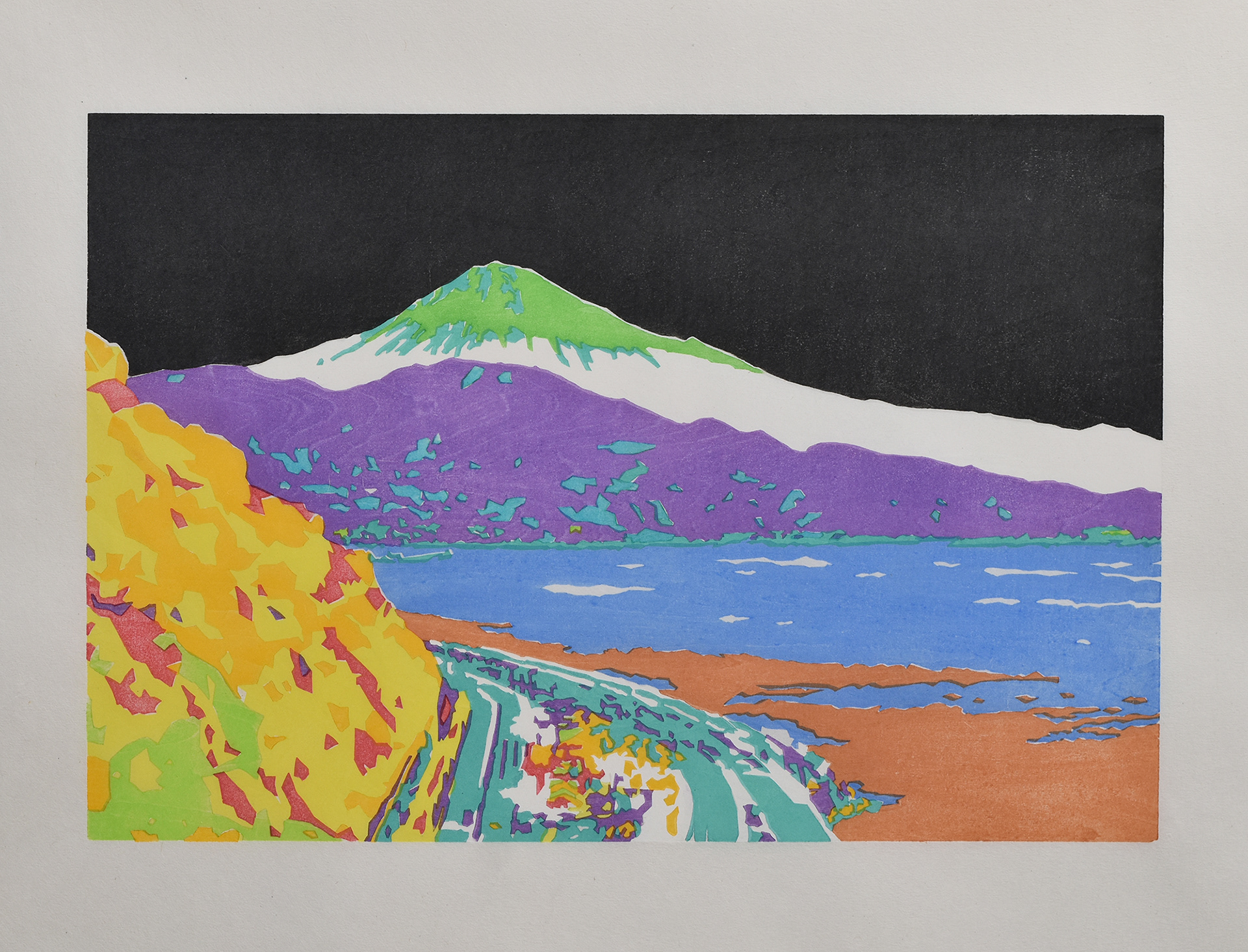
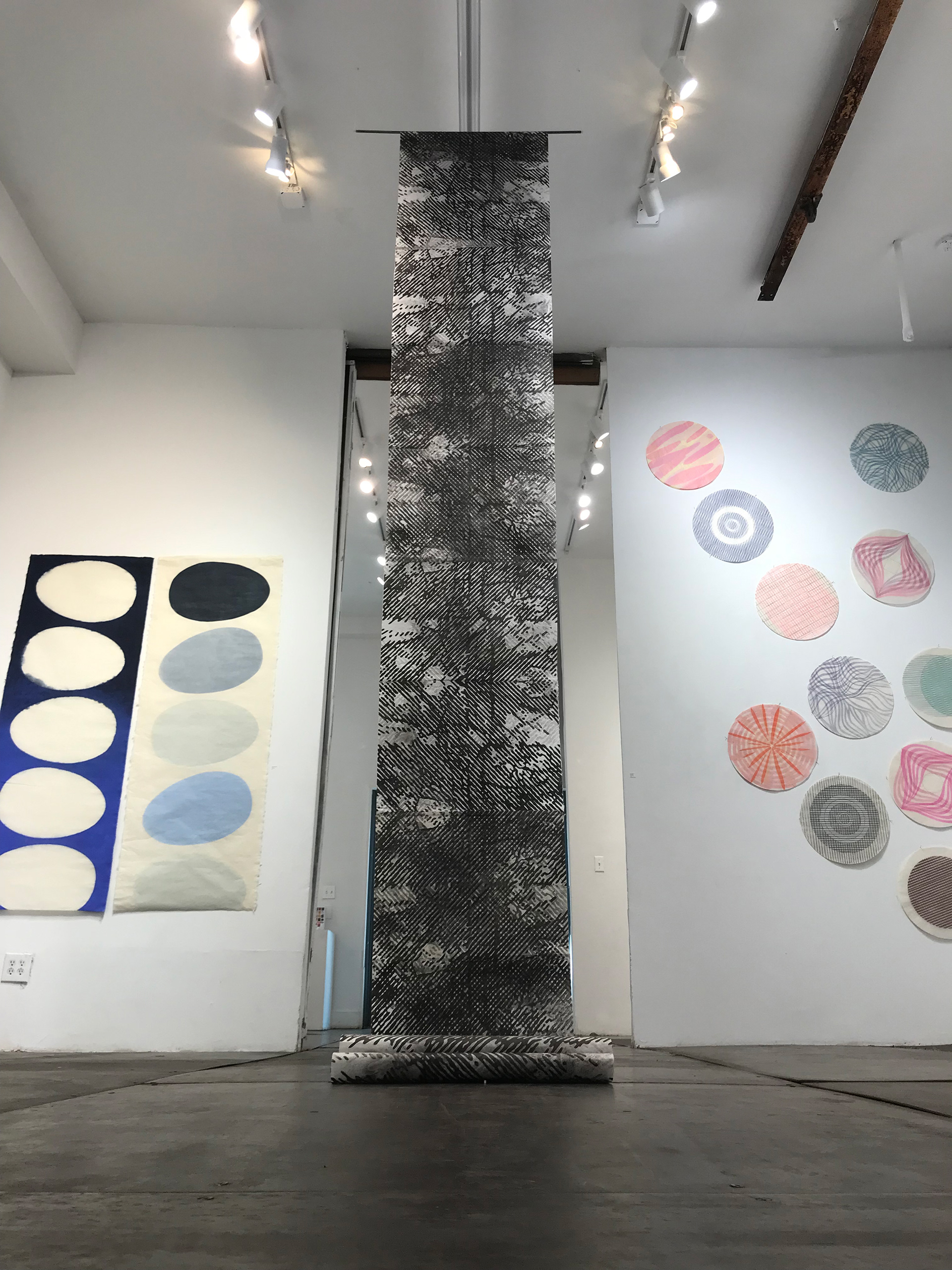
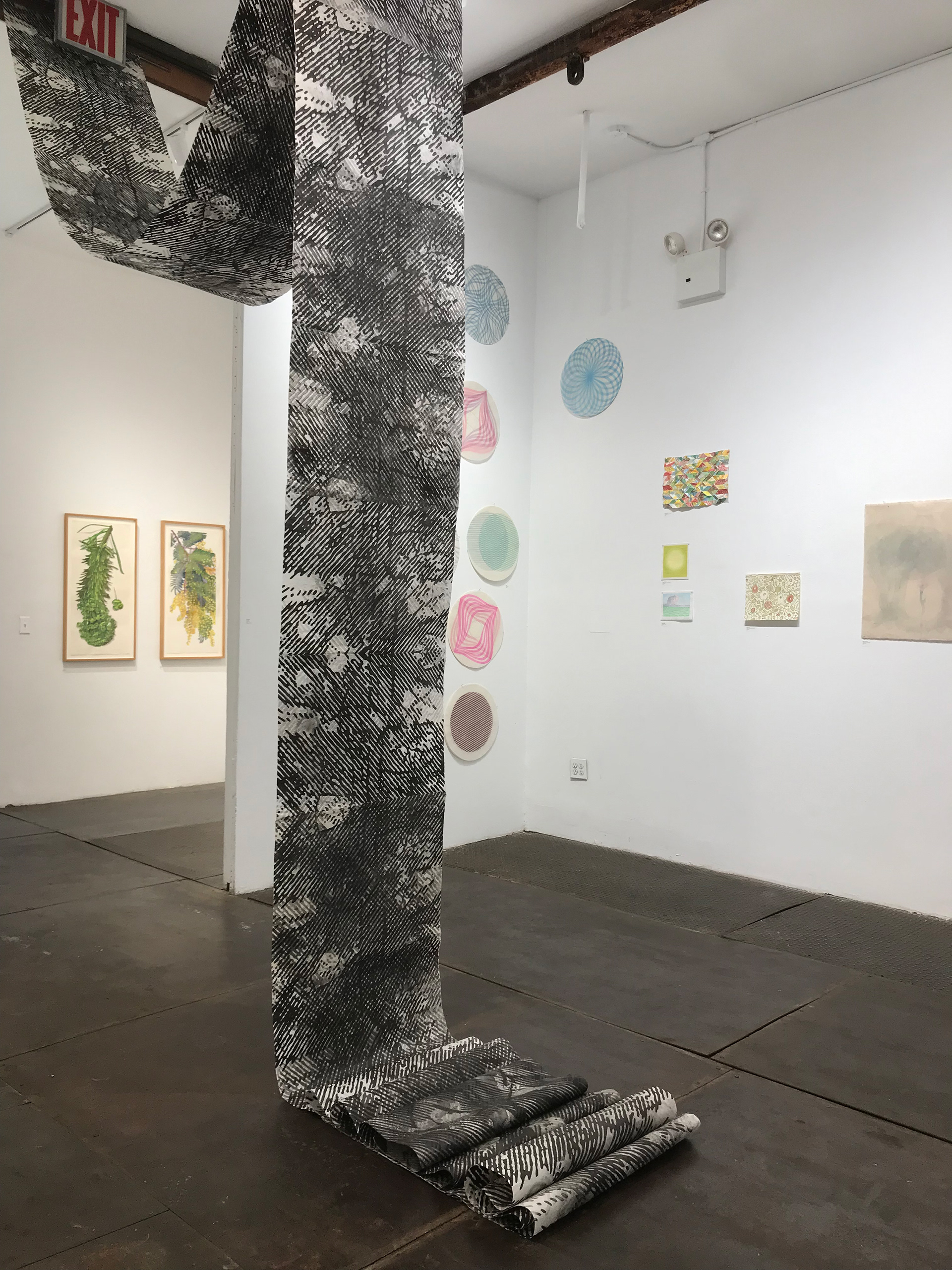
Chihiro Taki’s layered landscapes suggest a place for imagination and
contemplation where you can feel the weather. Taki’s
large-scale Walking Day shows the watery technique gomazuri, or sesame
seed printing, which creates a mottled texture, suggesting falling
rain.
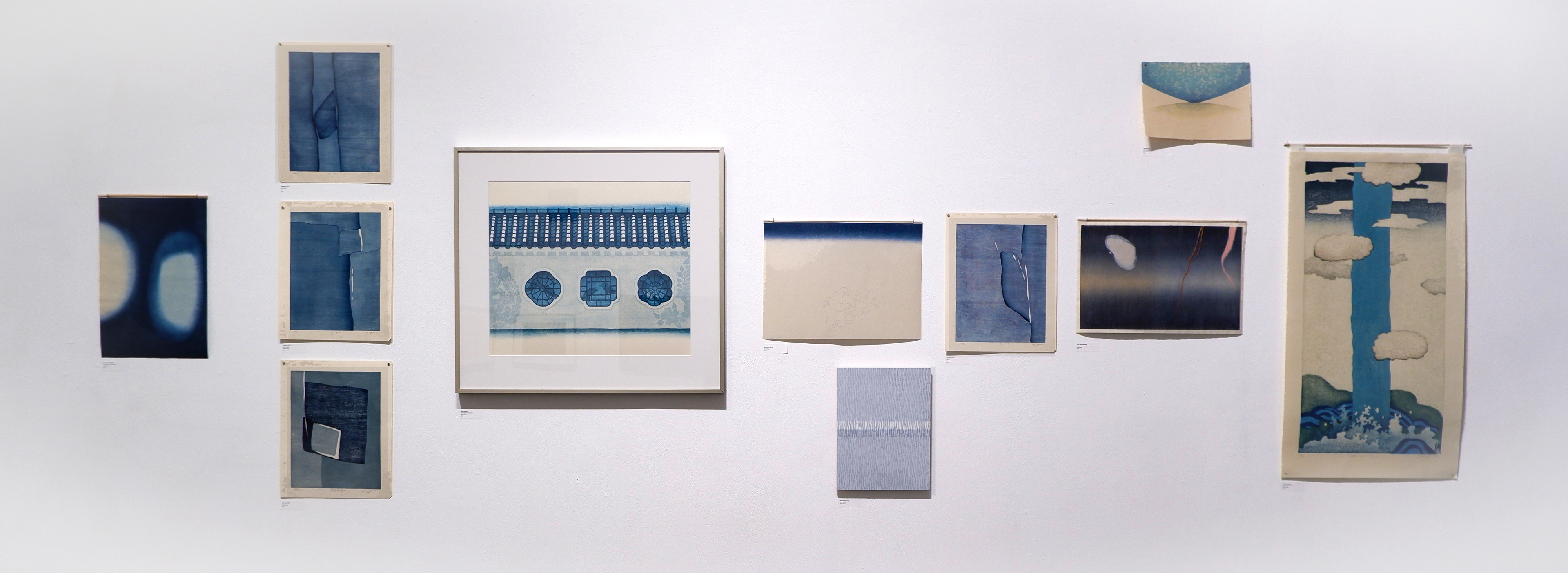
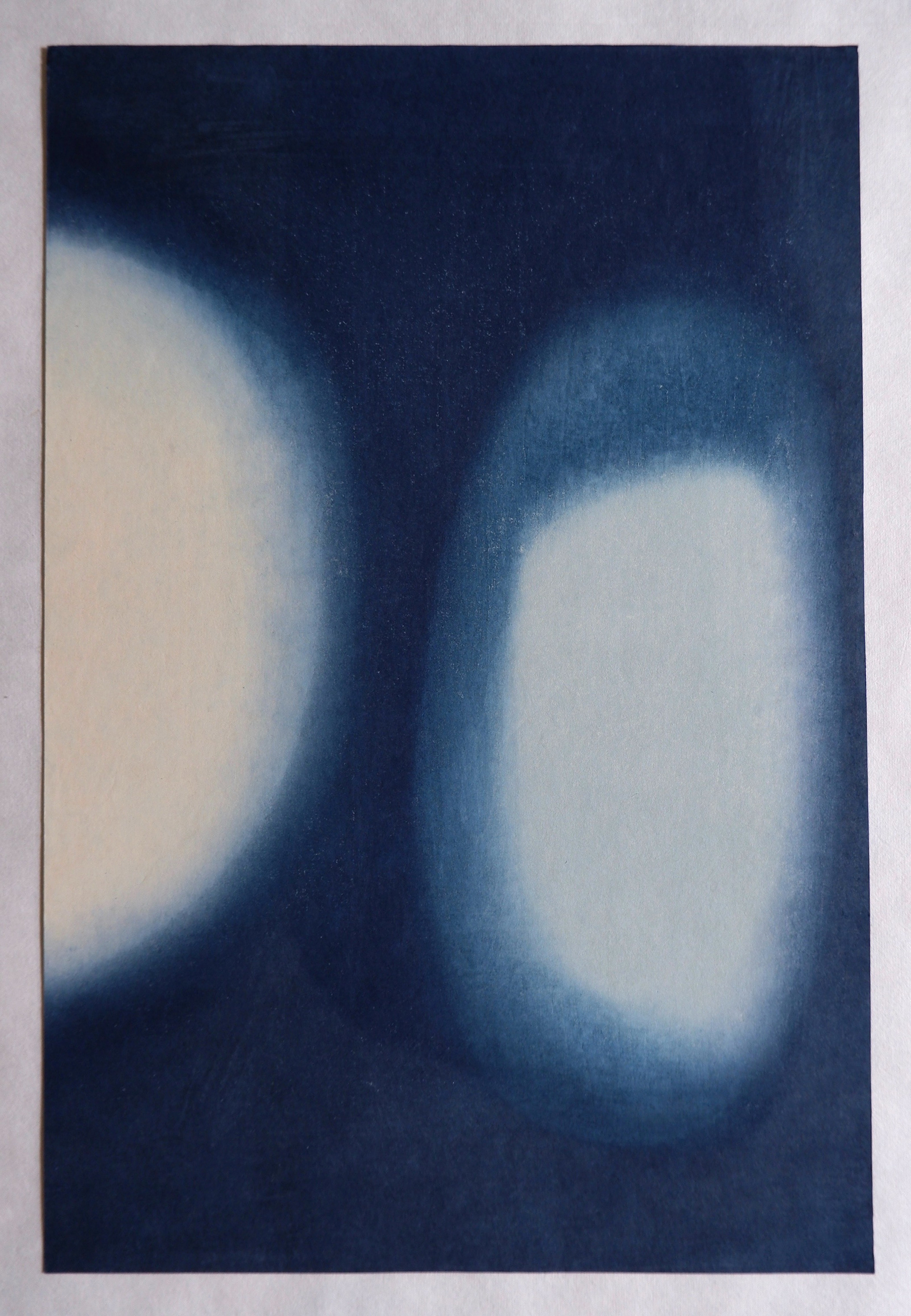
Lucy May Schofield’s bokashi gradation techniques use the same deep
blues as ukiyo-e prints, suggesting an escape to an imaginative
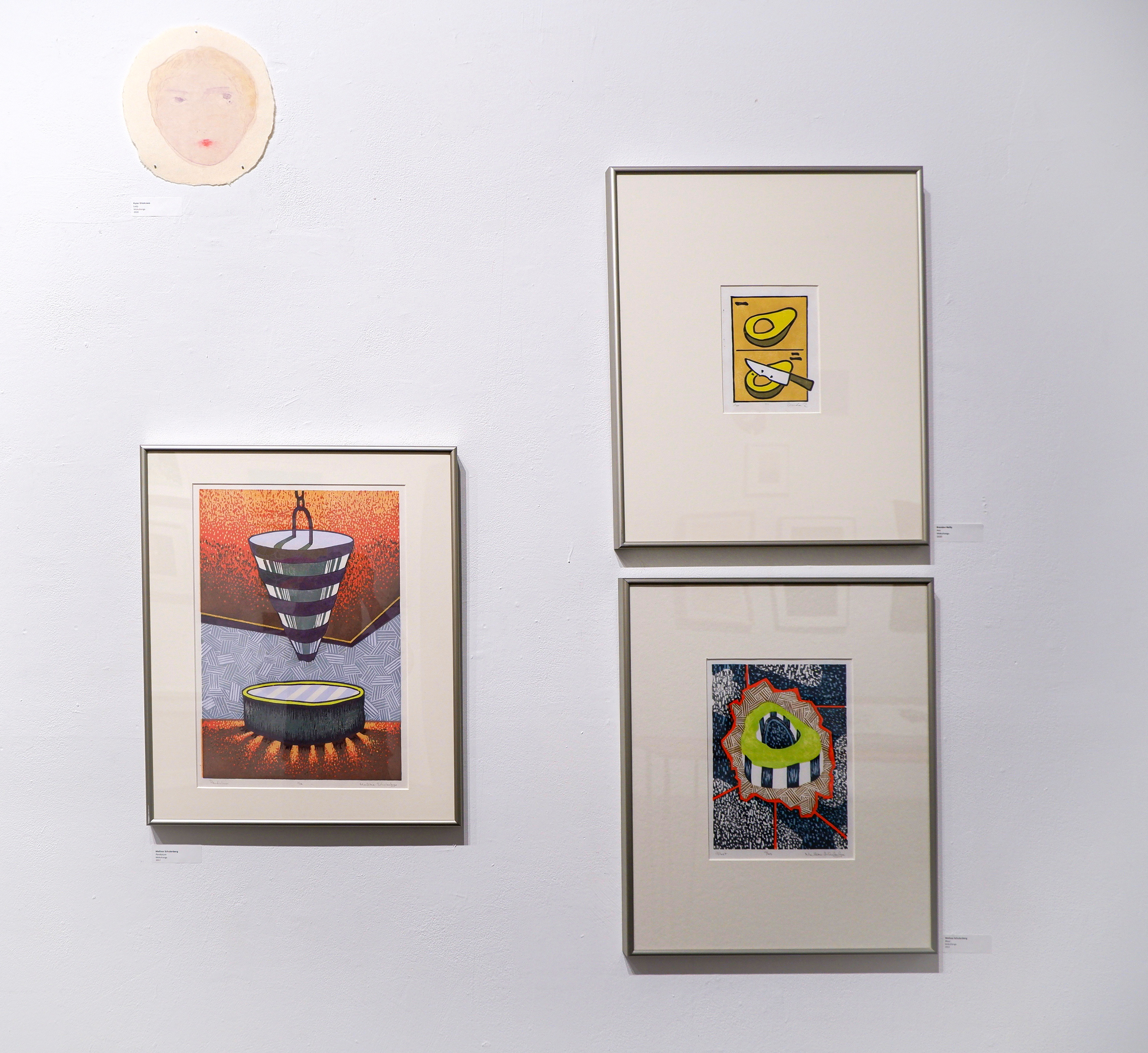
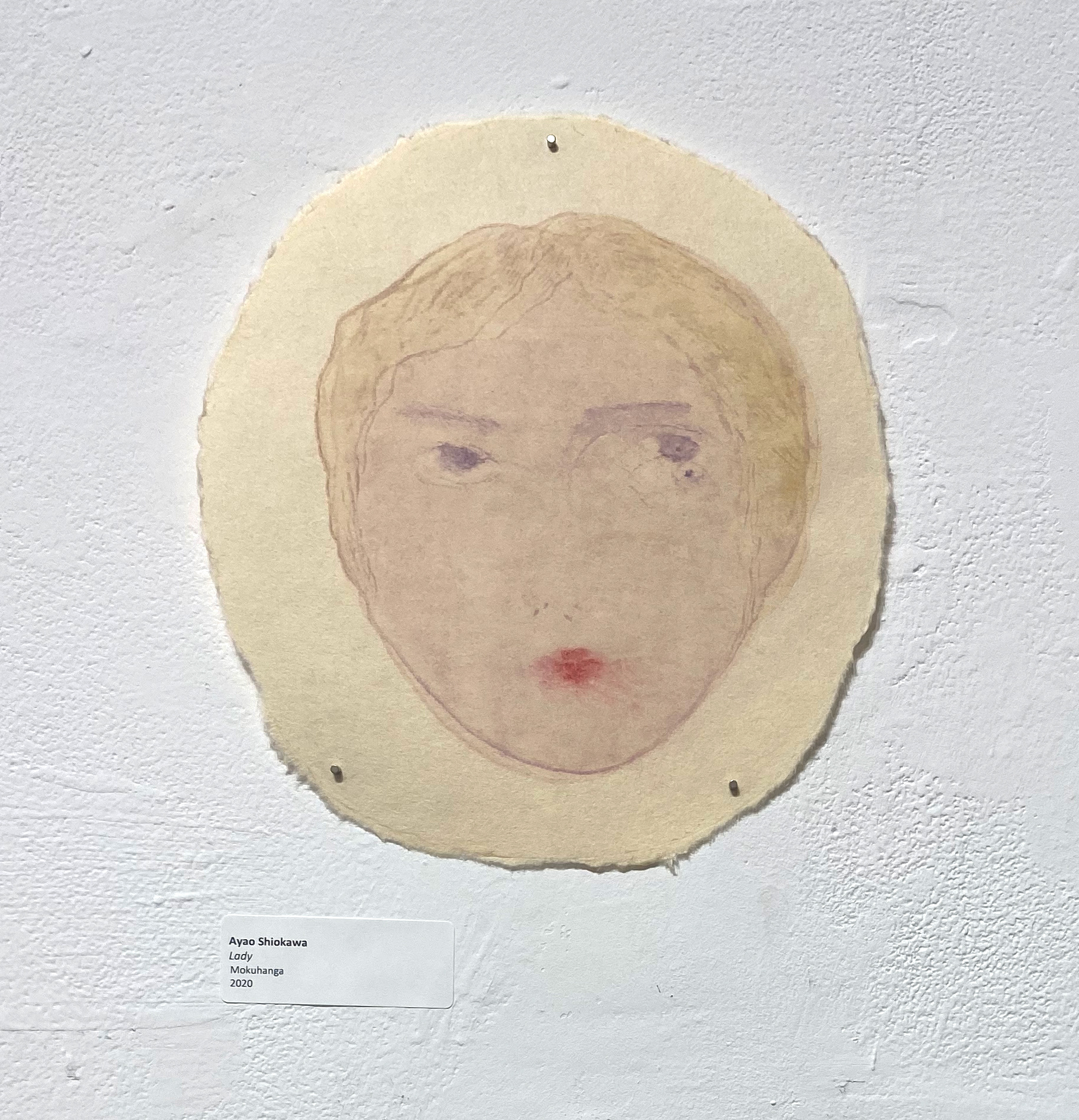
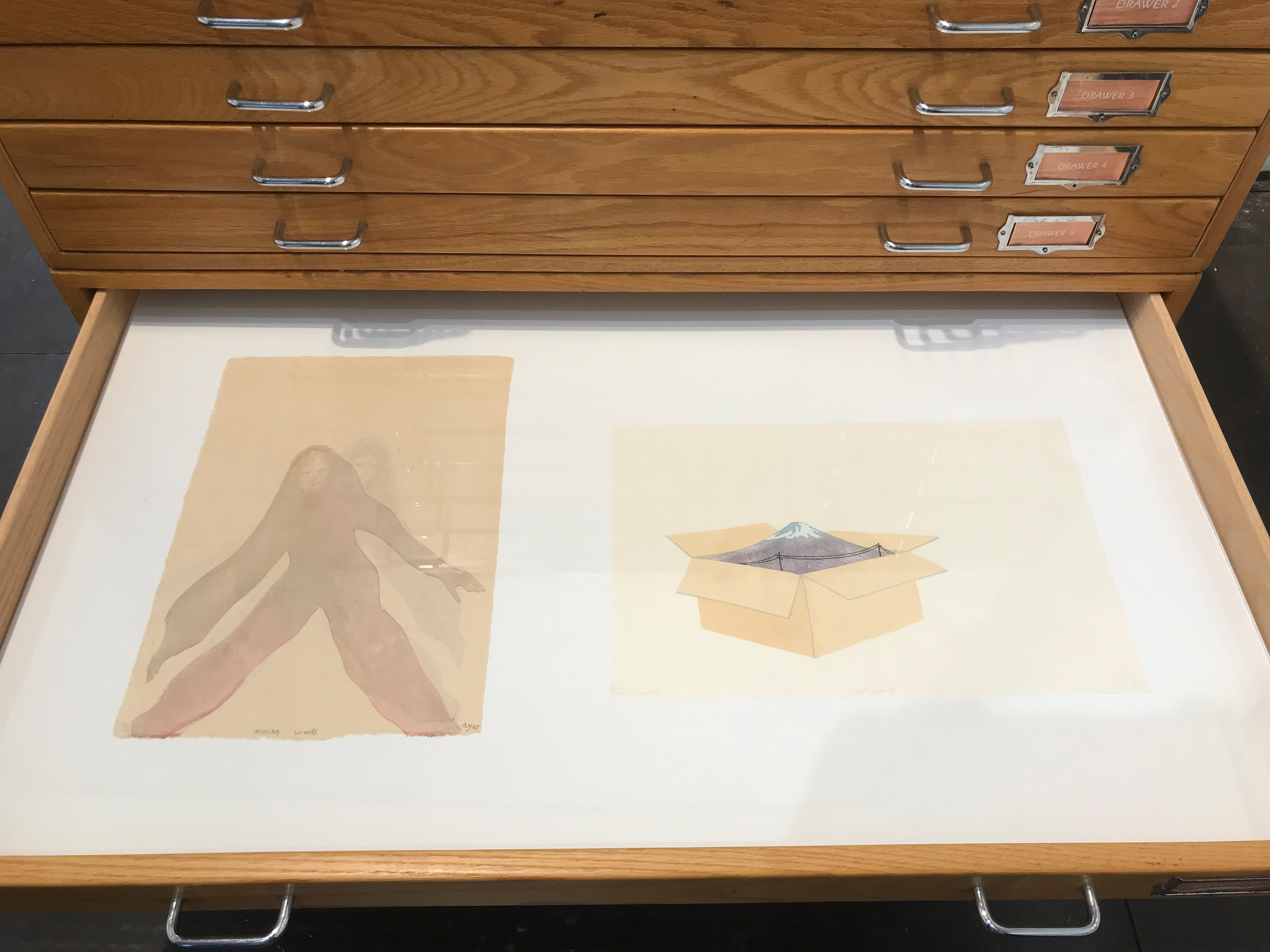
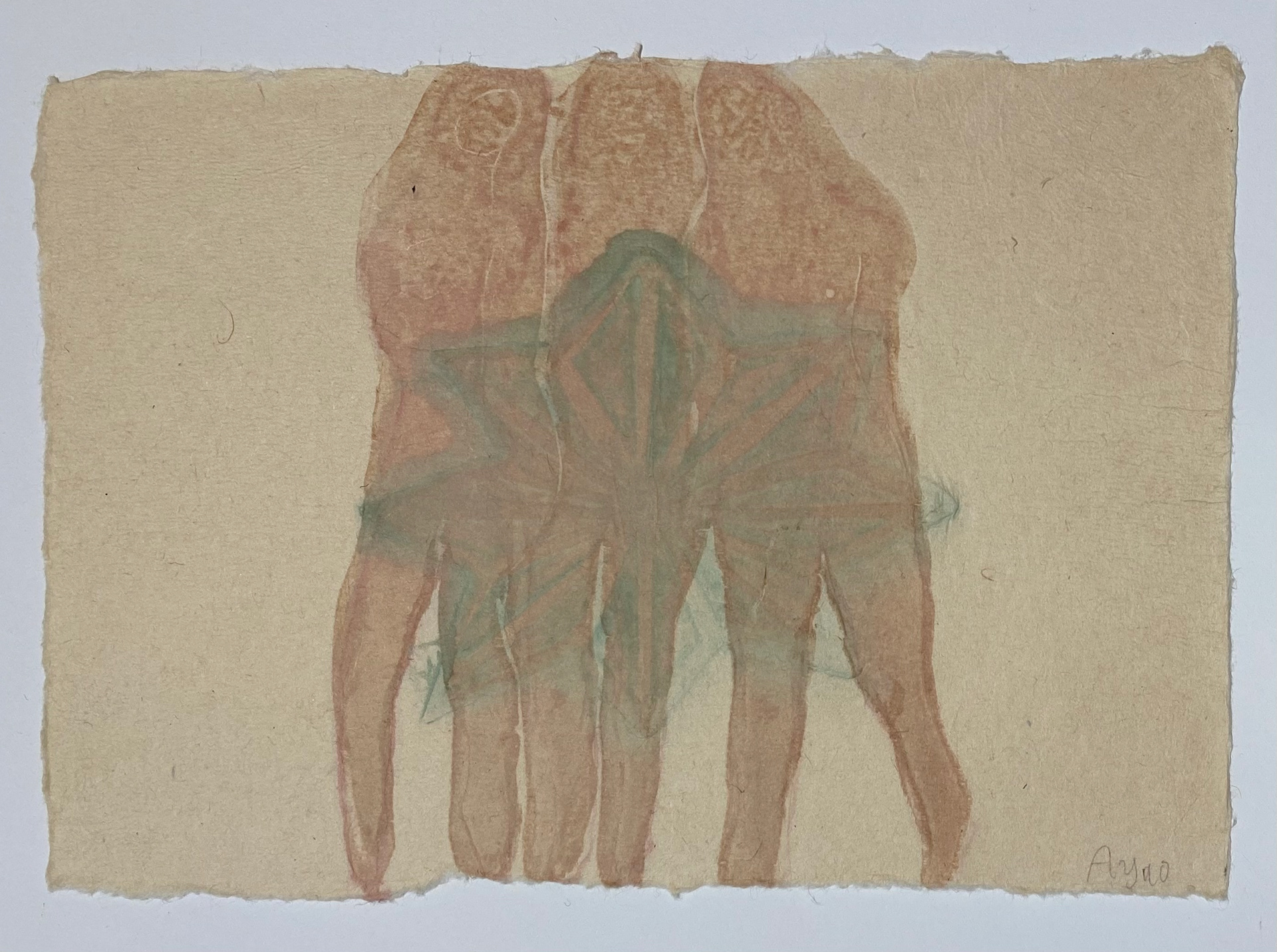
universe where ethereal longing creates a dreamscape of memory. Ayao
Shiokawa prints in delicate layers, using only enough pigment to allow
the image to emerge after a long, quiet gaze. Shiokawa’s imagery is
like a whisper on the surface of the page.
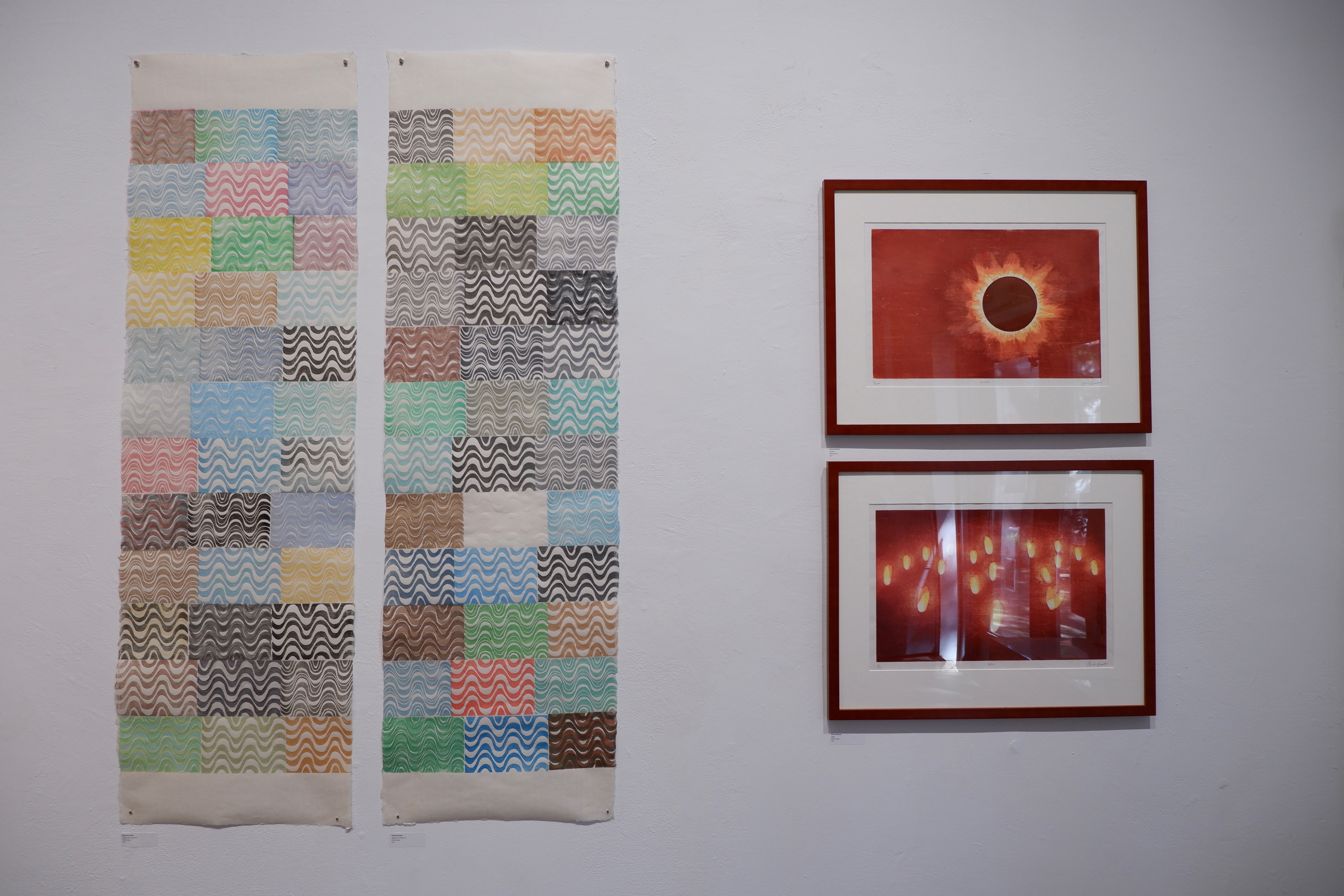
Kate MacDonagh and Katsutoshi Yuasa’s surfaces rely on masterful
carving to create textures that translate into optical mixing of
values and colors. In Cadence 3, MacDonagh blends tones through her
carving and careful control of water on the surface of the block. In
Yuasa’s Making your own paper, printing, by hand, and seeing through
the light he carves blocks, then prints his digitally generated
halftone image on fine handmade washi, creating a conversation between
the digital and the traditional.
The Sensitive Baren
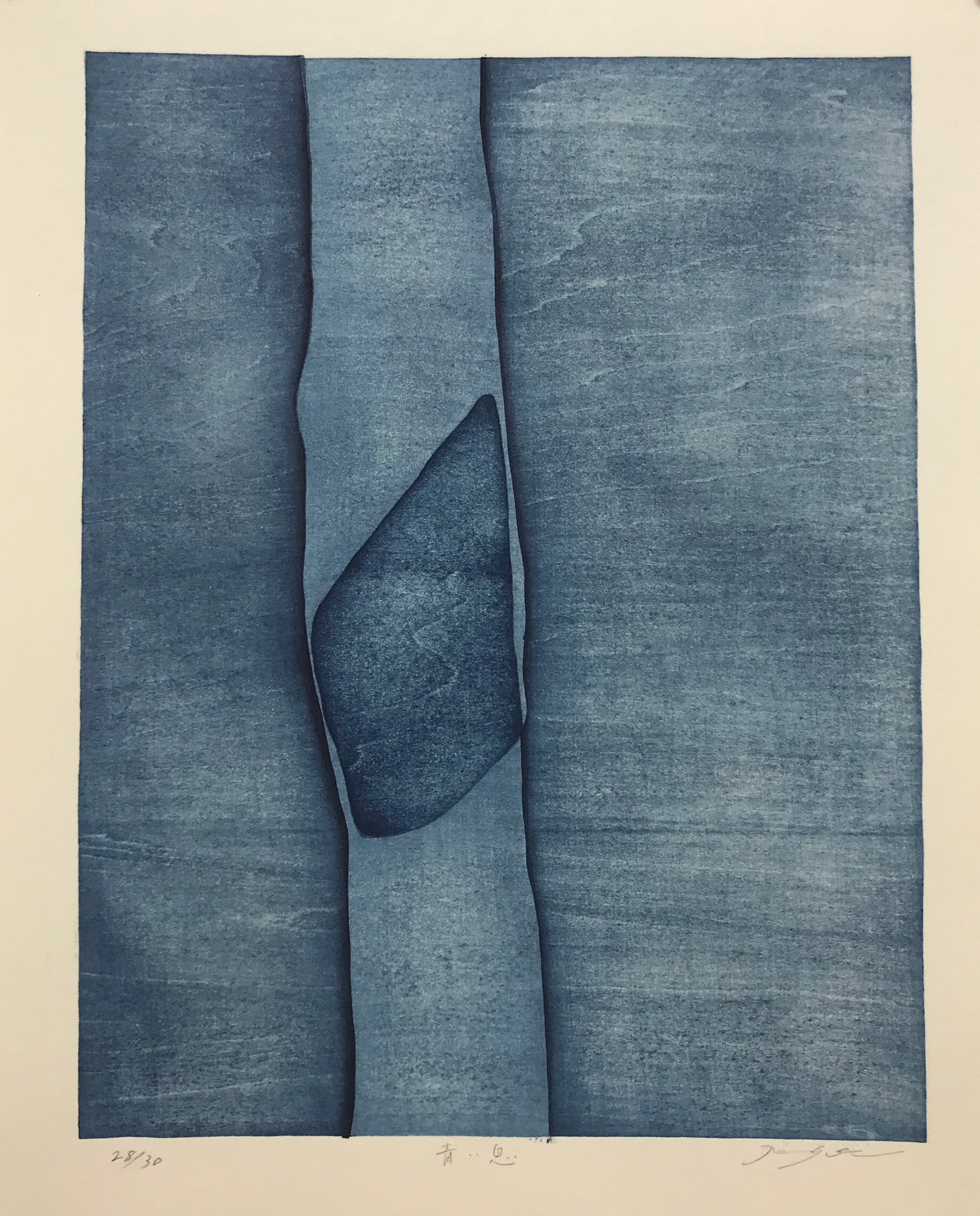
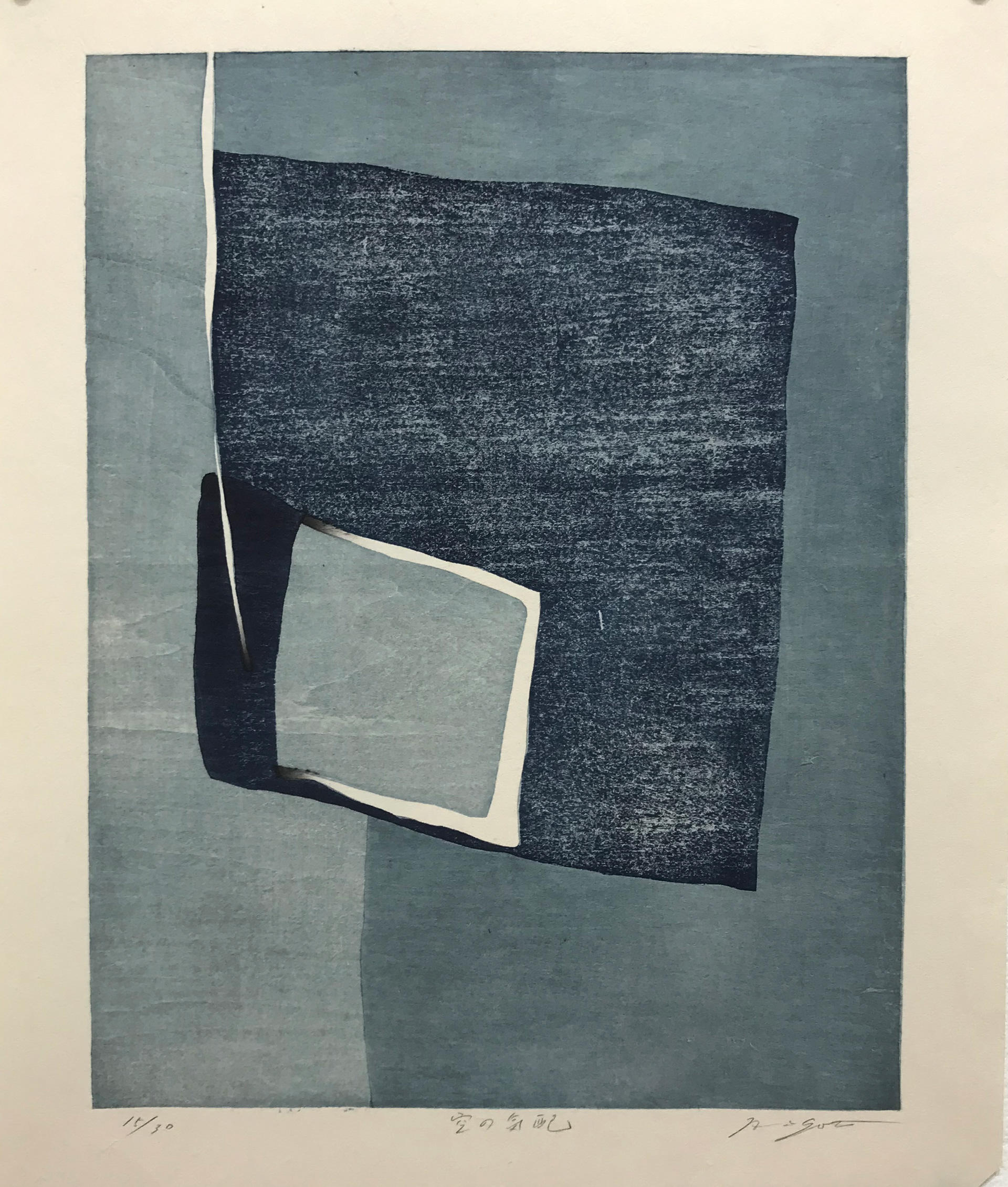
Hidehiko Gotou is not only a masterful carver and printer but is also
a craftsperson best known as the finest baren maker in Japan. The
baren is the “printing press” of mokuhanga. It is a handheld disk that
is rubbed on the back of the dampened paper to pick up color from the
inked block. Creating a baren is a meticulous process of cutting
strips of bamboo sheath and twisting them together to create strings
that are then tied into a flat spiral, backed onto a lacquered disk
composed of layers of sized paper and then covered with a bamboo
sheath.
Gotou teaches contemporary artists how to use the baren to create
different printing effects. Multiple baren can be used within one
print, some press gently on the paper surface, others make a stronger
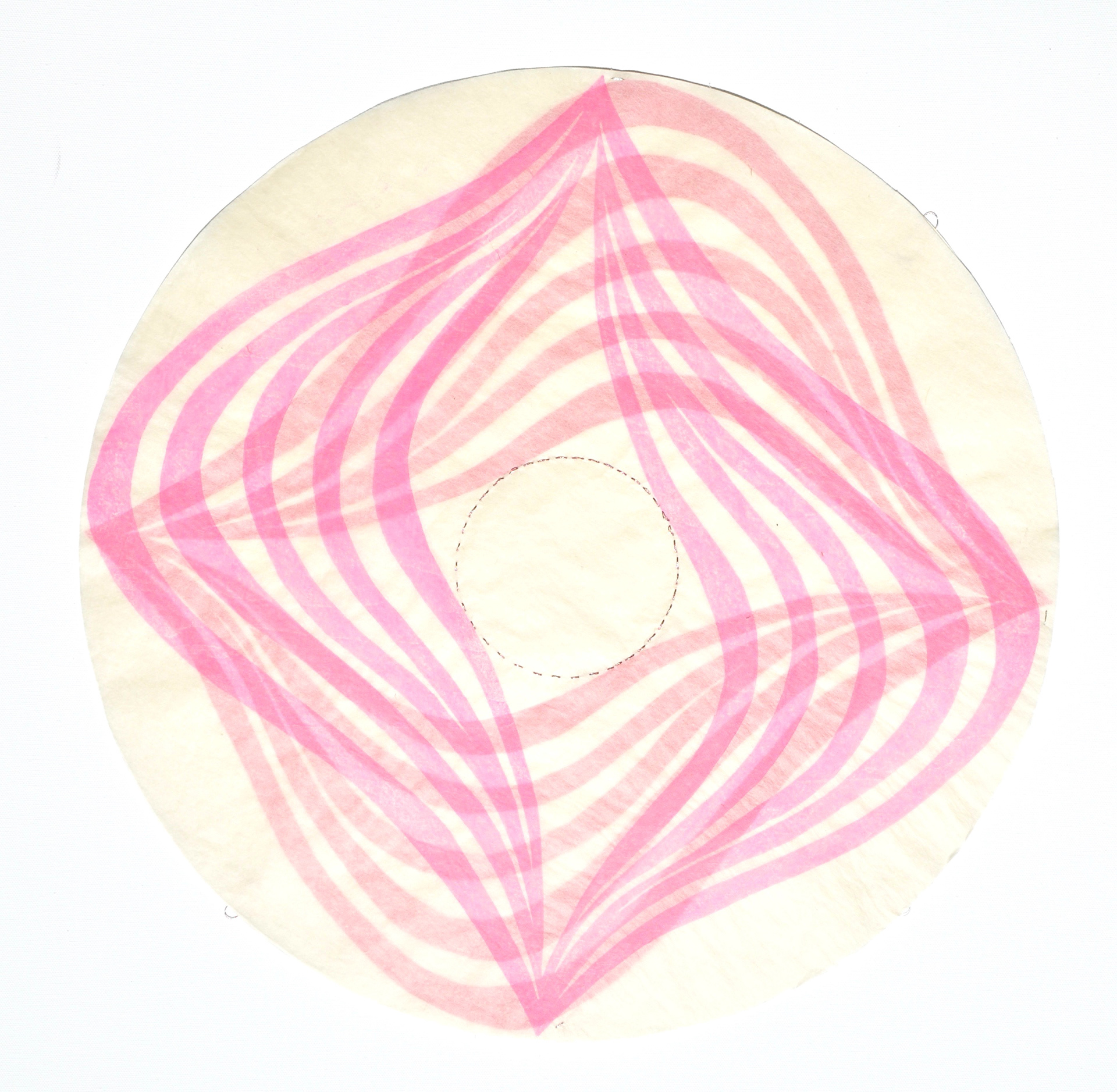
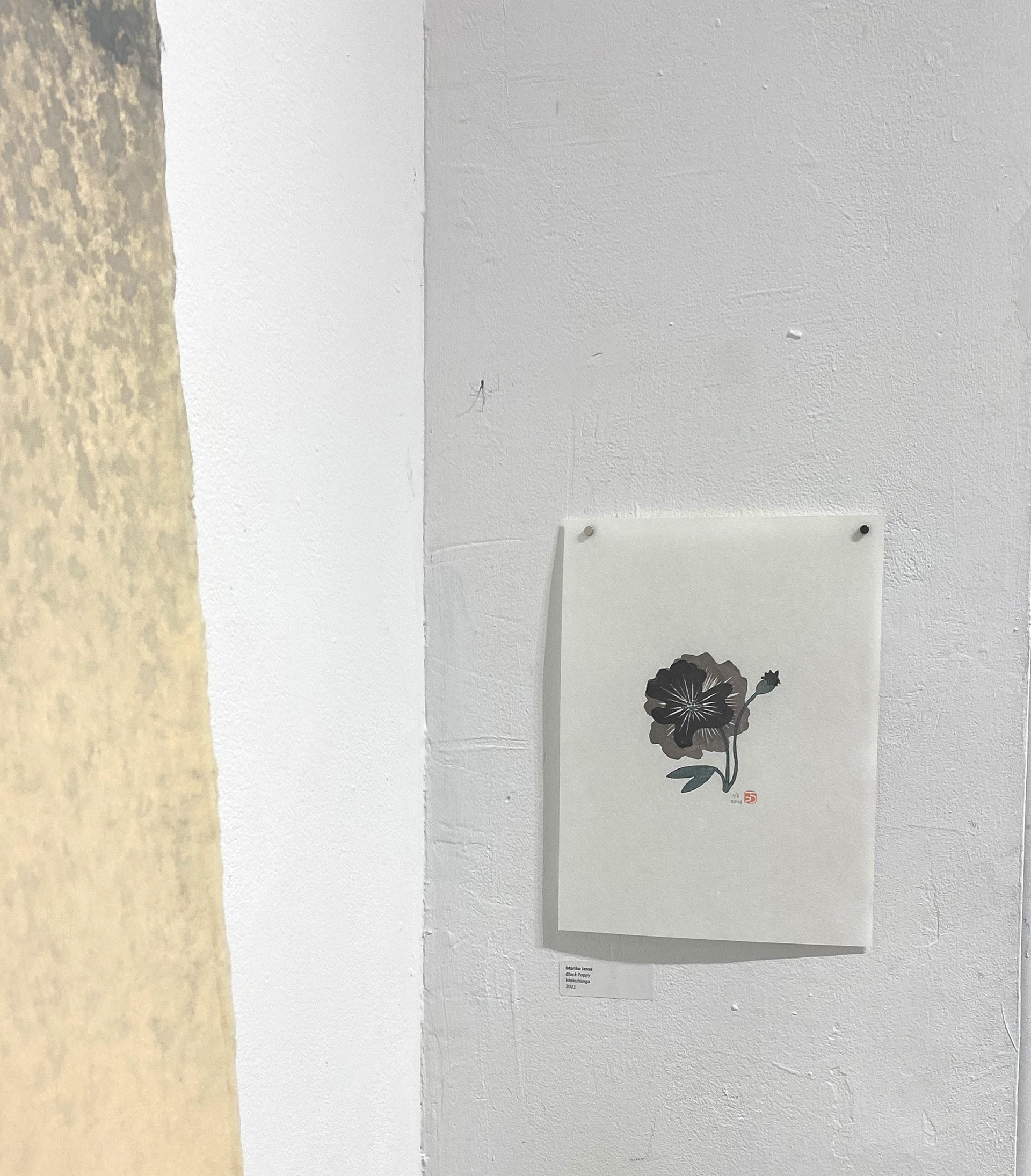
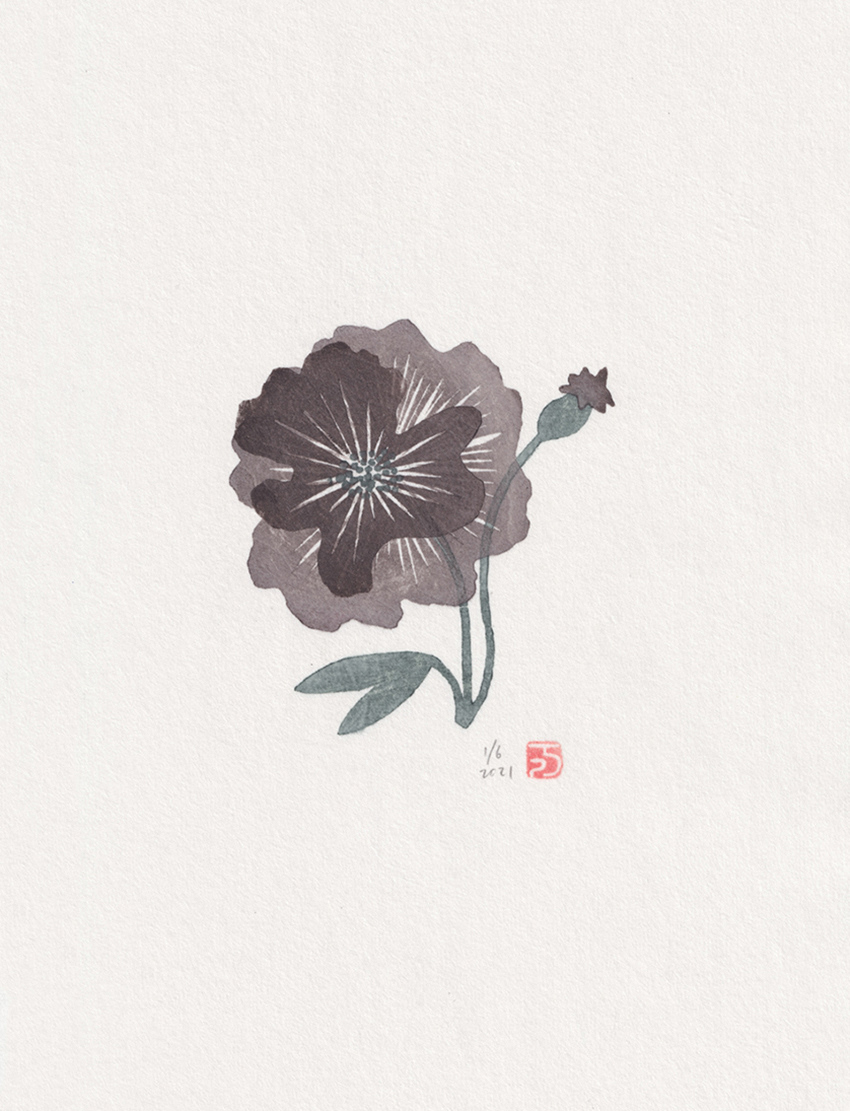
impression. In Mariko Jesse’s print Night Garden (Green and Pink) the
pressure of her hand and the character of the baren work together to
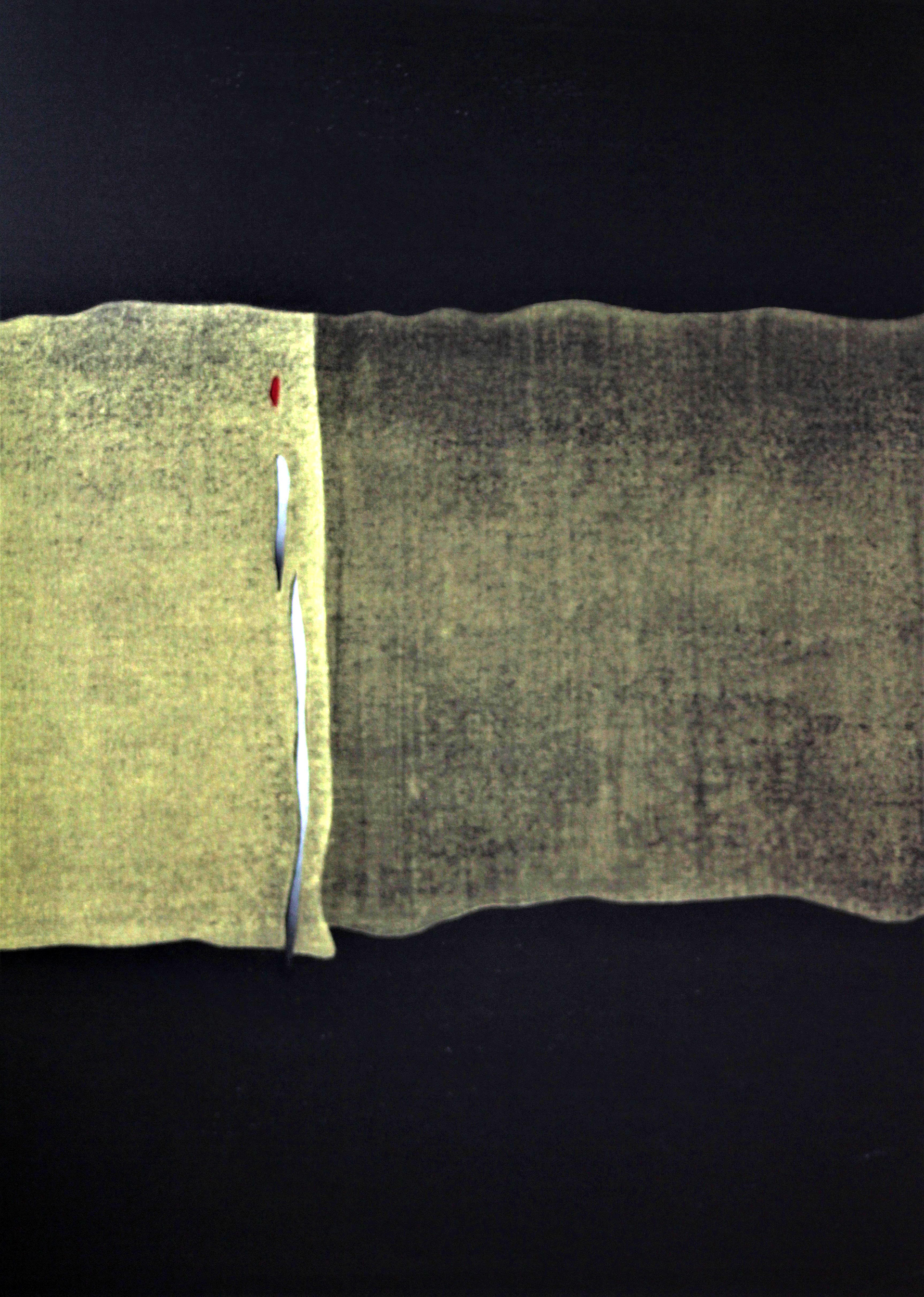
control the density of the pigment on paper. In Gotou’s work Comb the
Night, the flat, even application of dense pigment,
called betazuri,contrasts with the watery feeling of the lightly
burnished areas.
Technical Meets Personal
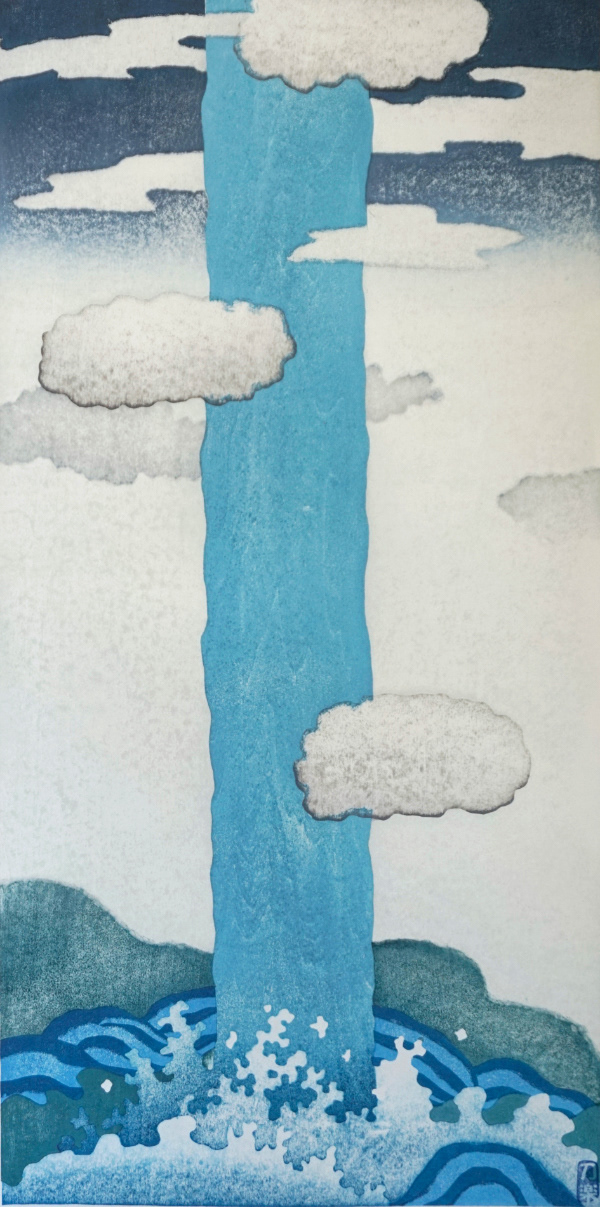
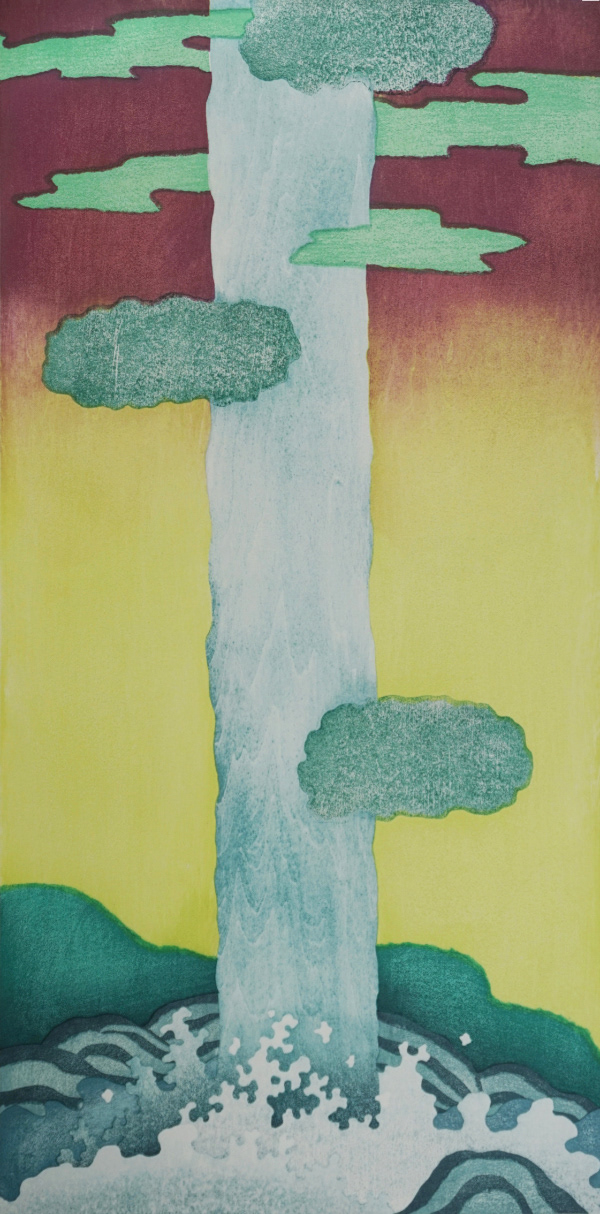
Terry McKenna, the author of two mokuhanga books with a studio and a
school in Nagano, Japan, explores the technical side of mokuhanga
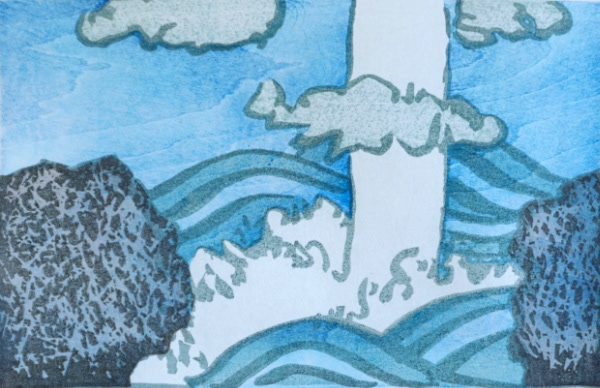
printing. In Water from Heaven and Linden Falls, he uses the same set
of blocks to create two distinct prints. He uses varying amounts of
water to create color tints and spatial effects.
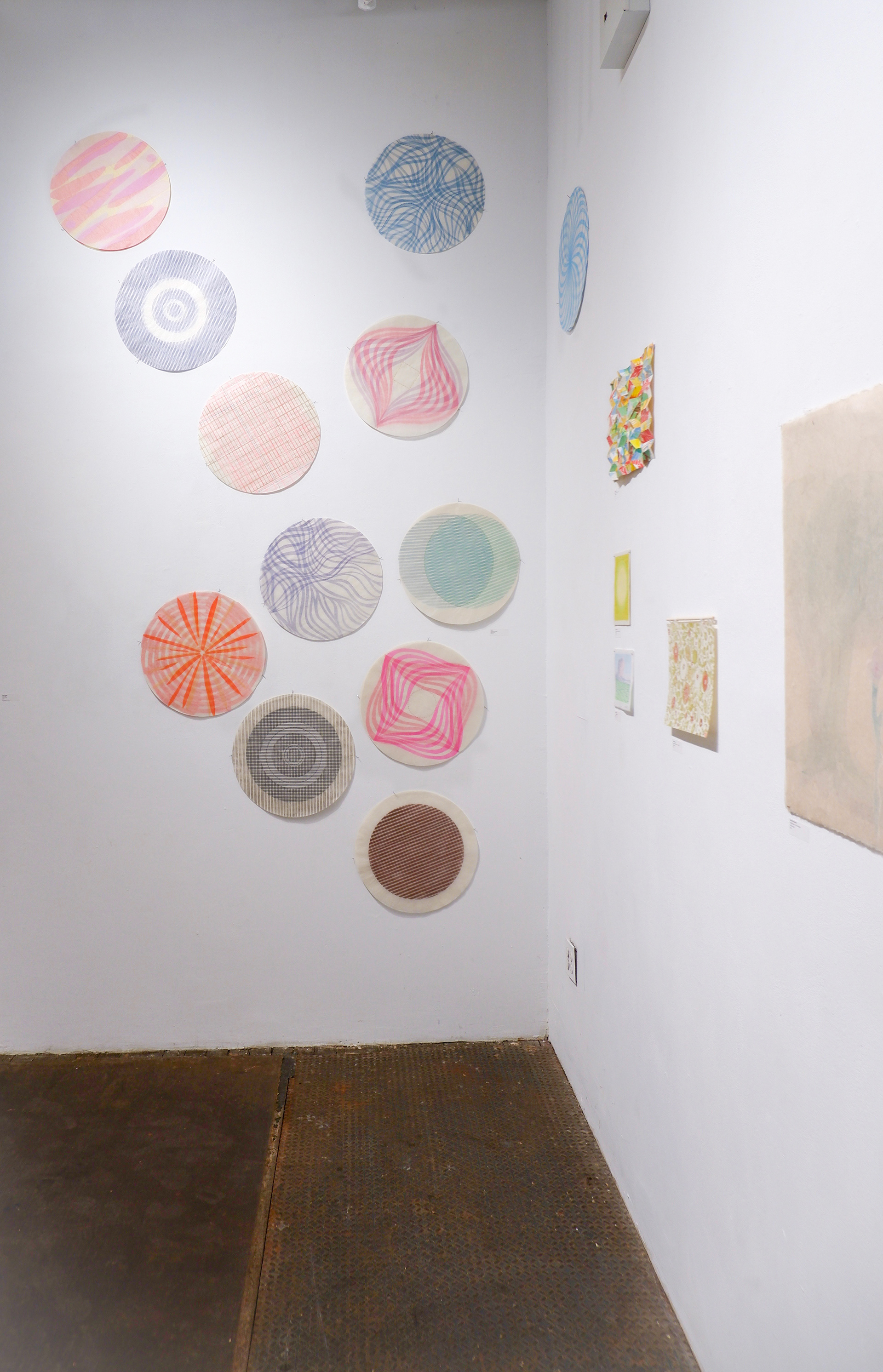
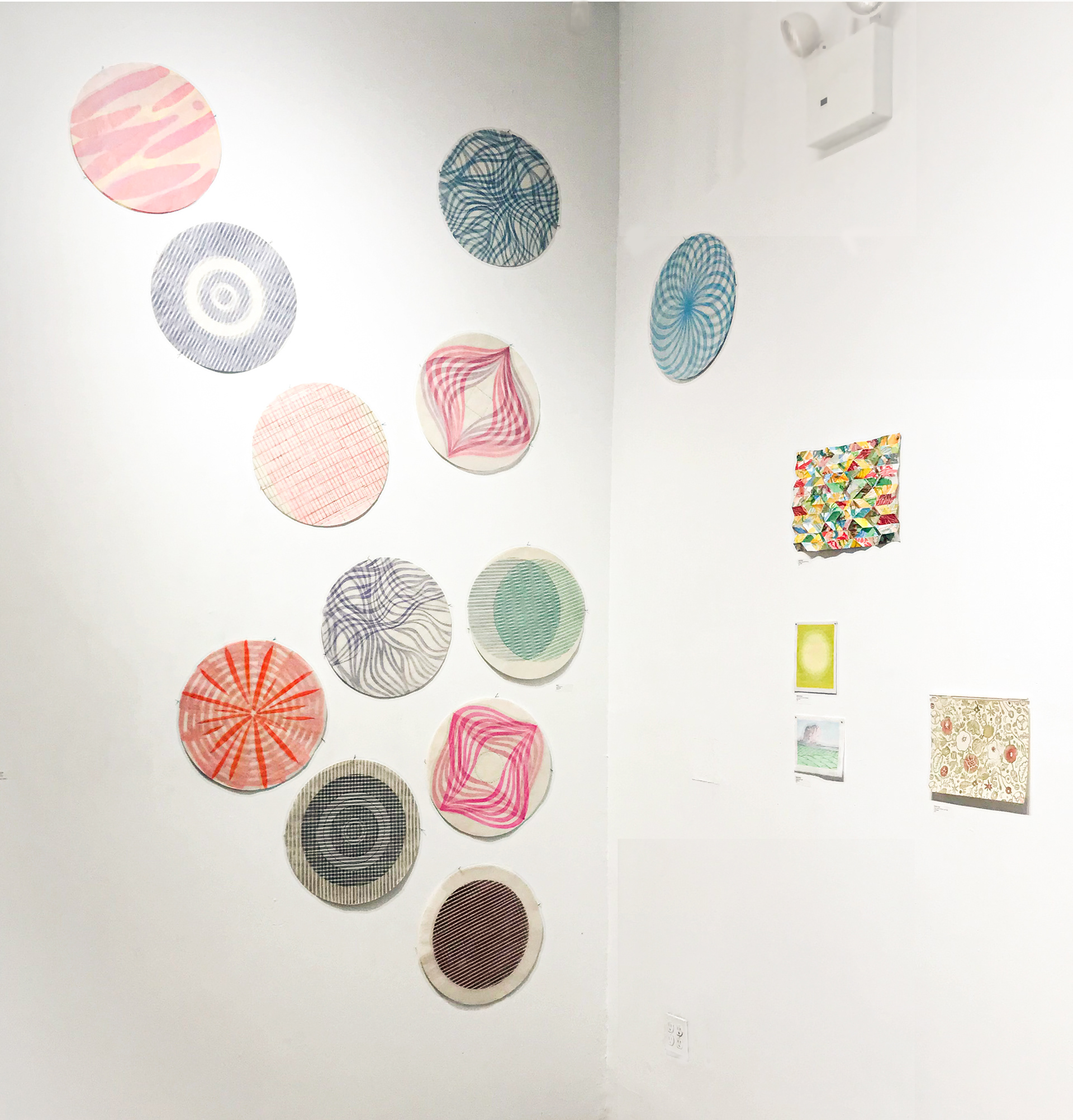
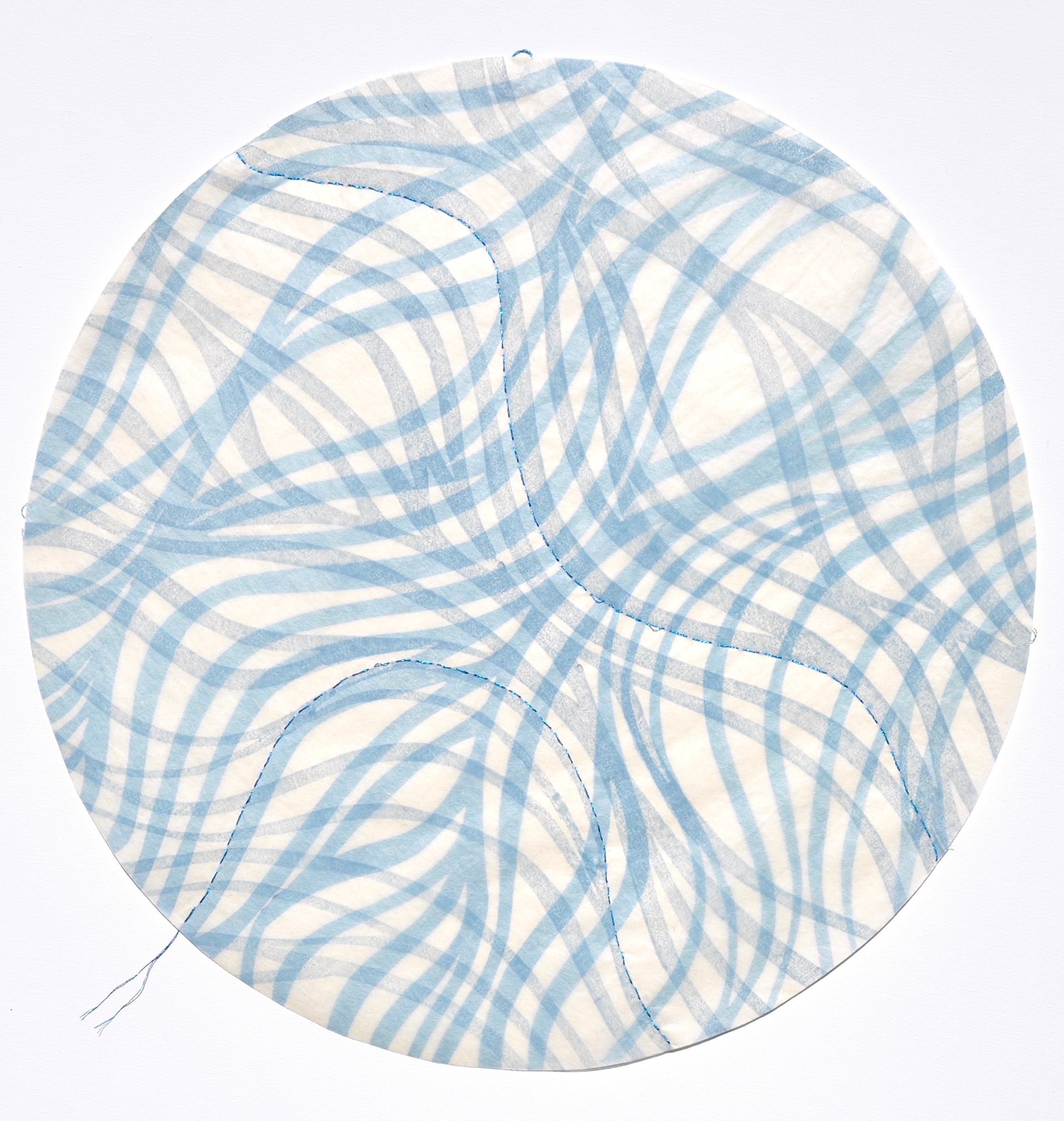
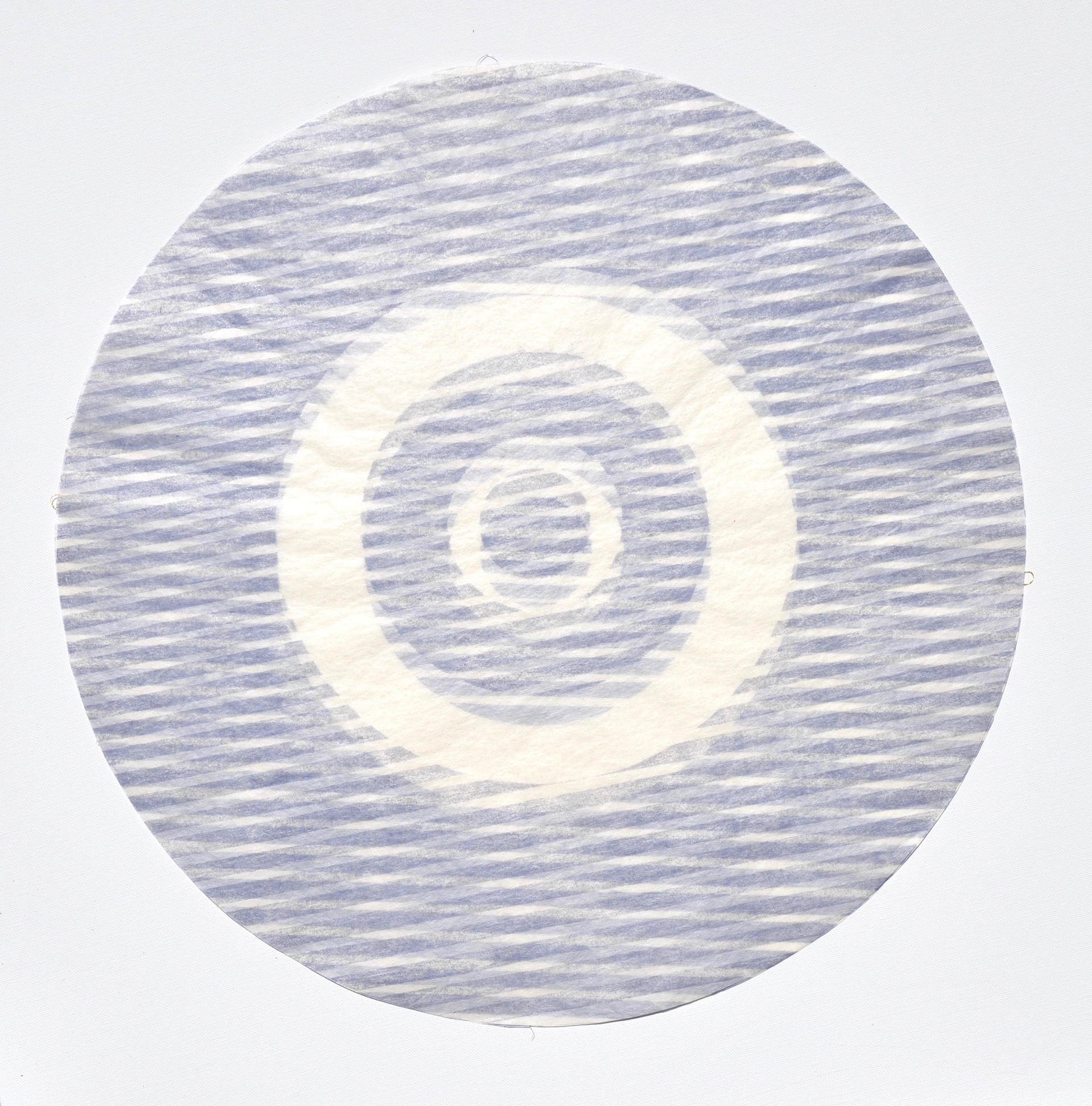
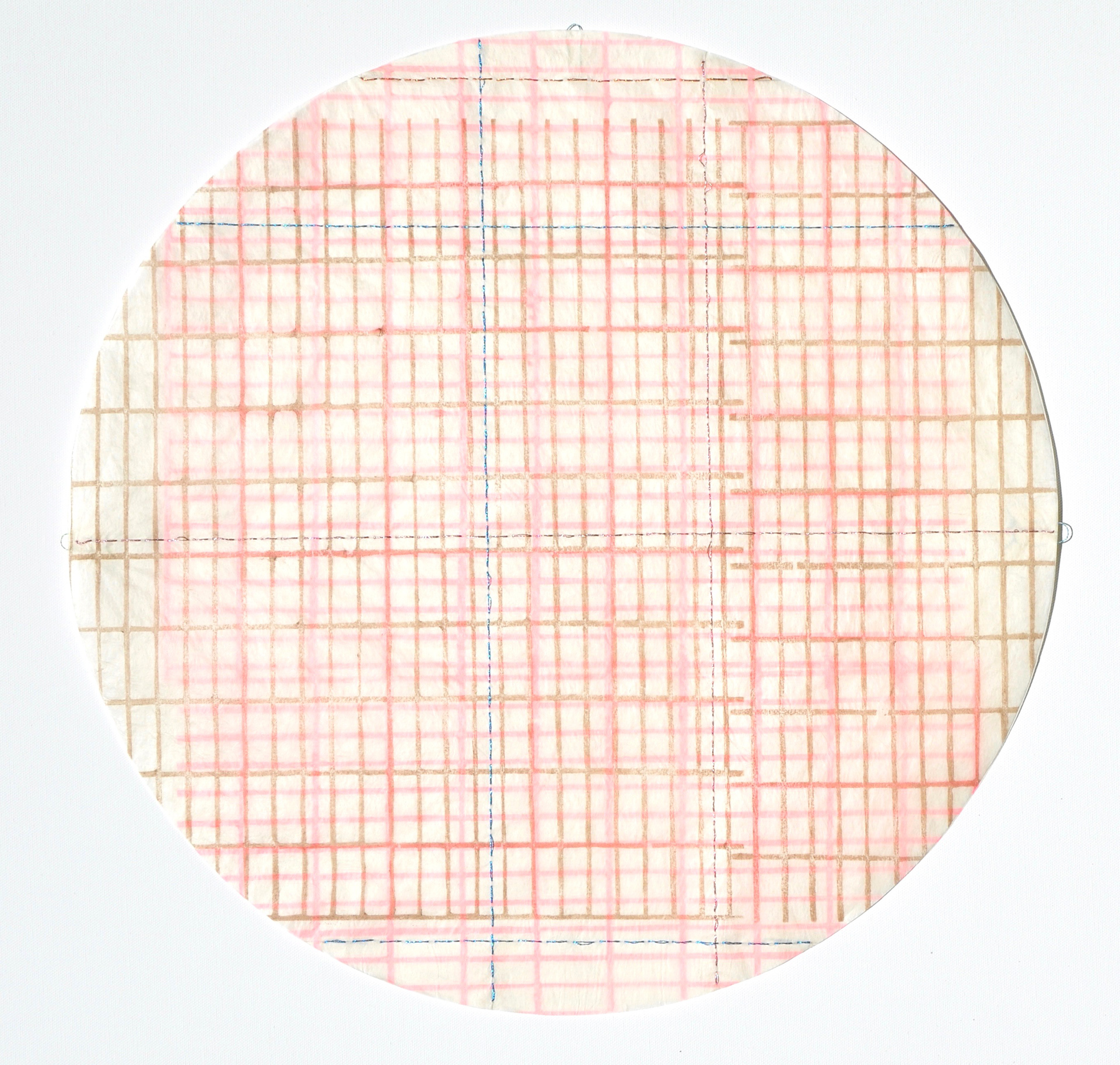
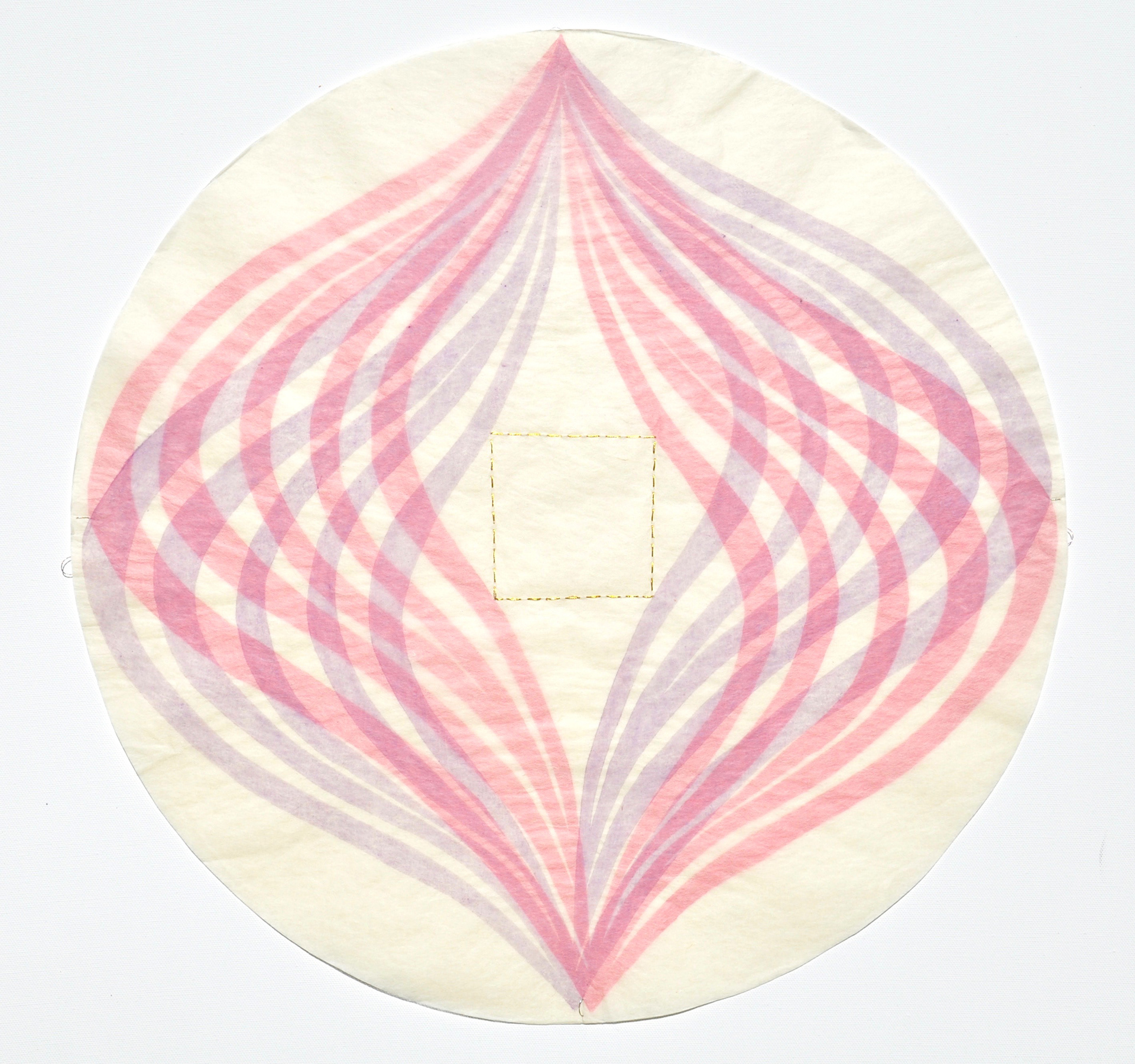
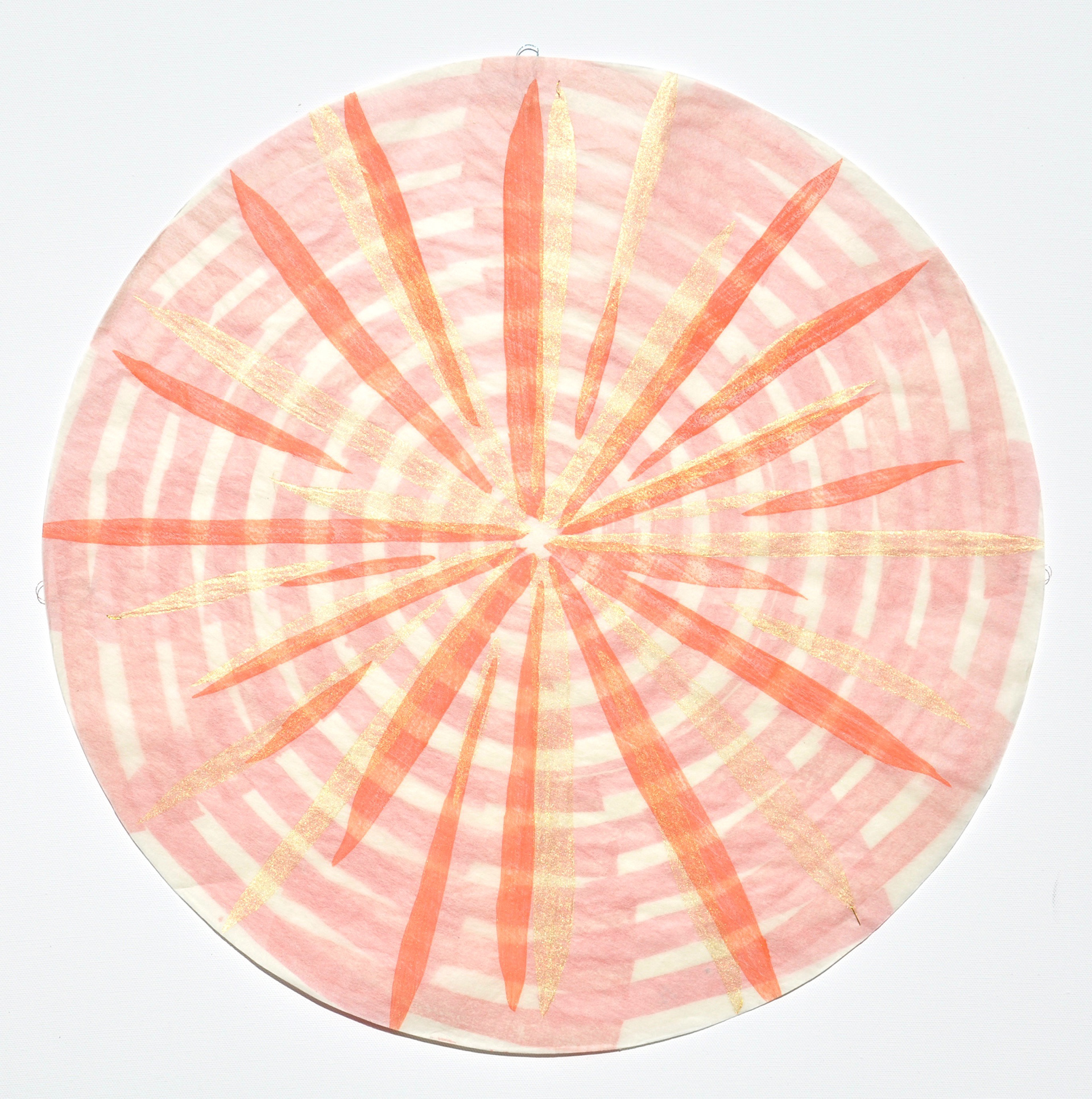
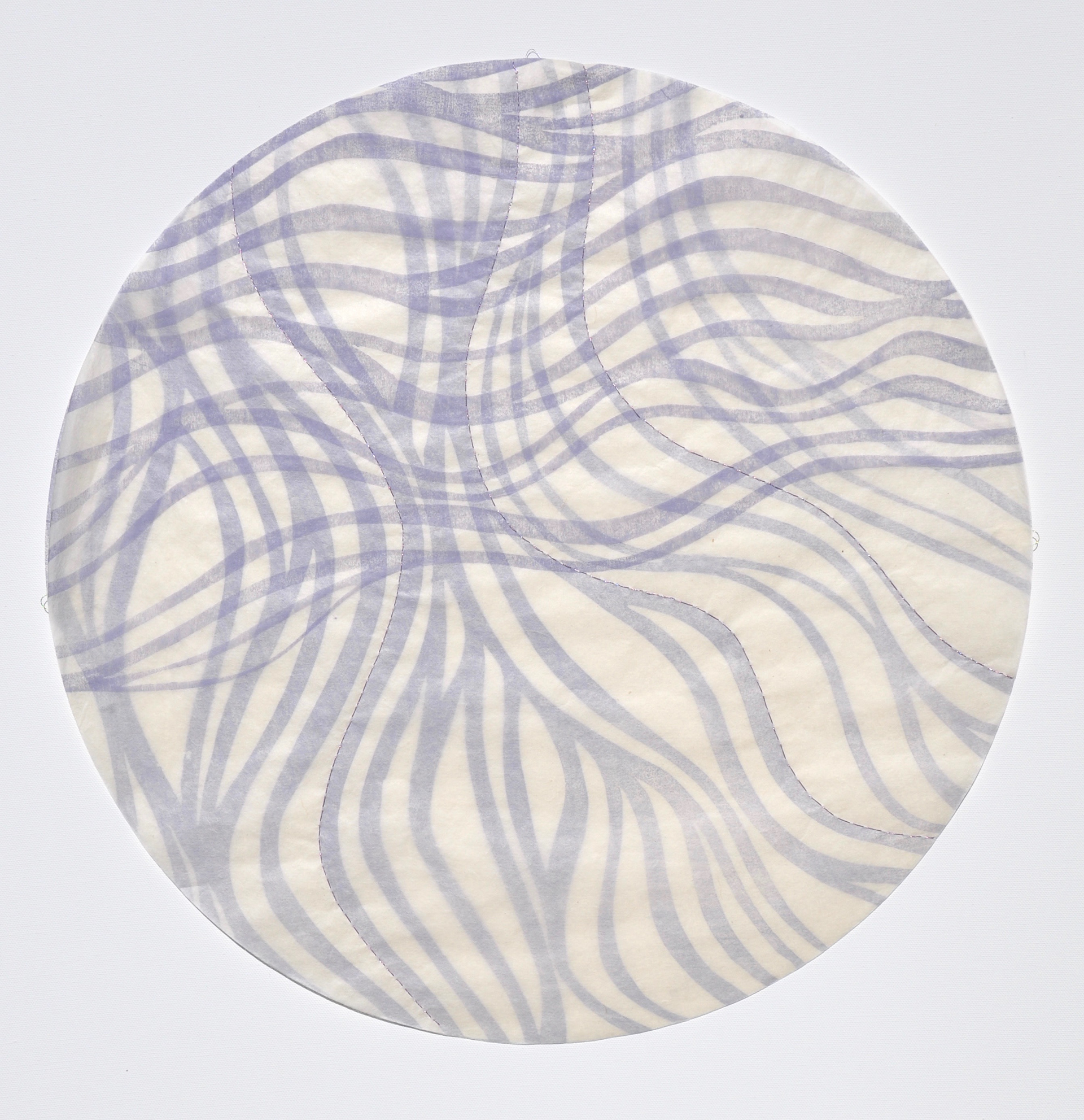
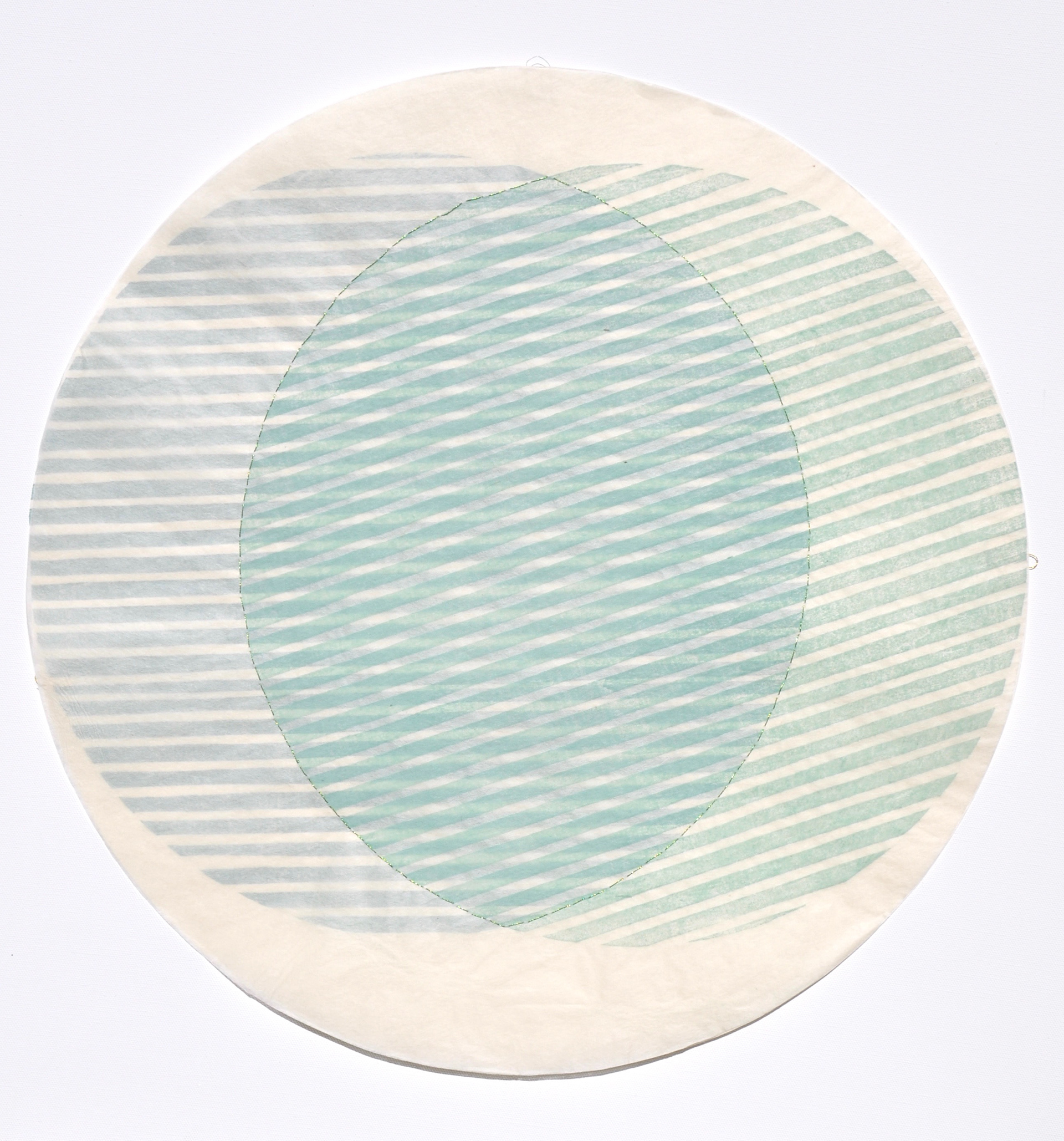
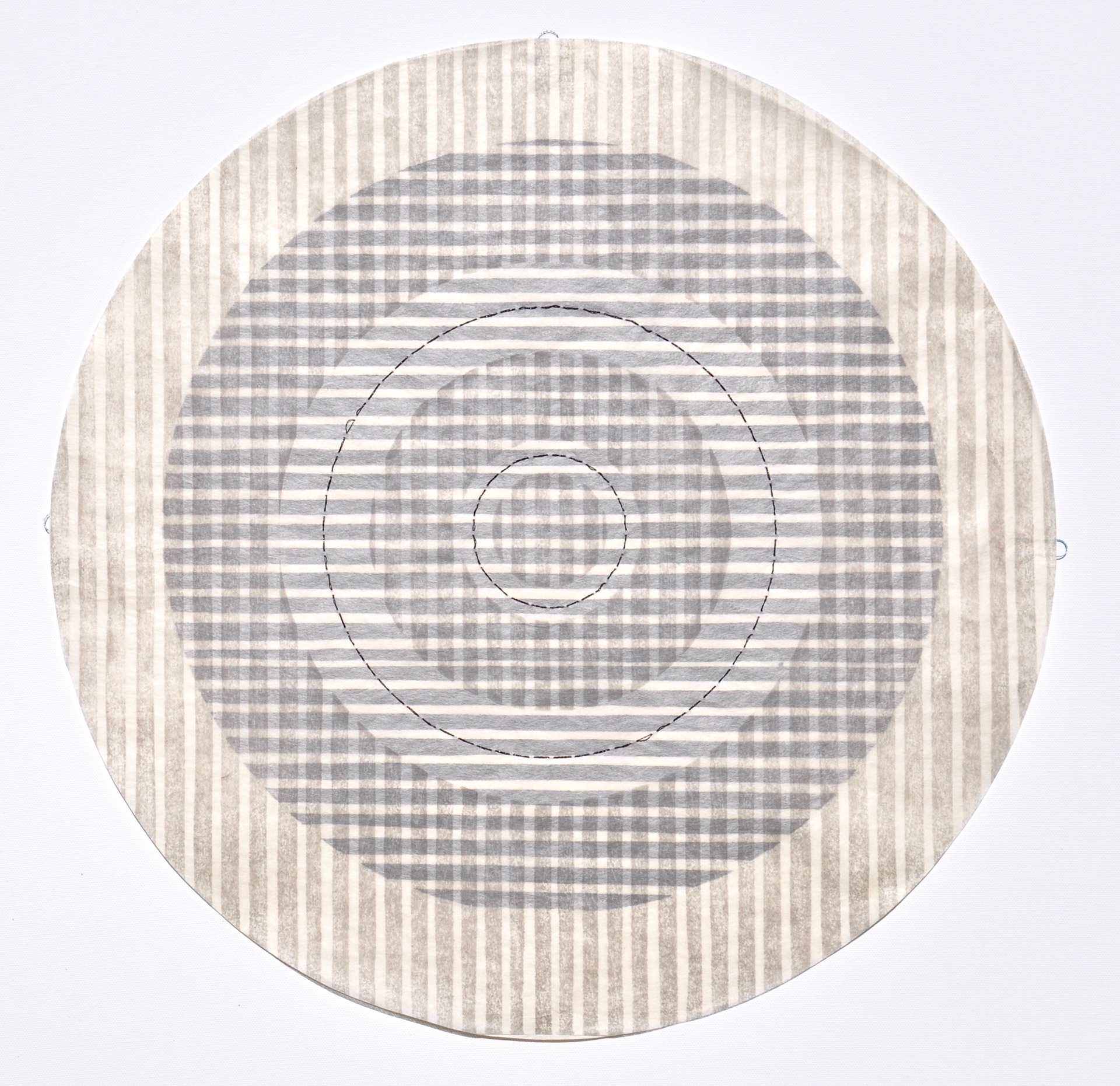
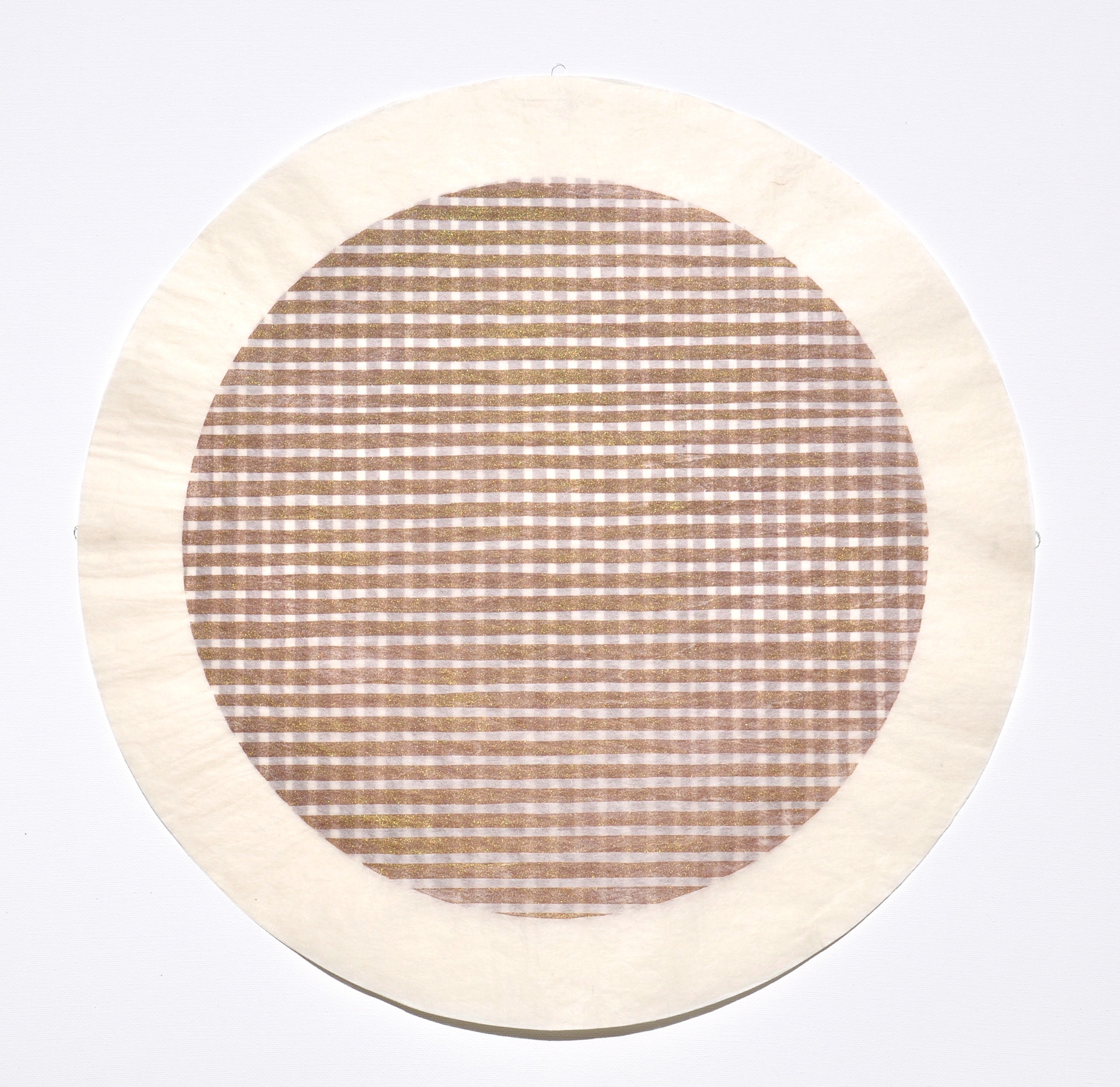
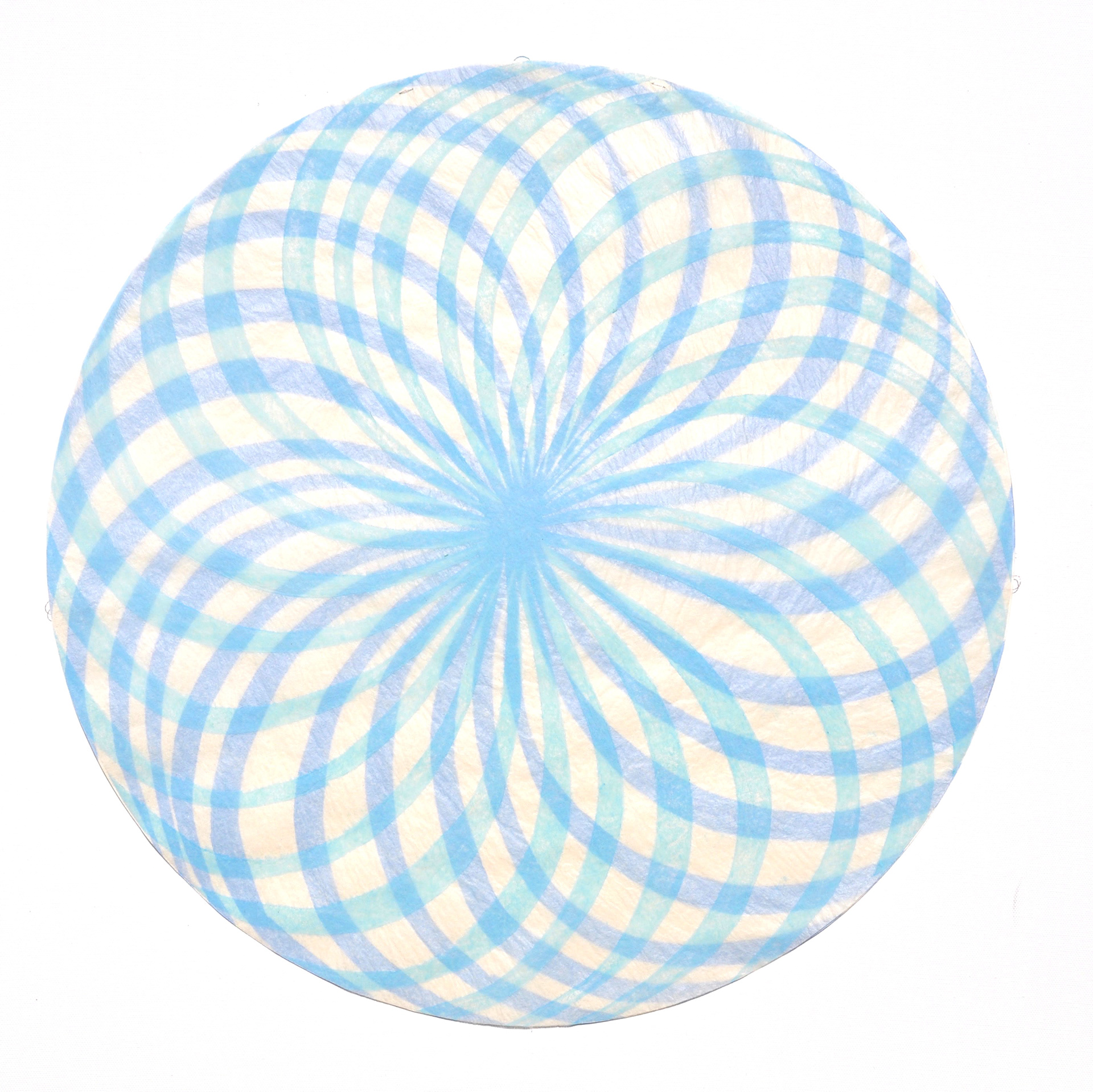
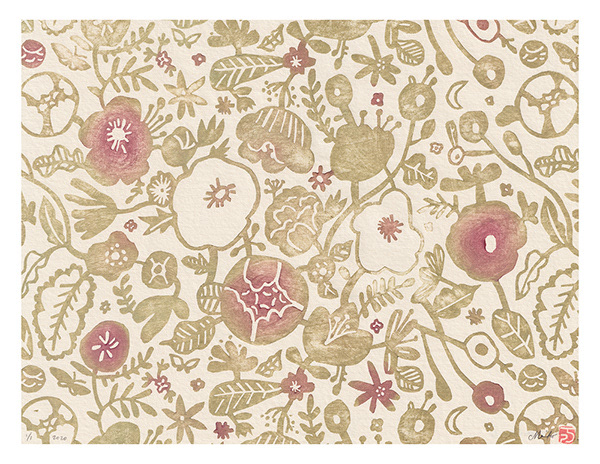
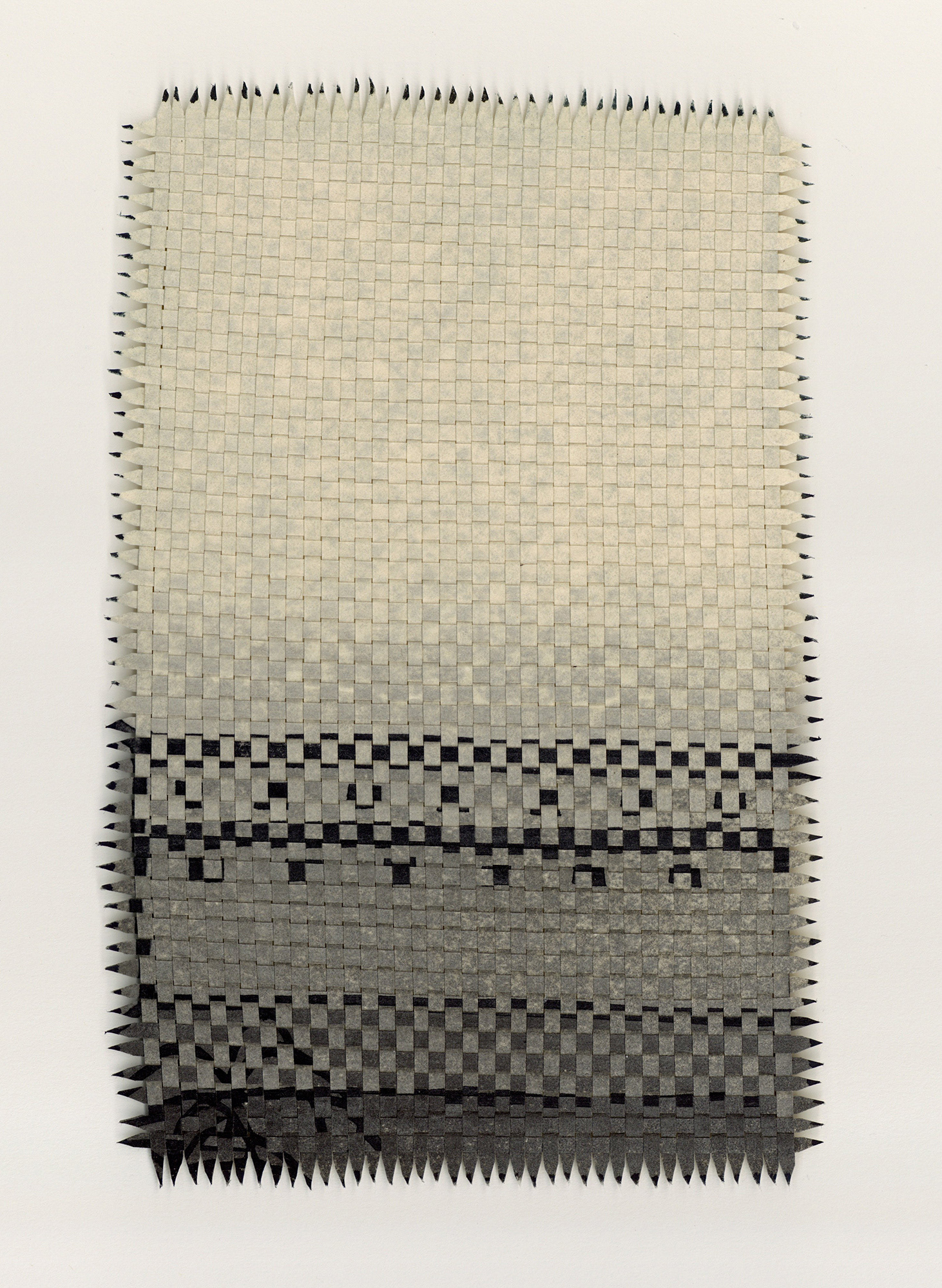
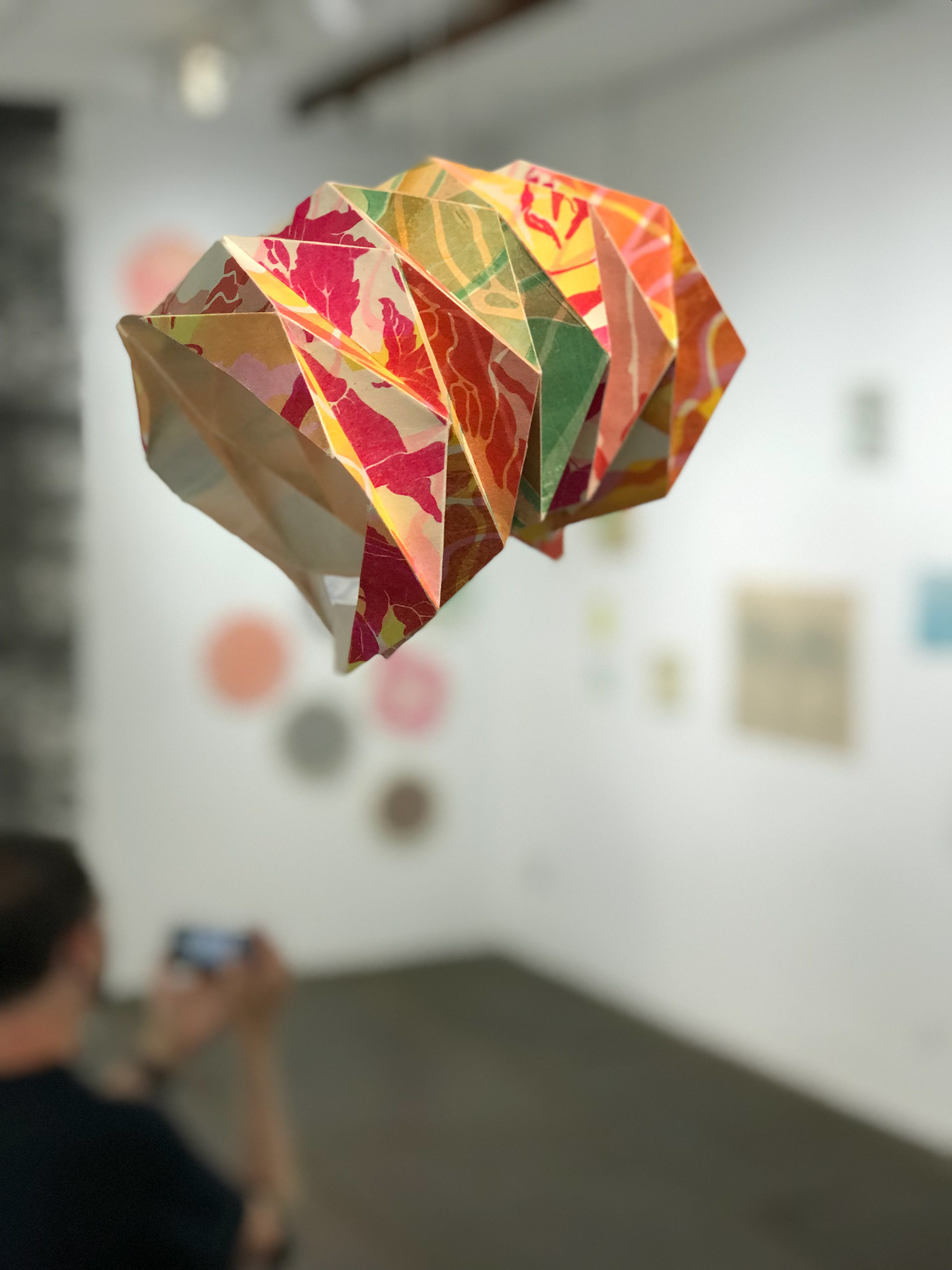
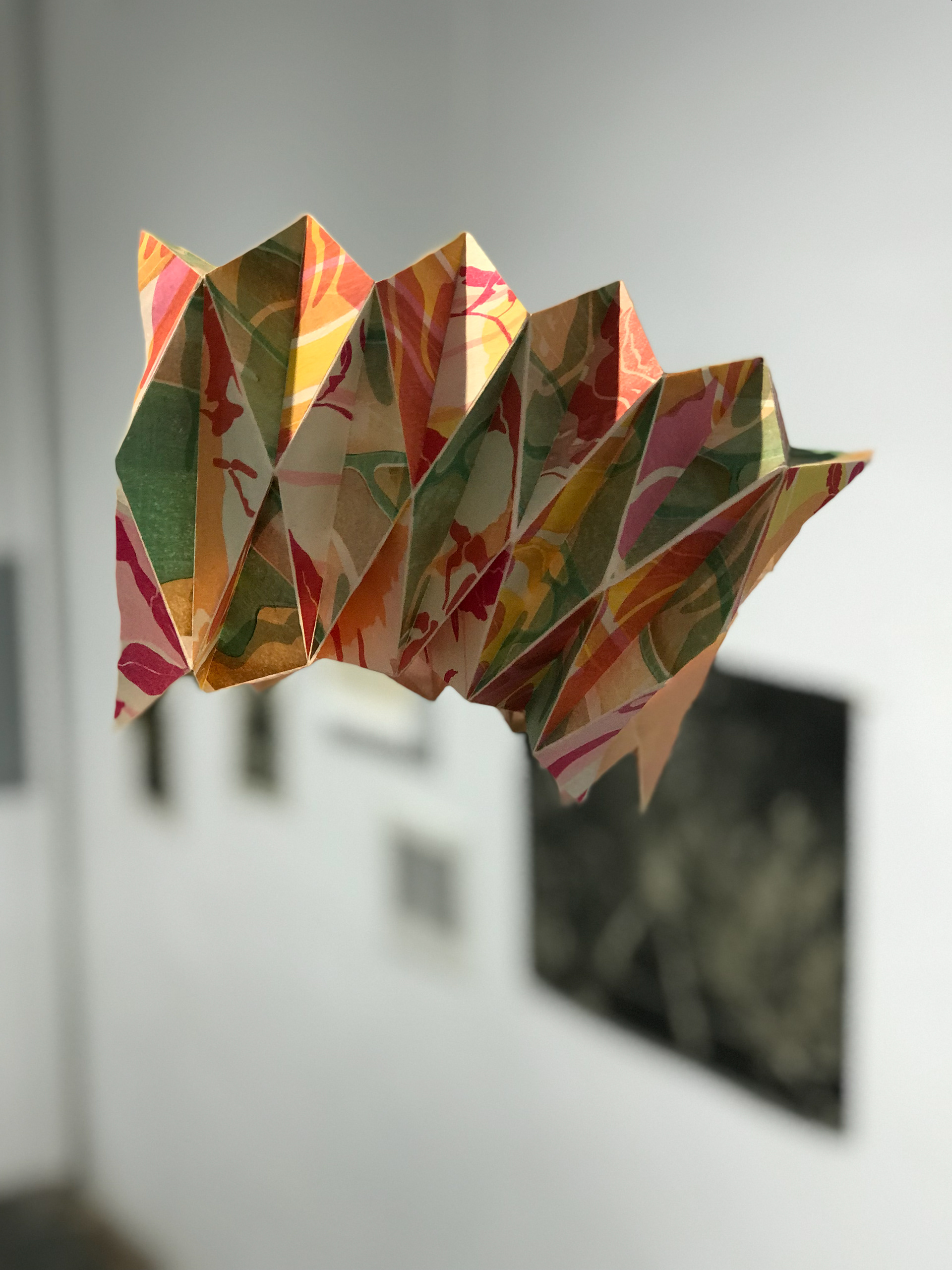
Mia O layers sheets of handmade paper to create luminous surfaces. She
often joins the paper by sewing, emphasizing the strength of washi
paper and its potential in installation. She channels her feeling for
nature into geometric forms, flipping and layering shapes to create
decorative surfaces.
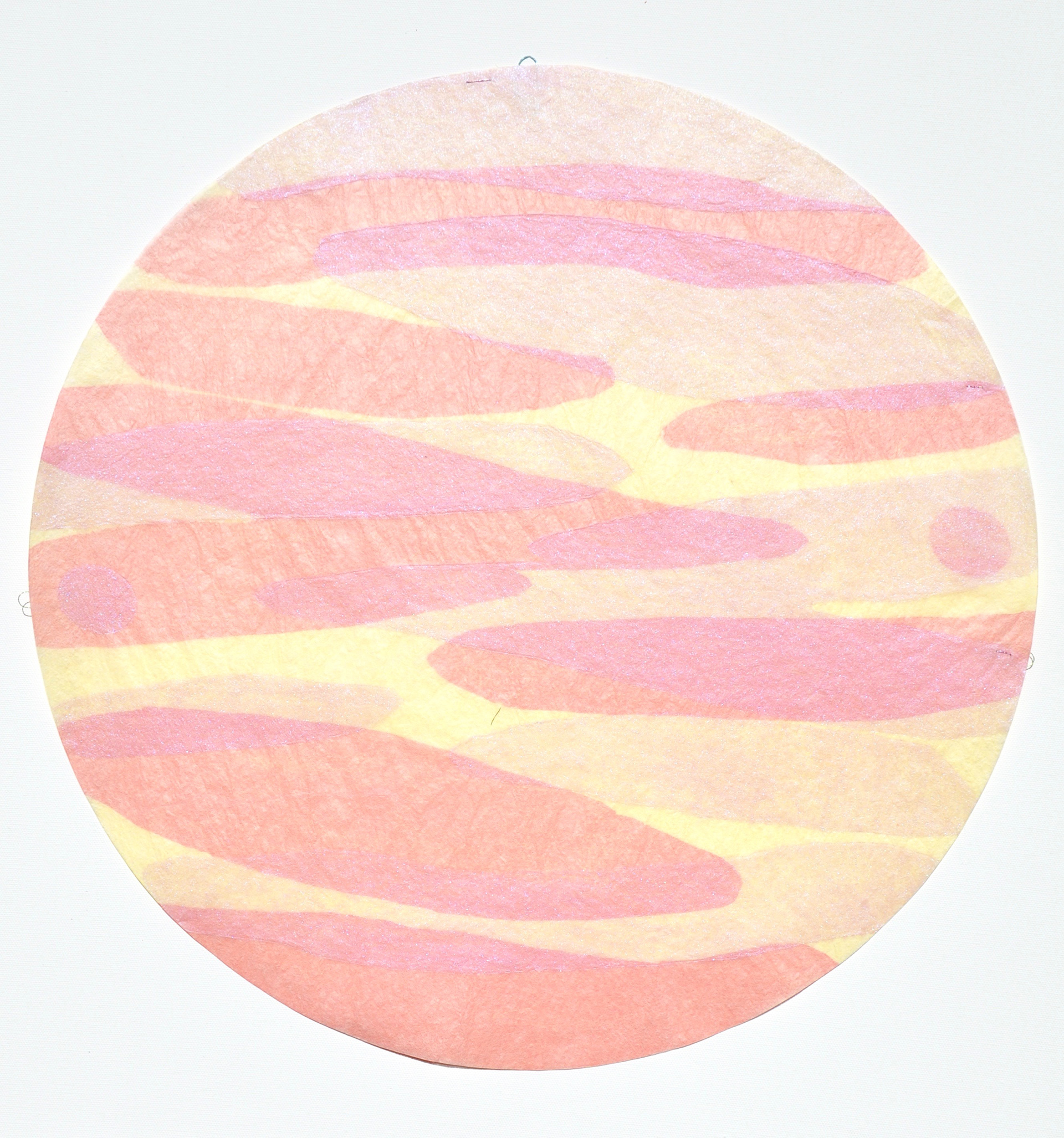
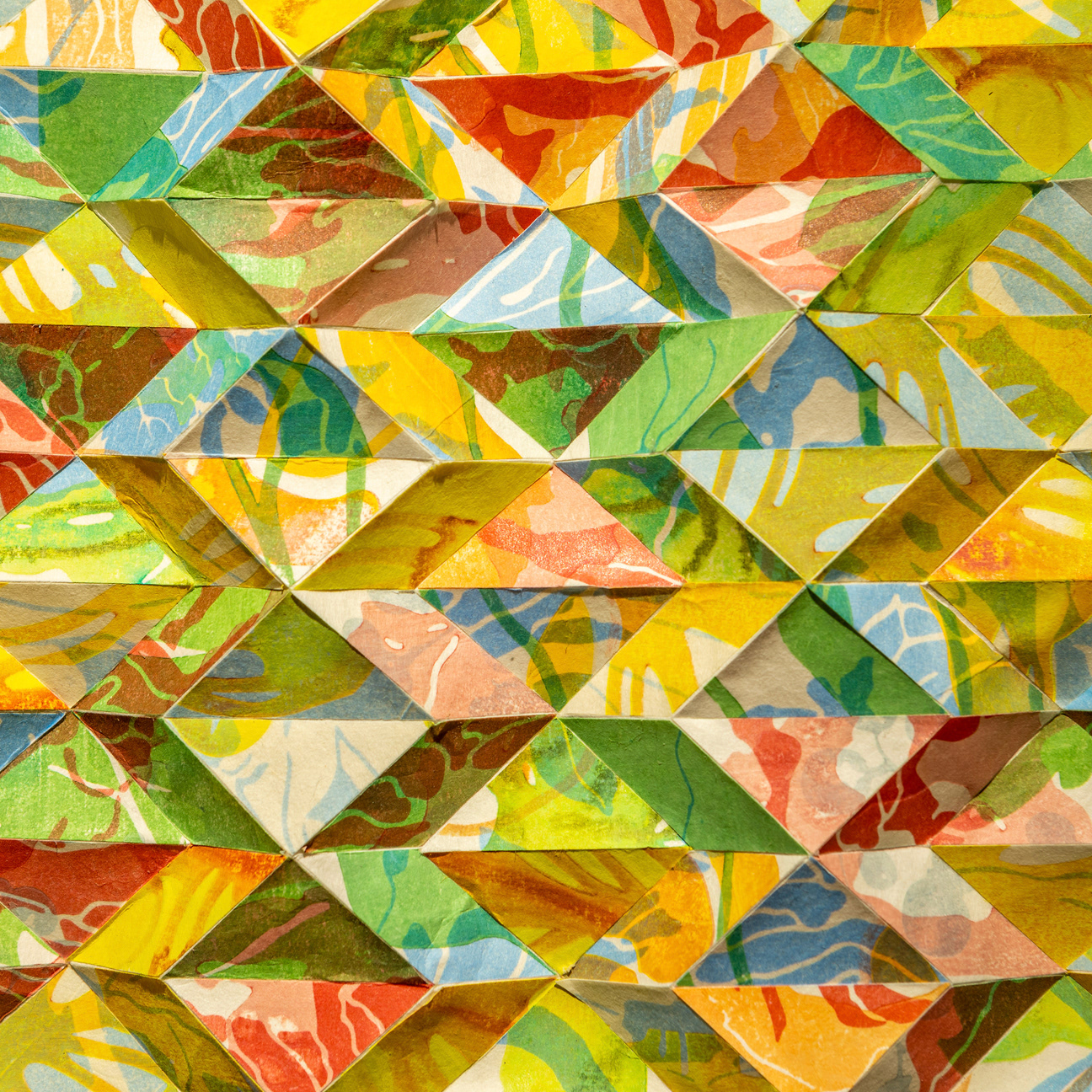
Patty Hudak and Louise Rouse both collage their prints, layering and
repeating shapes to reflect experiences from the natural world.
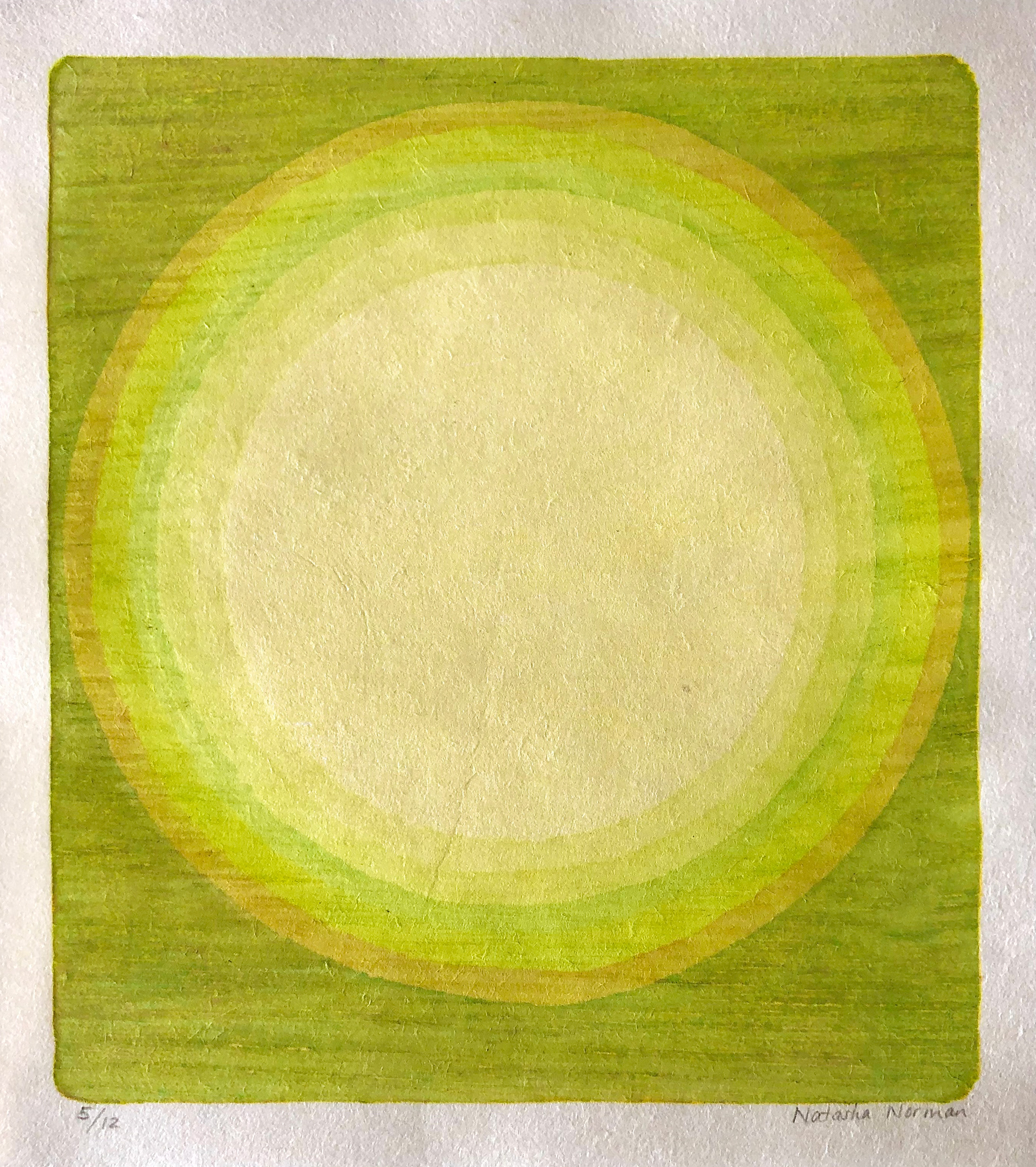
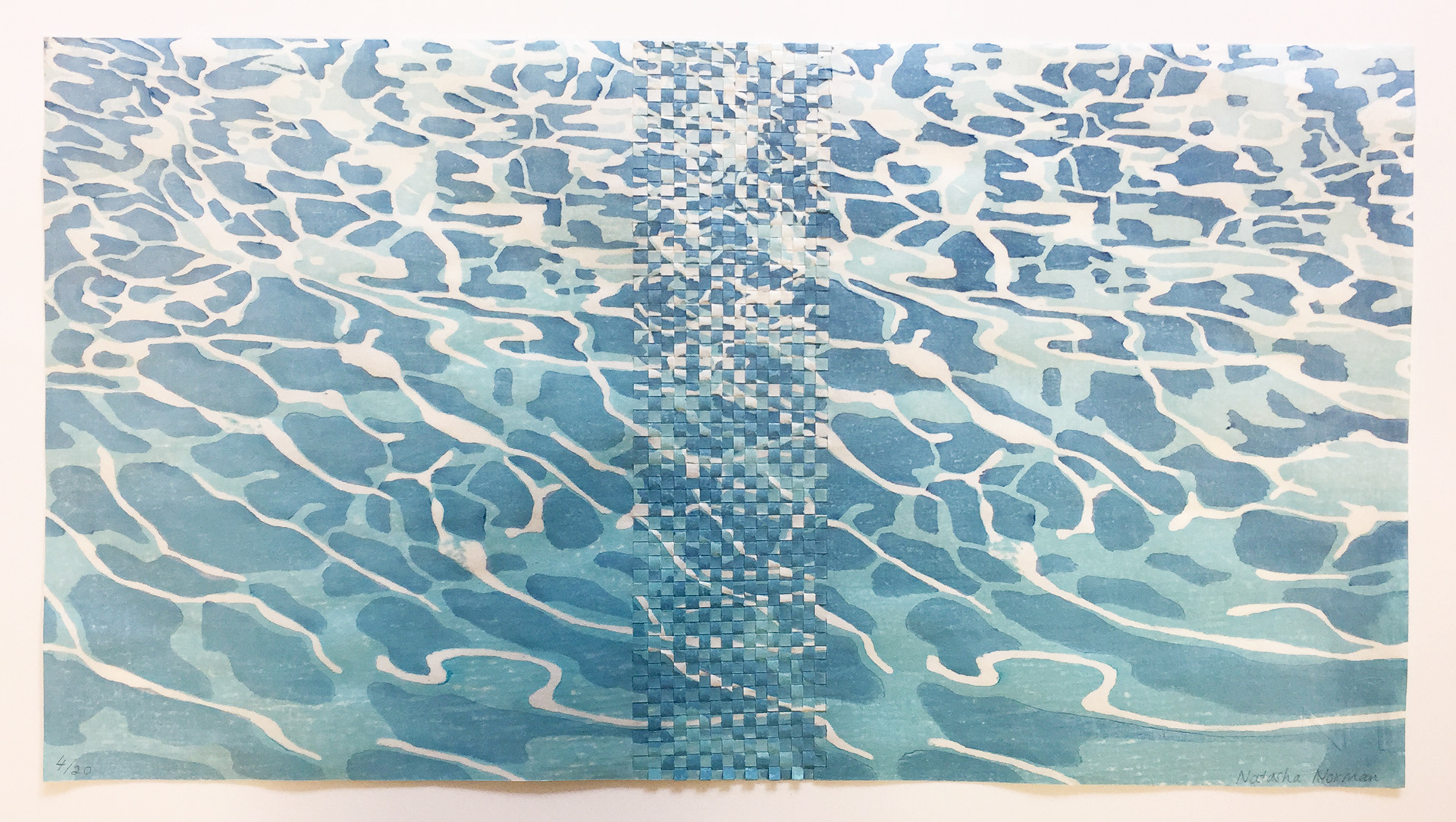
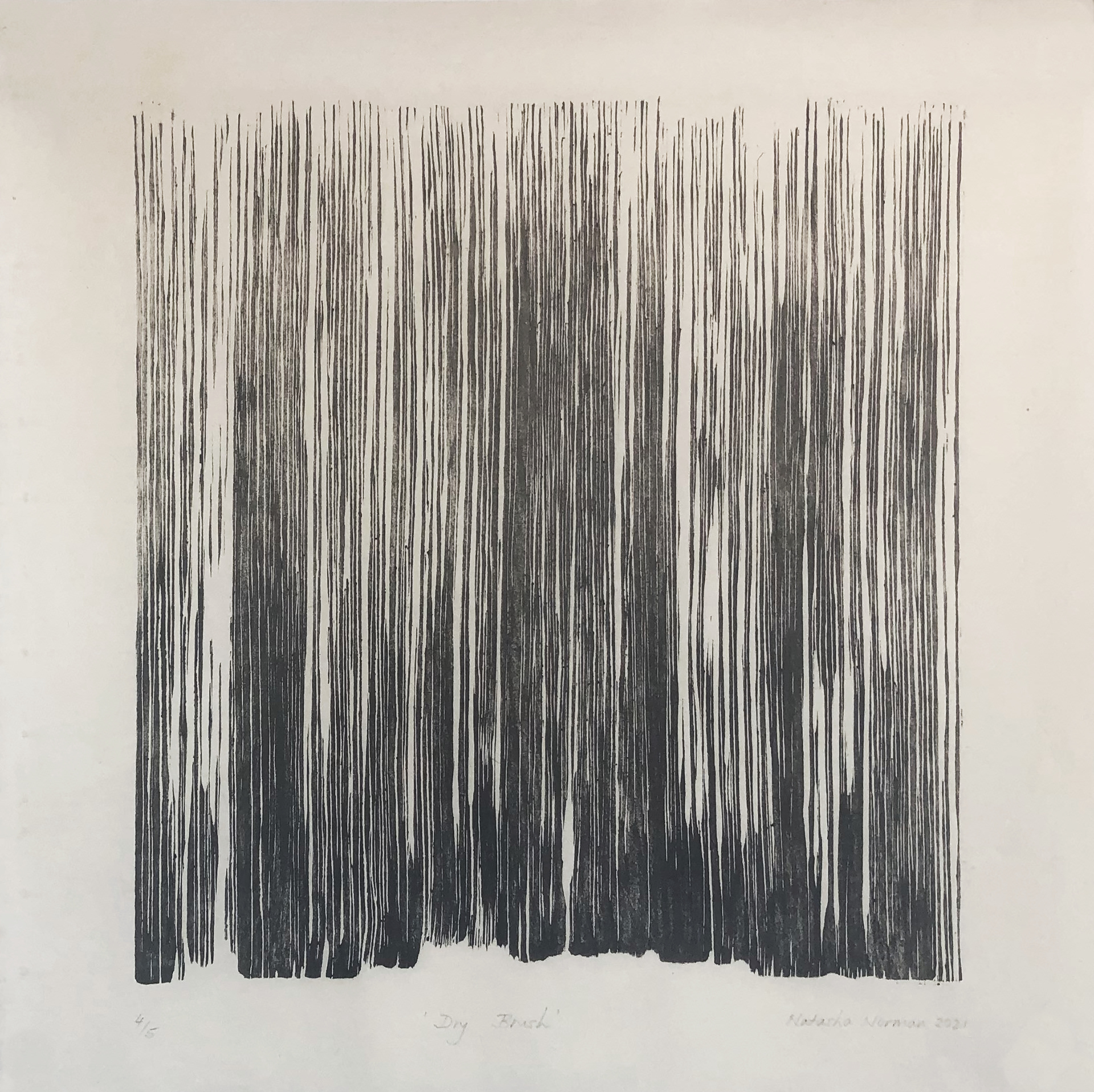
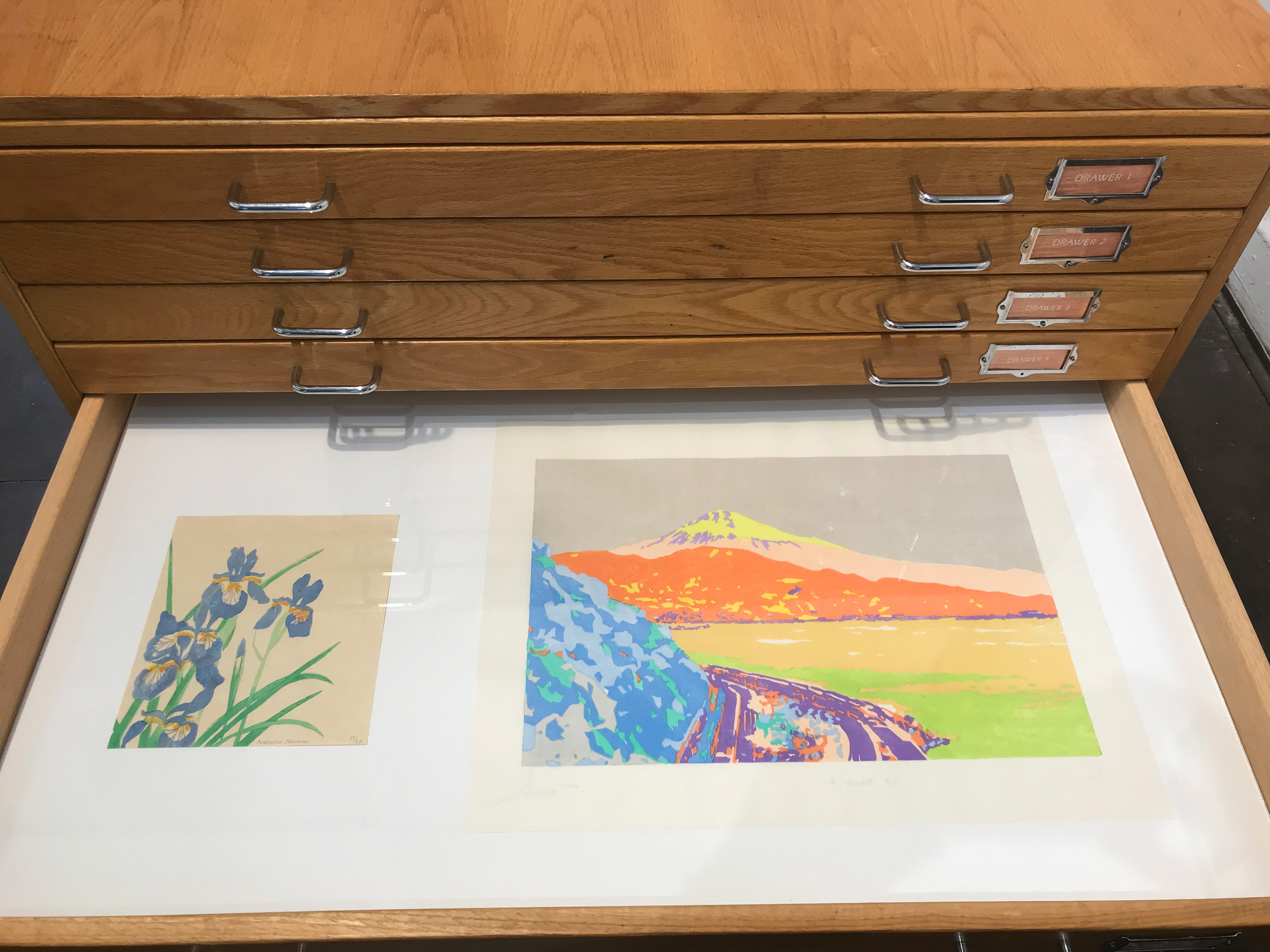
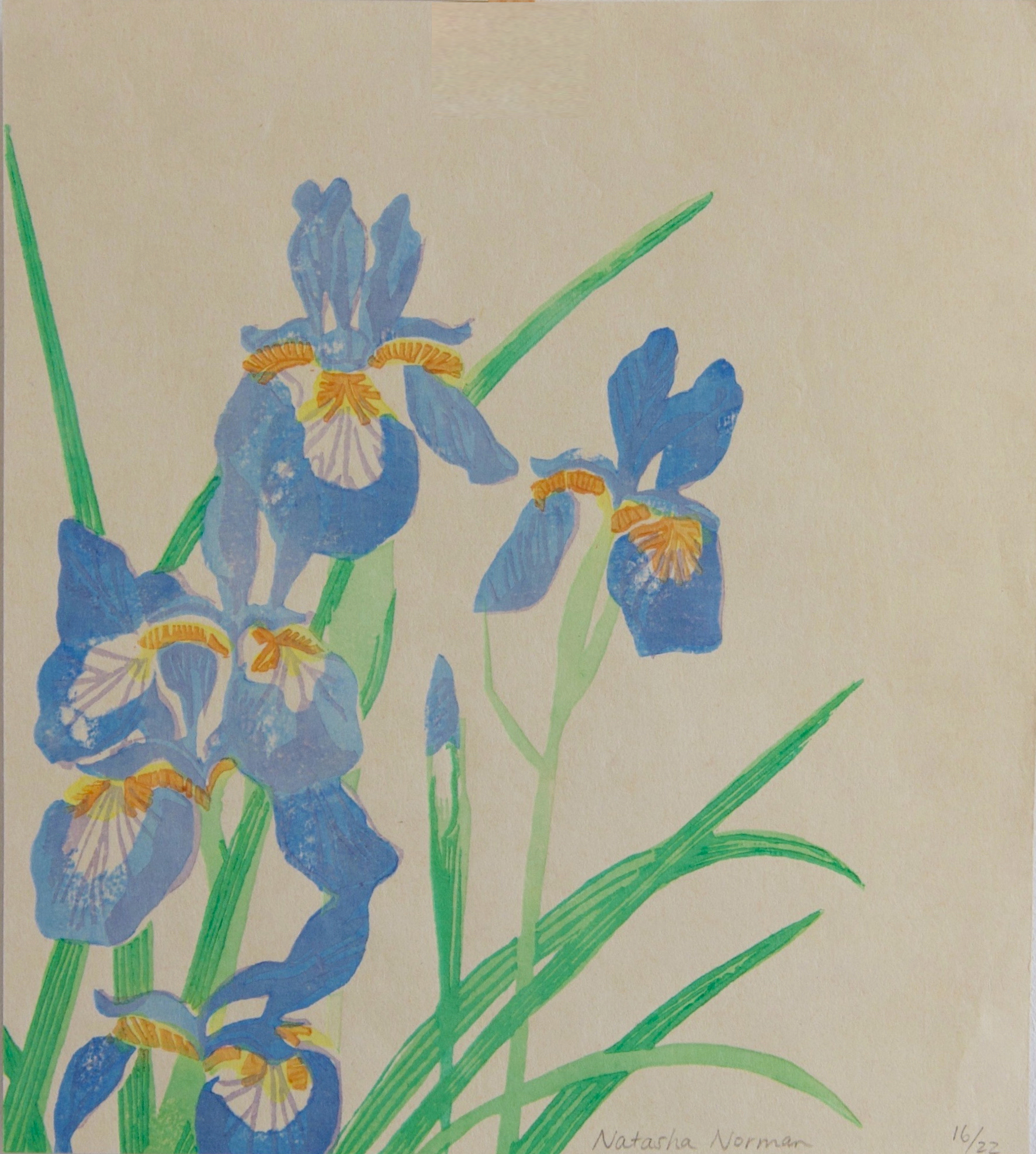
Natasha Norman also seeks inspiration from nature, responding to the
landscape of her home in Cape Town, South Africa.
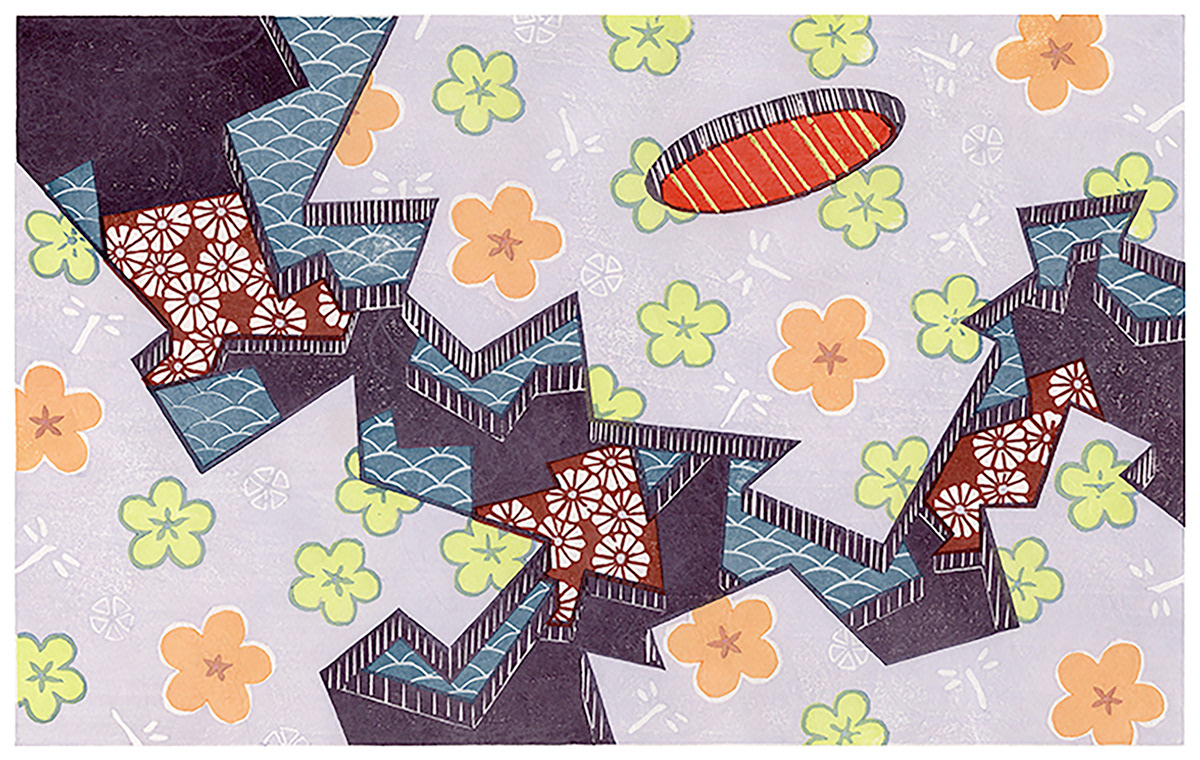
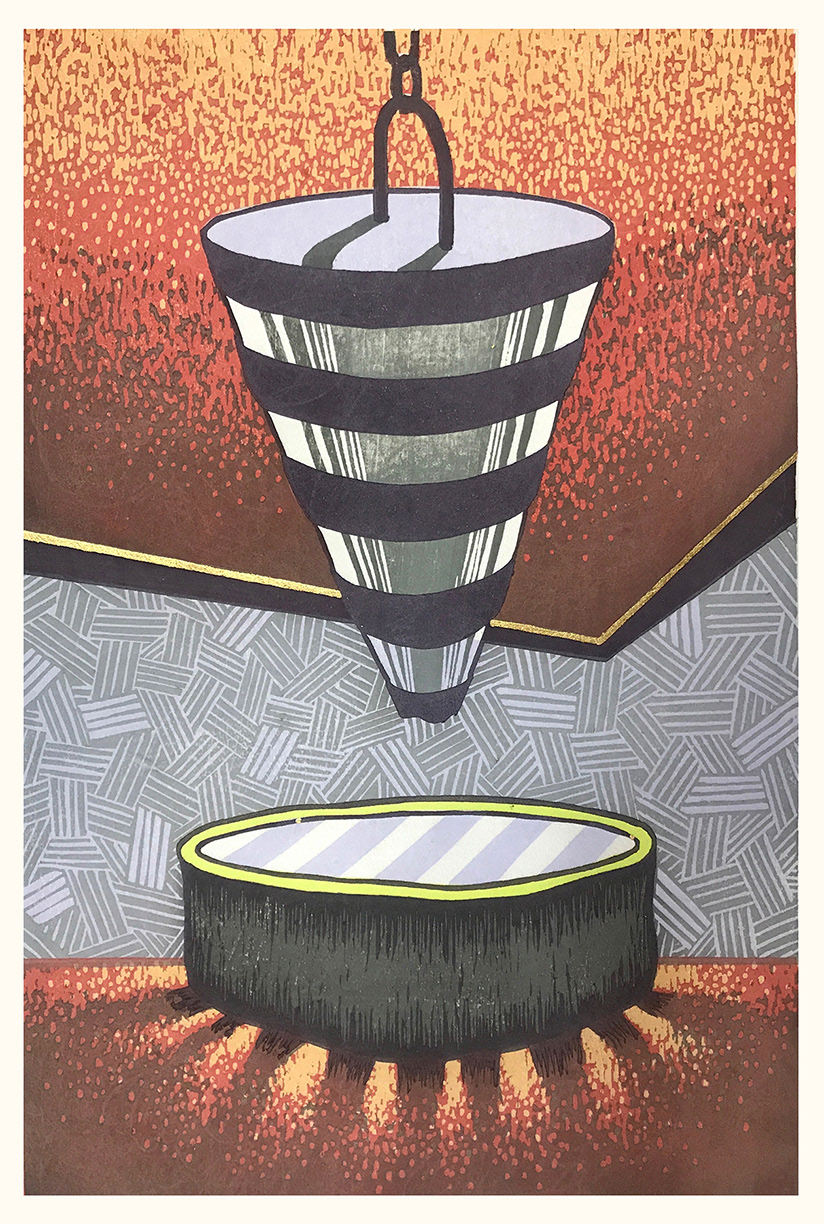
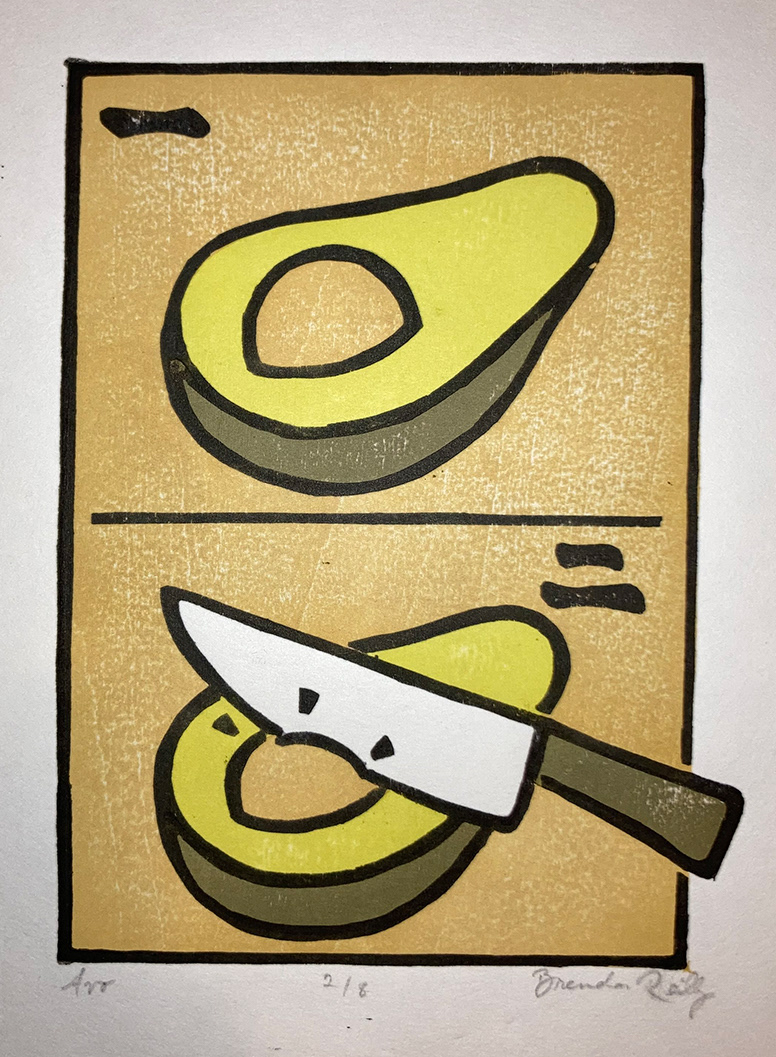
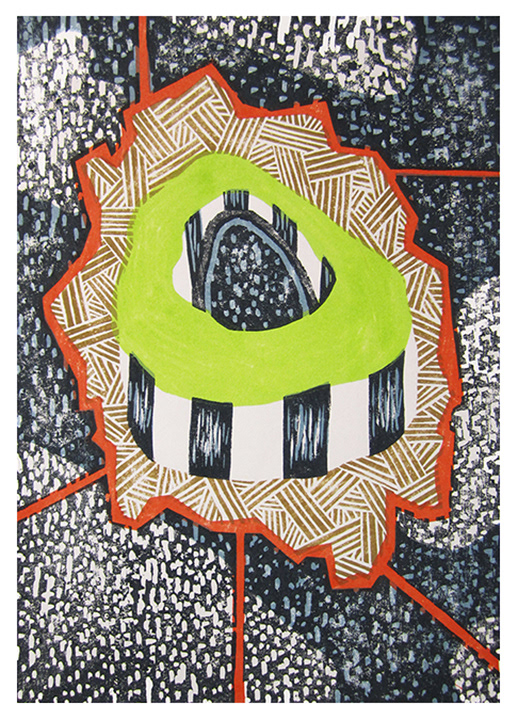
Melissa Schulenberg is a masterful printer whose boldly patterned
shapes suggest fantasy worlds. Her student Brendan Reilly brings these
surfaces into his own work, which is informed by both Asian art and
graphic design.
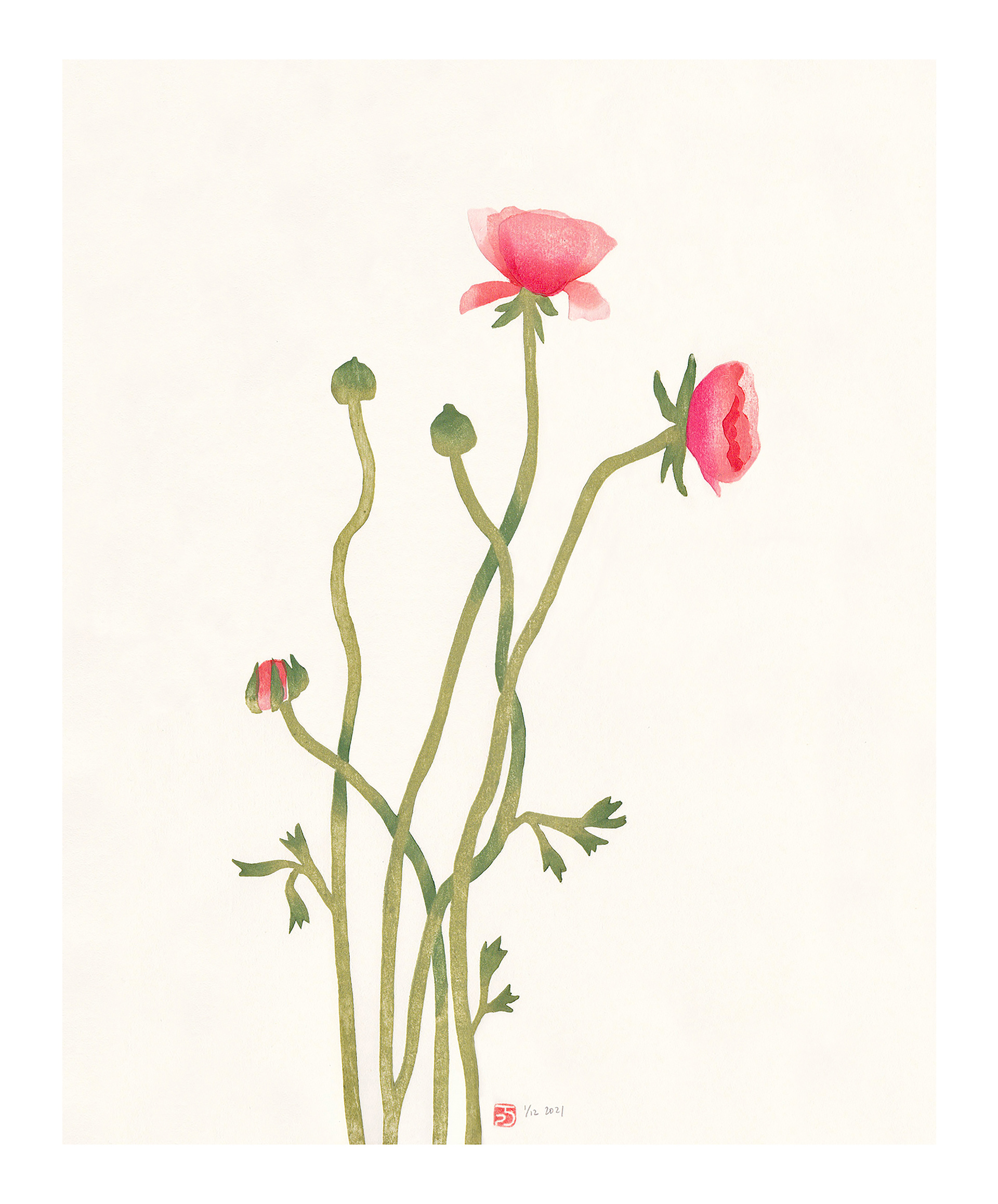
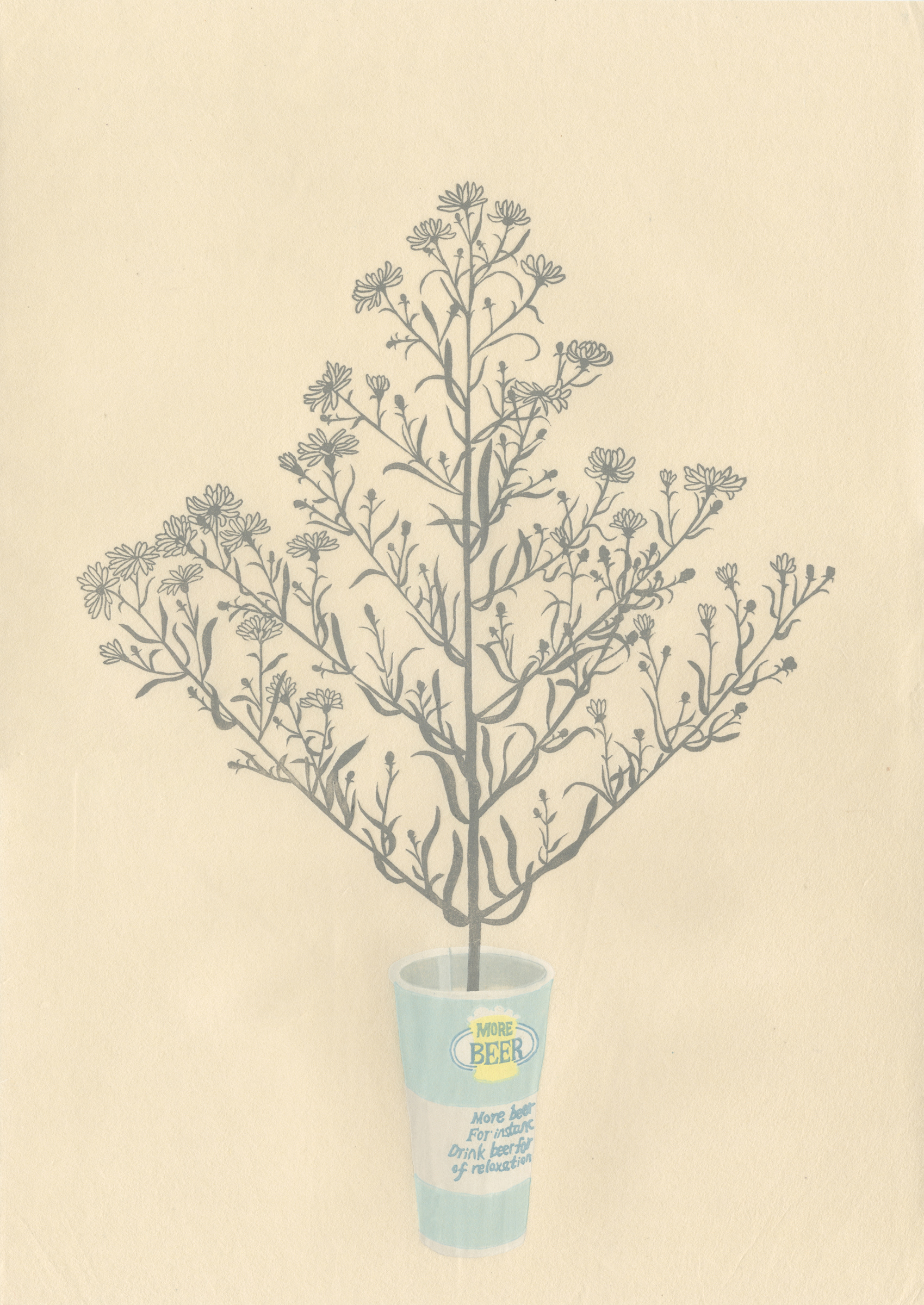
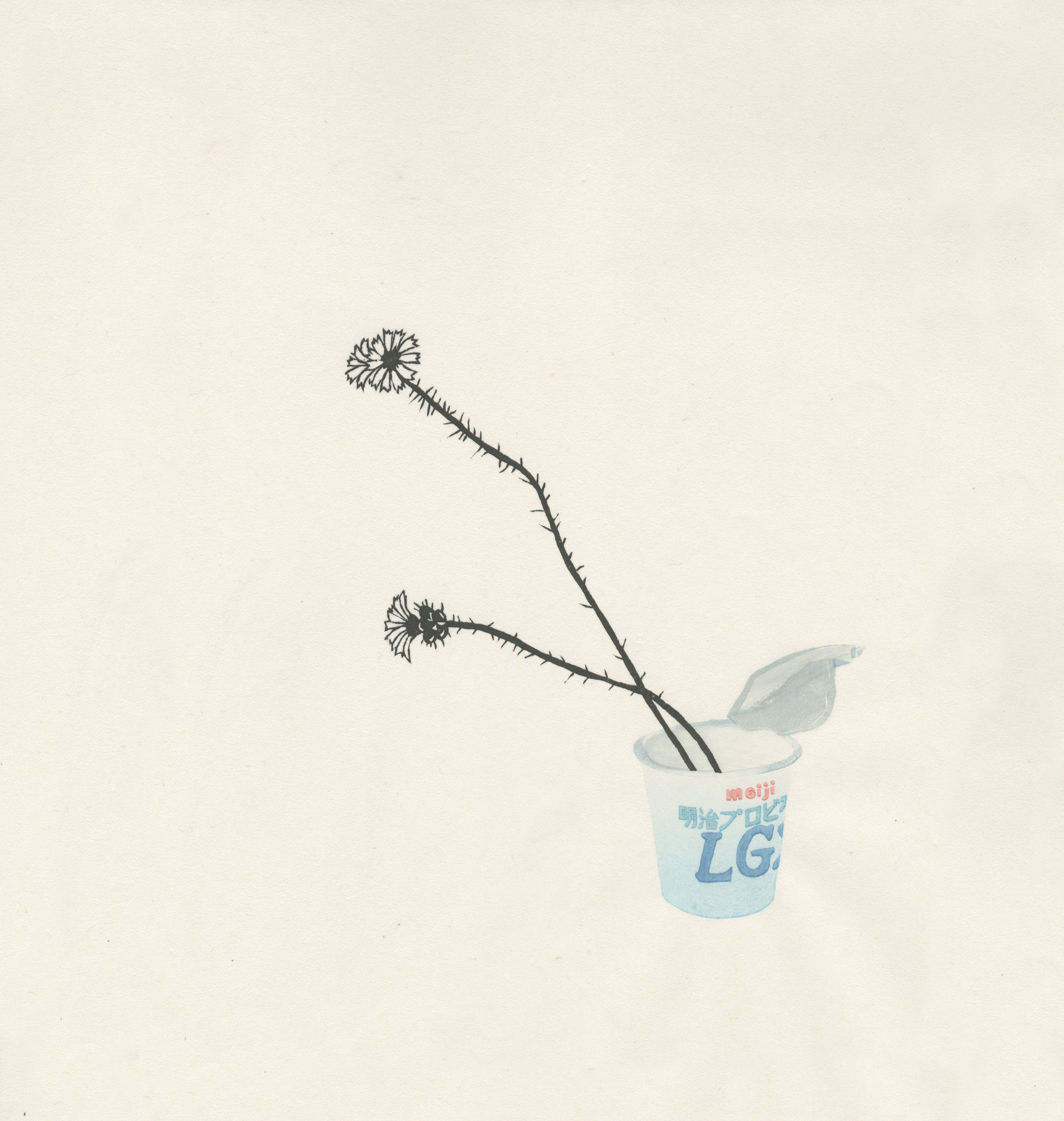
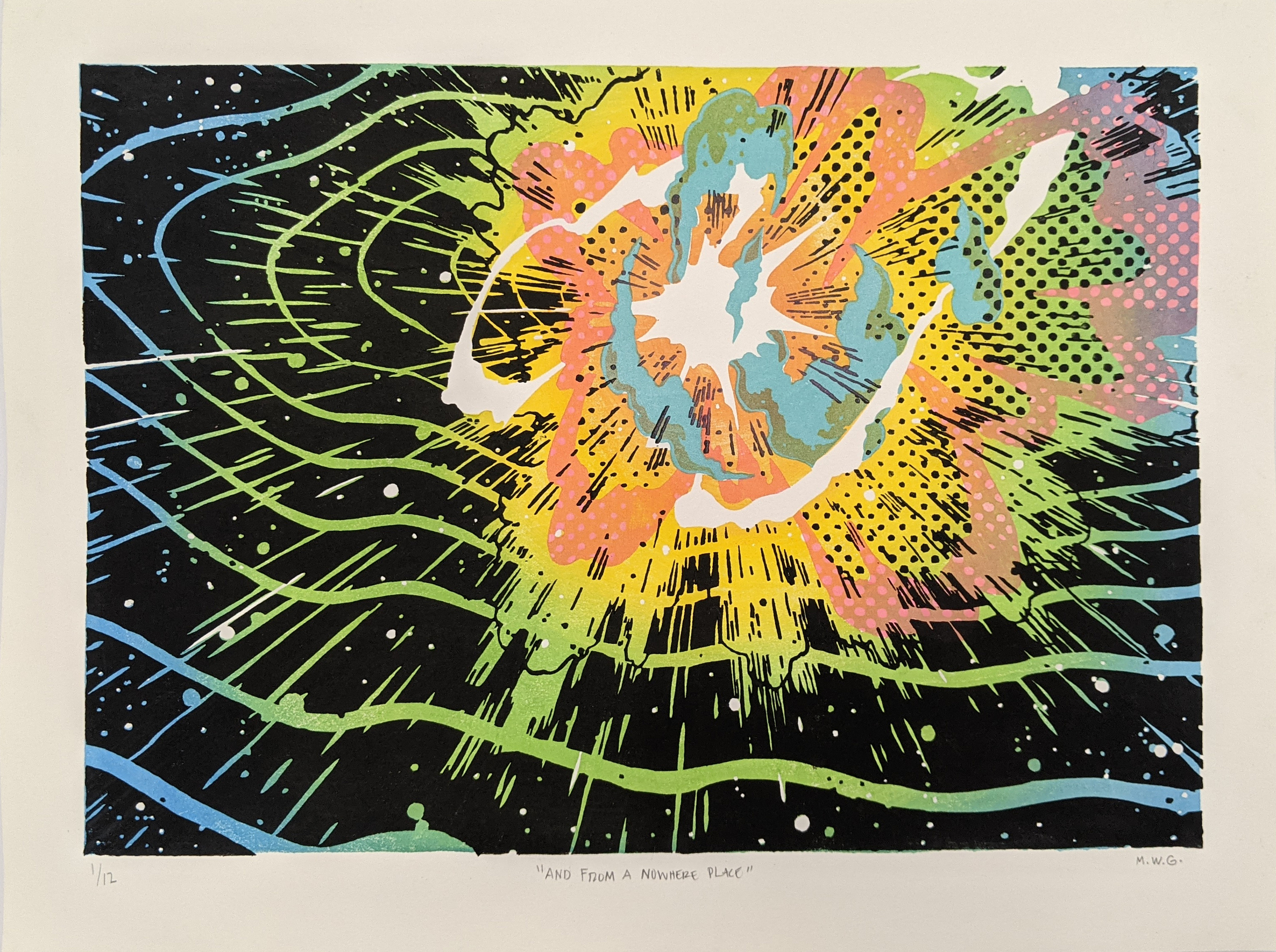
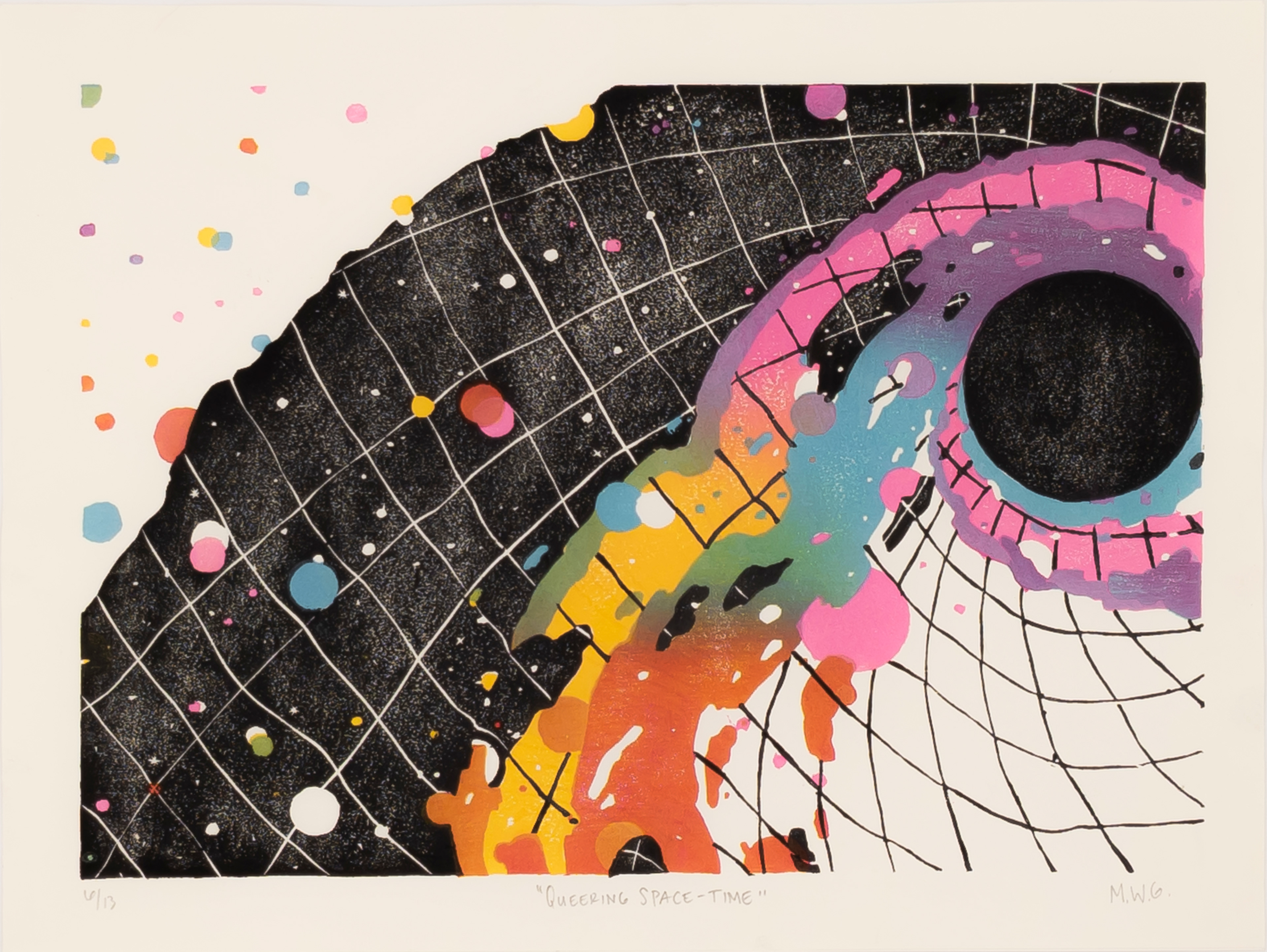
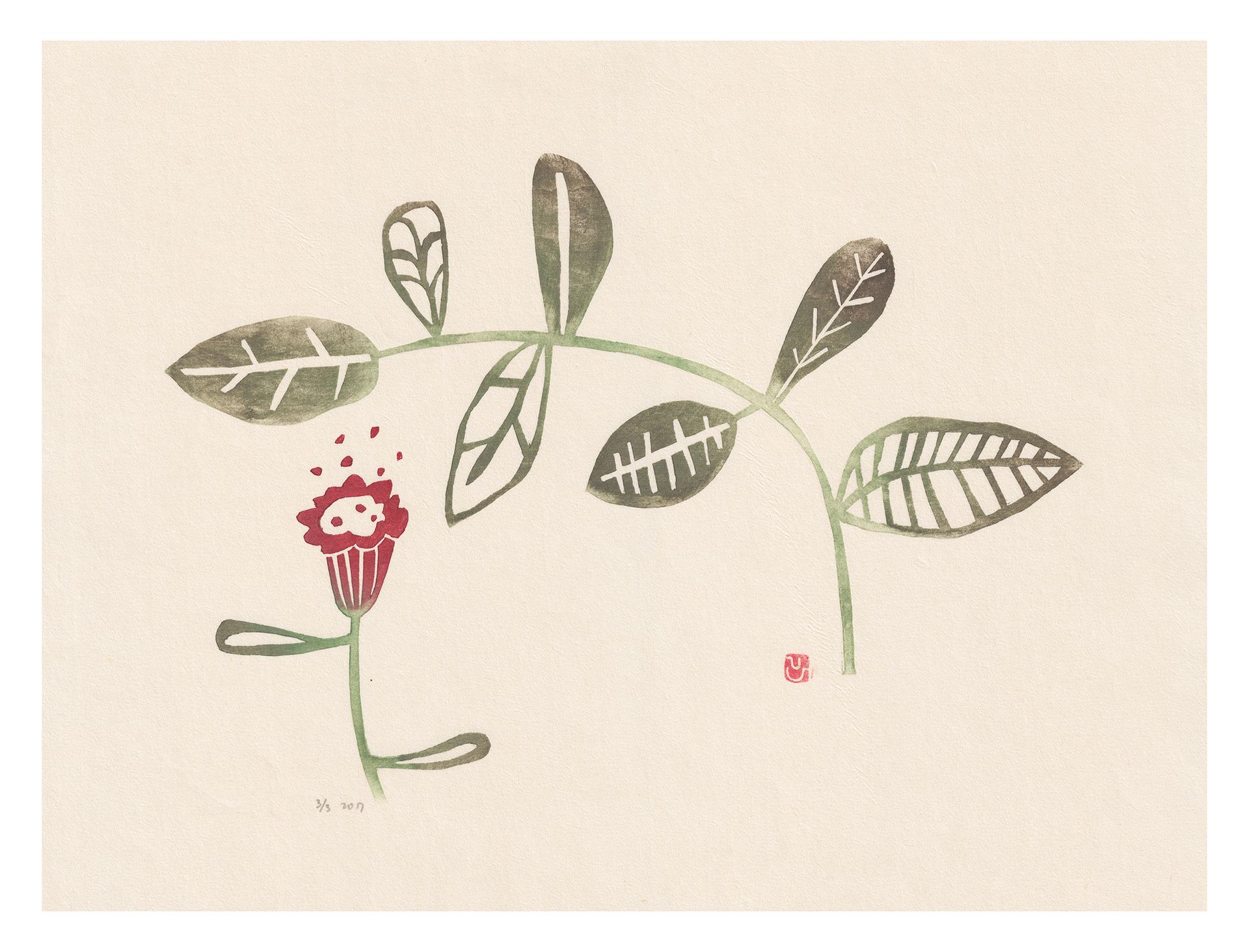
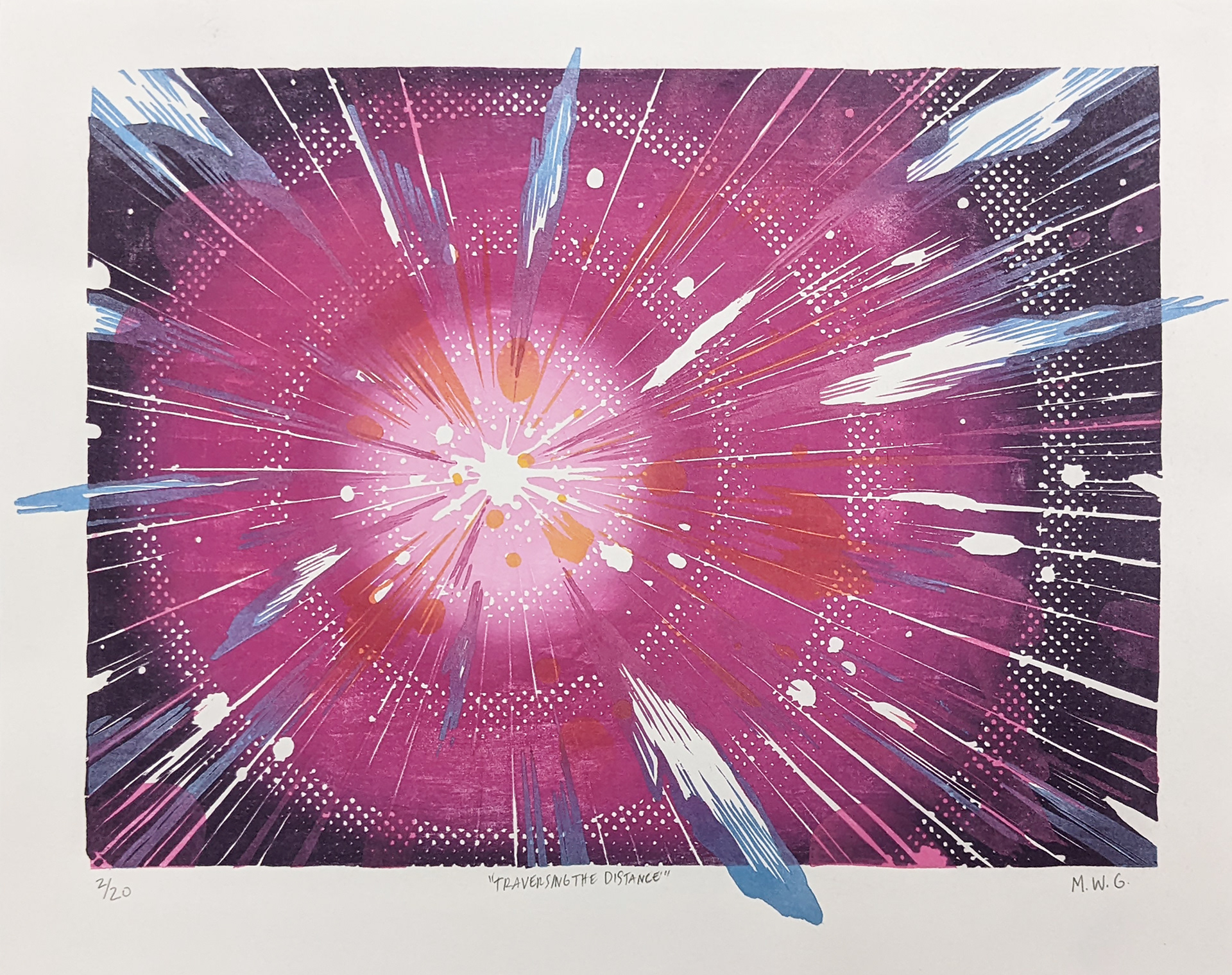
Yoonmi Nam and her student Matthew Willie Garcia each explore the
sense of identity. Nam is inspired by woodblock-printed painting
manuals from Asia and brings that language into her prints. Flowers
arranged in disposable containers evoke cross-cultural dynamics and a
sense of impermanence. Garcia creates colorful futuristic landscapes
that investigate his queer identity through fluid ideas of
multi-dimensional space-time.
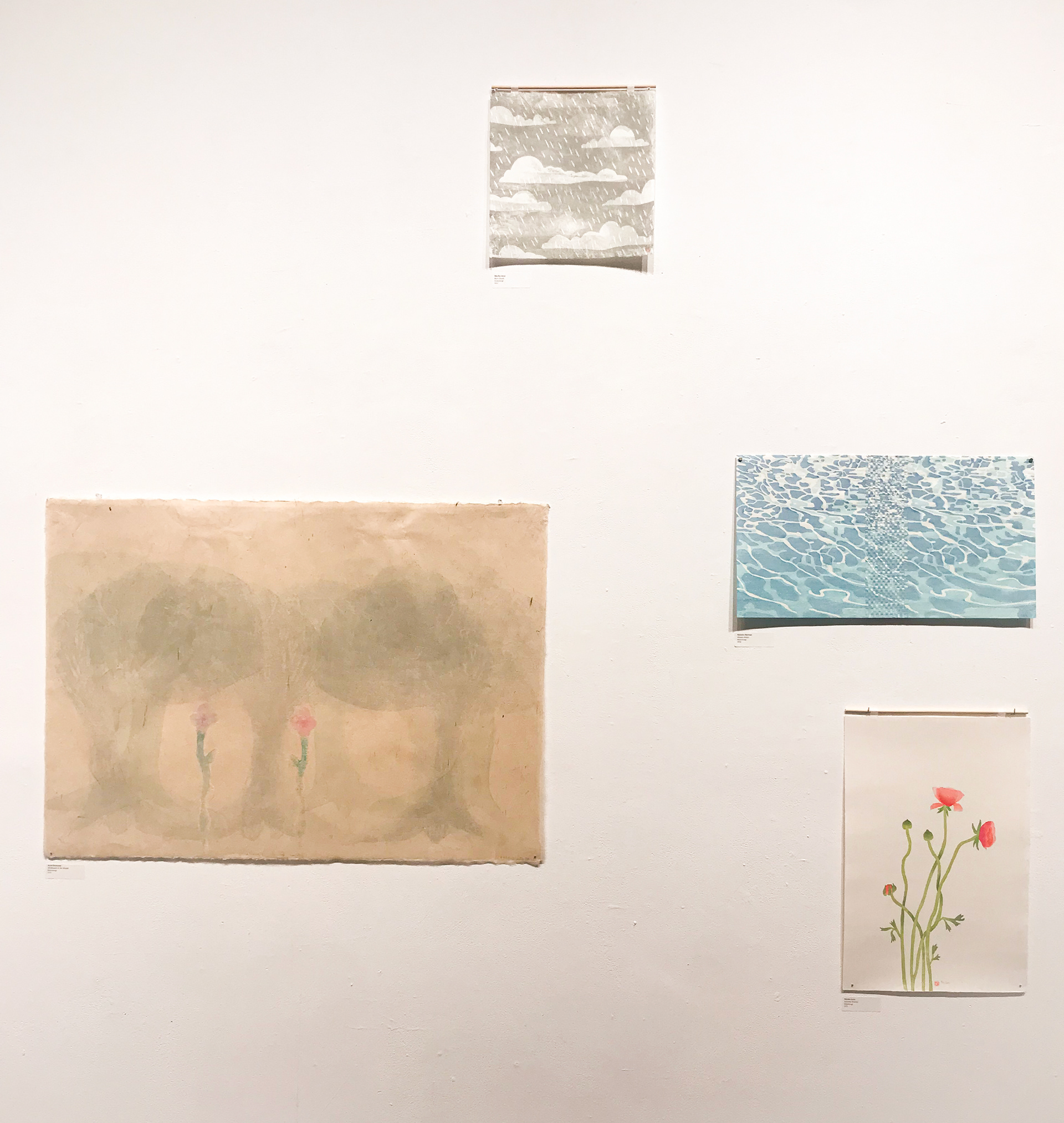
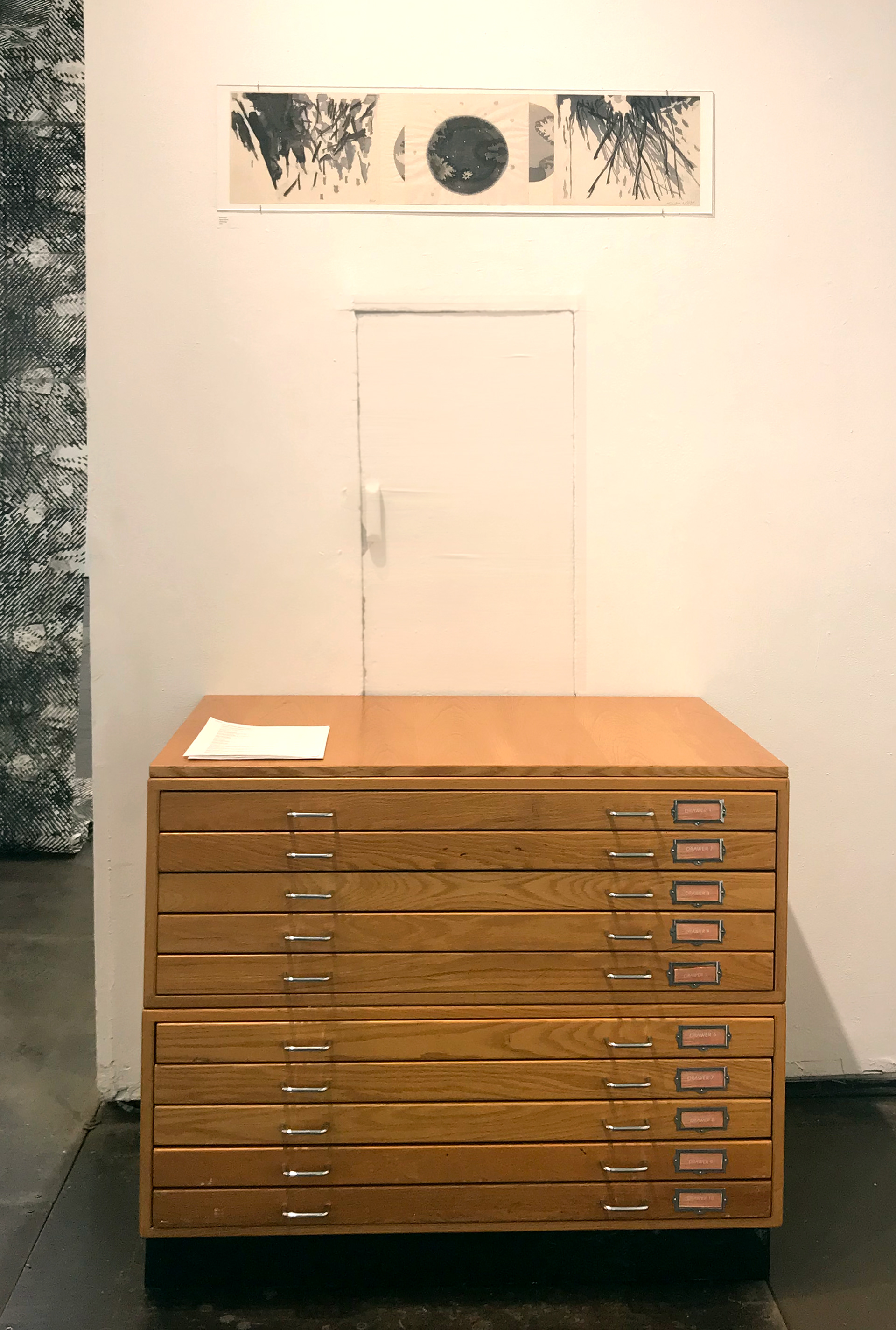
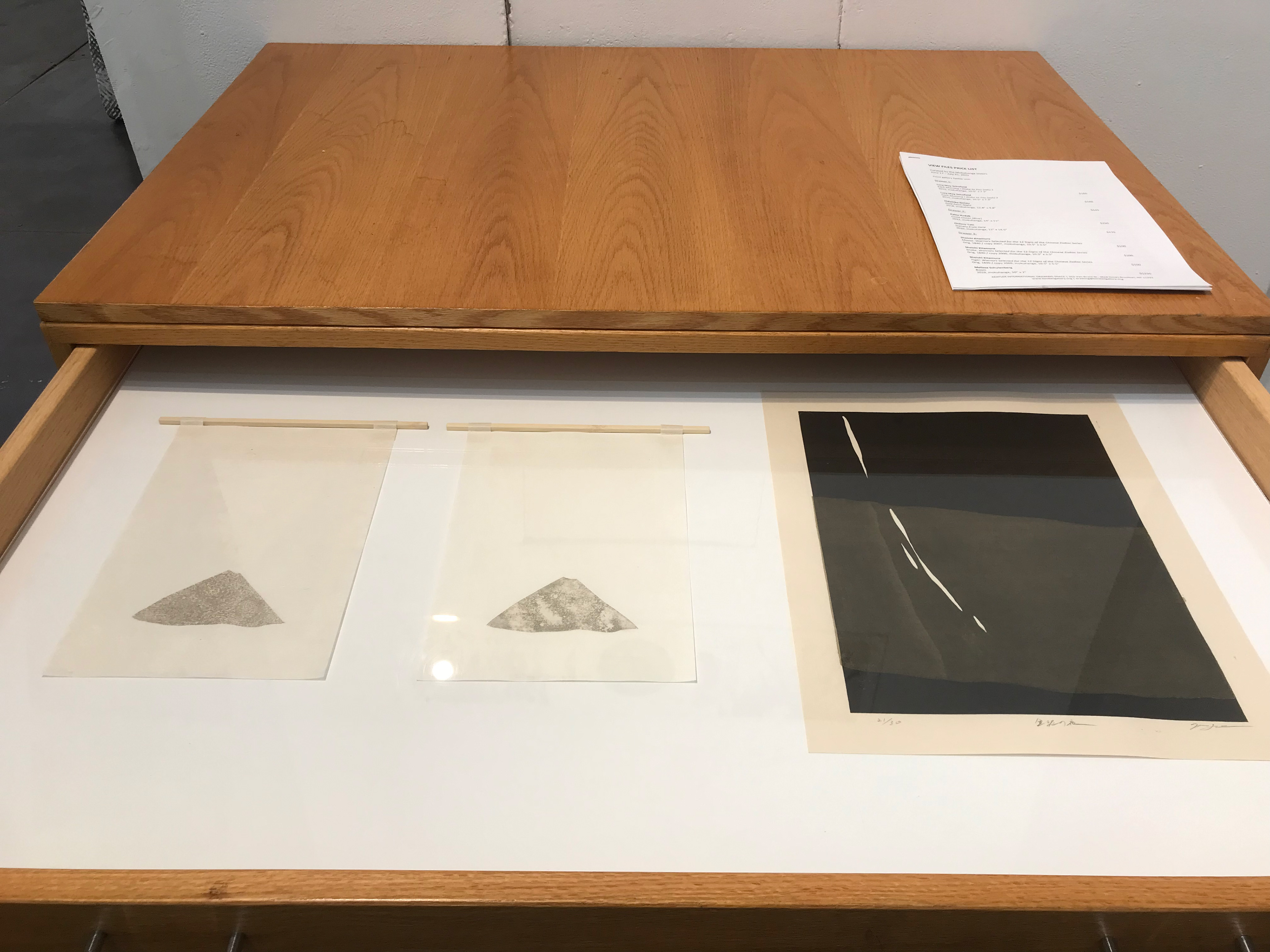
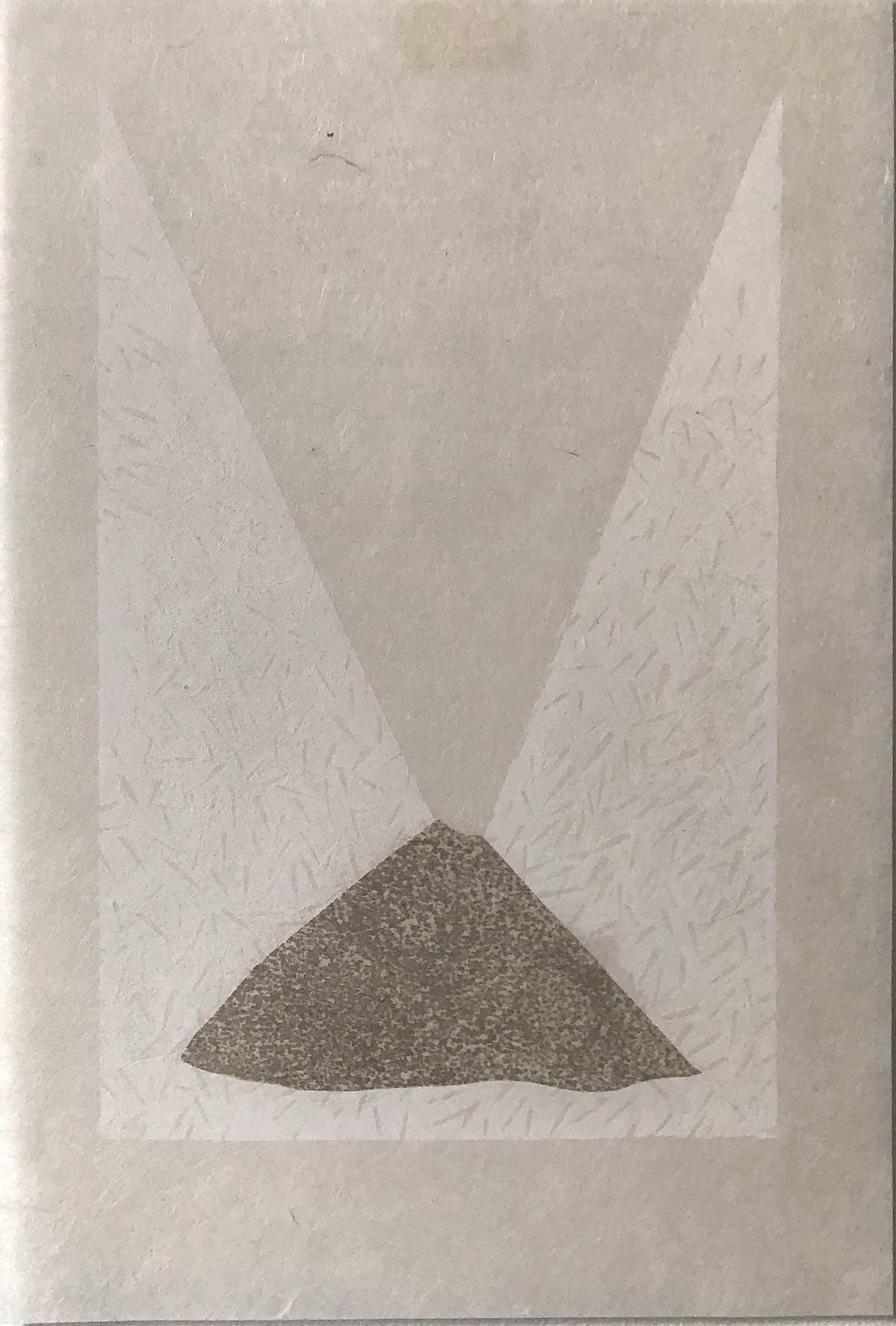
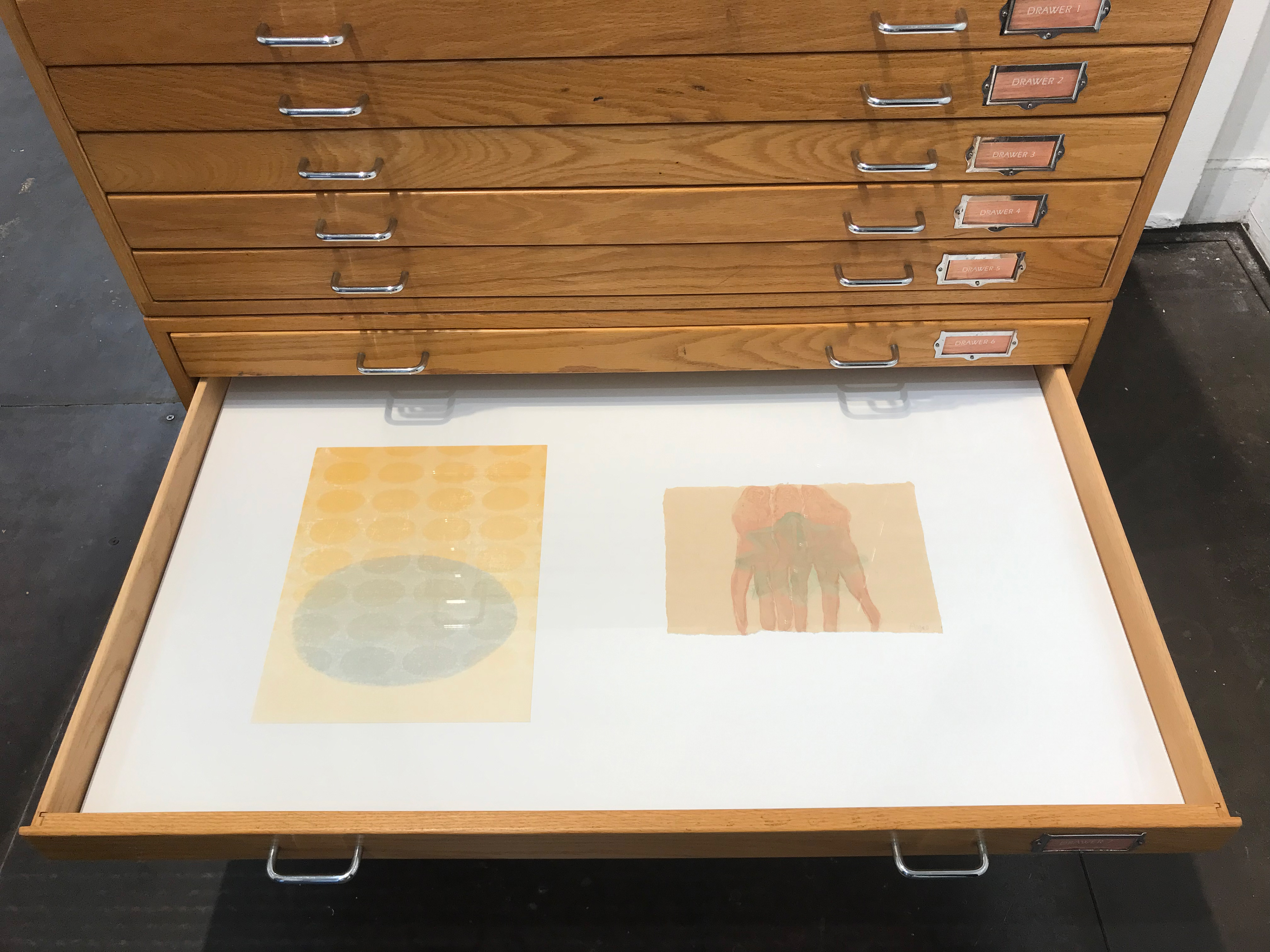
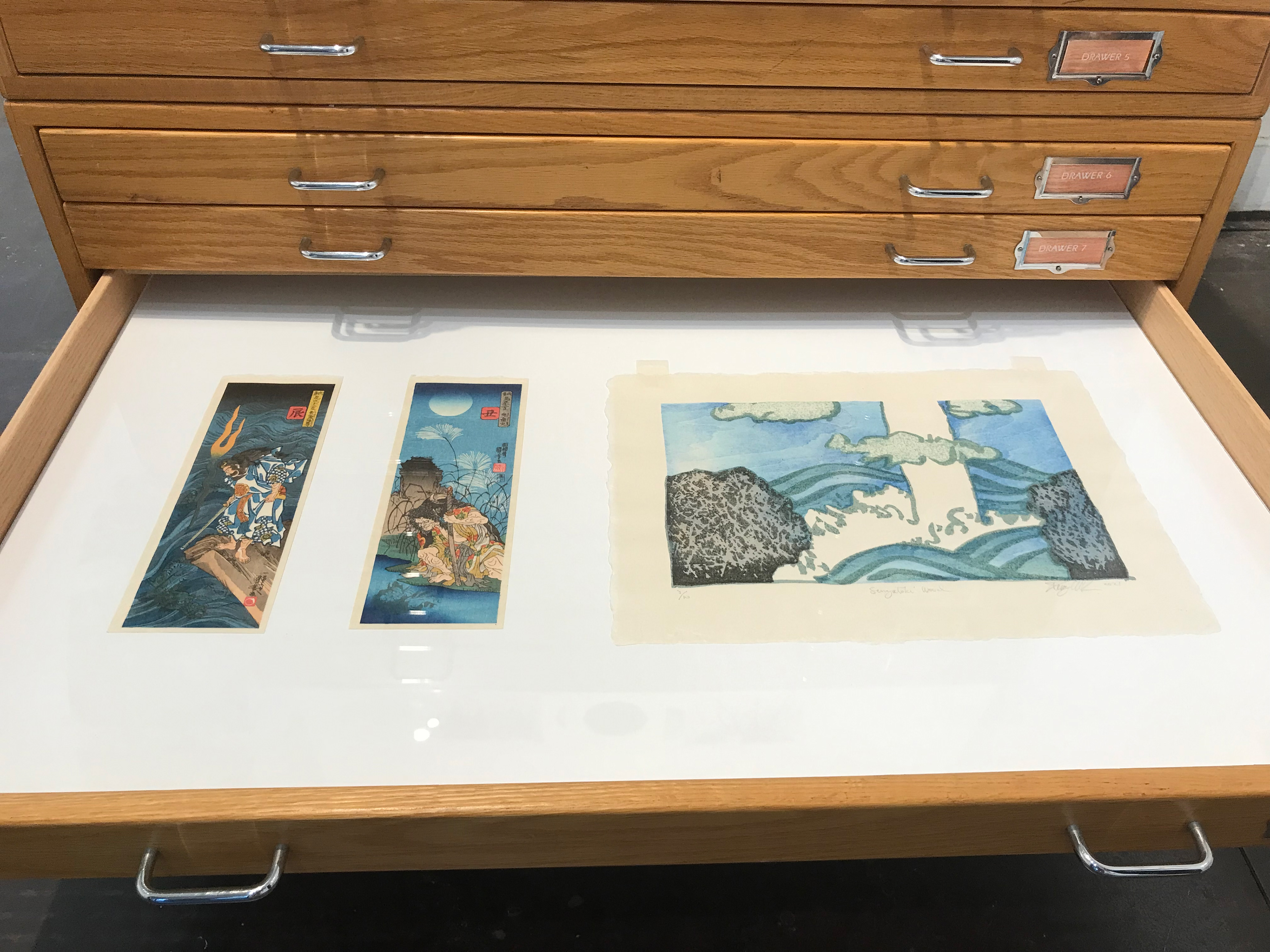
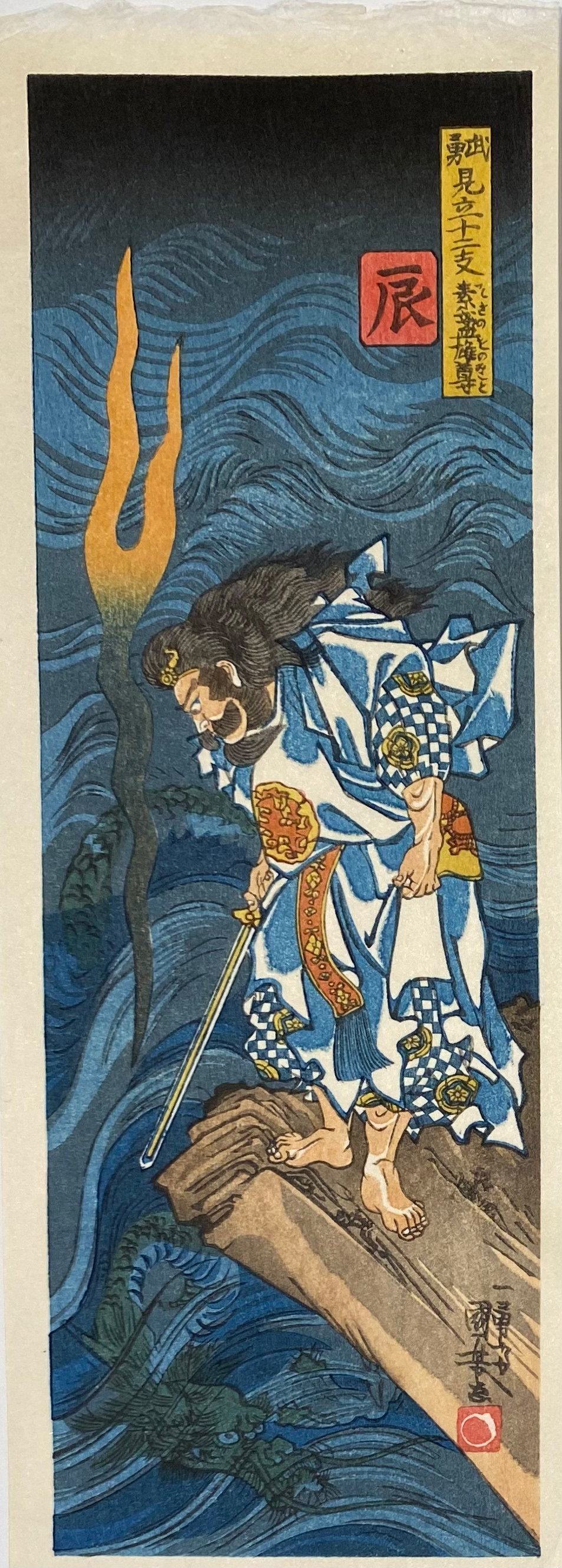
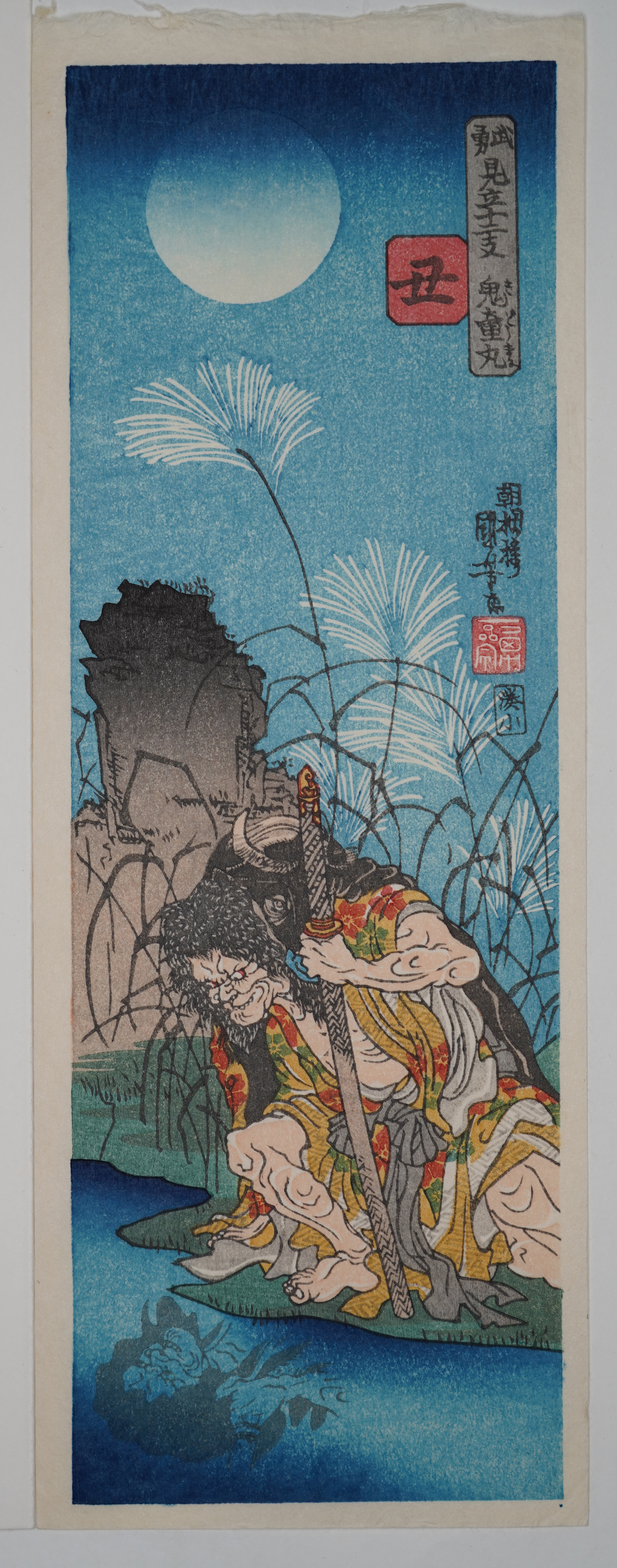
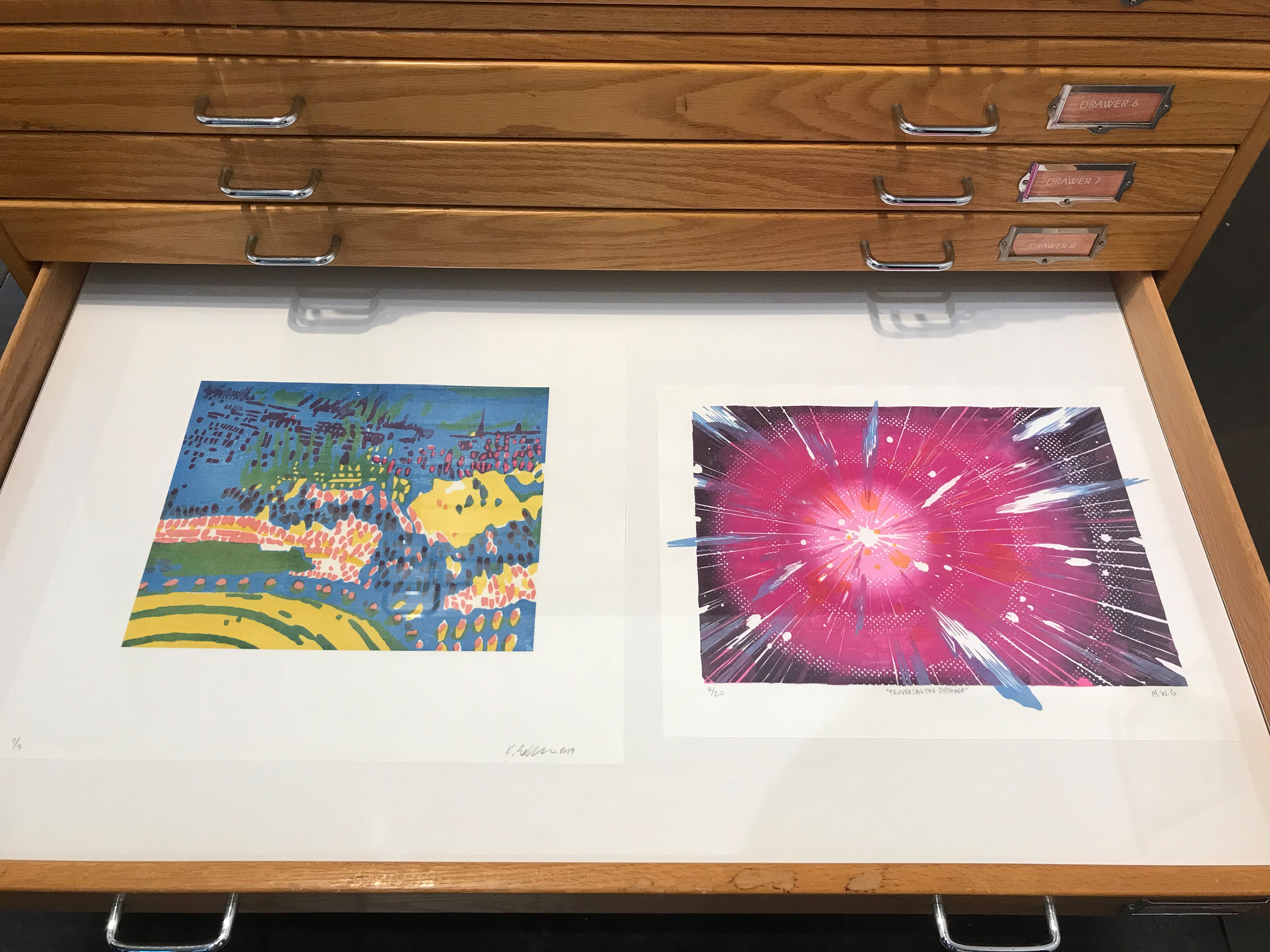
Mokuhanga from the Flatfiles
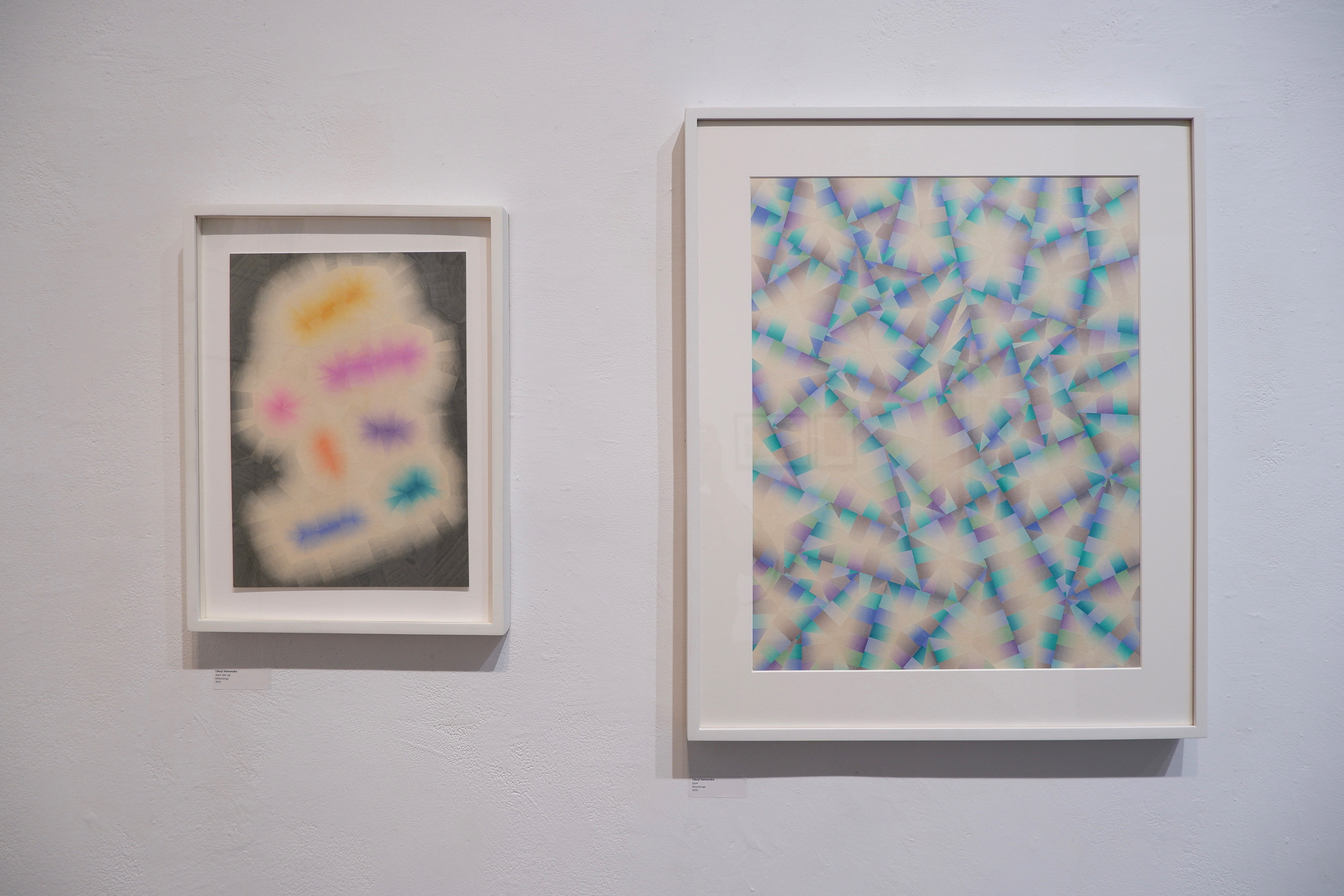
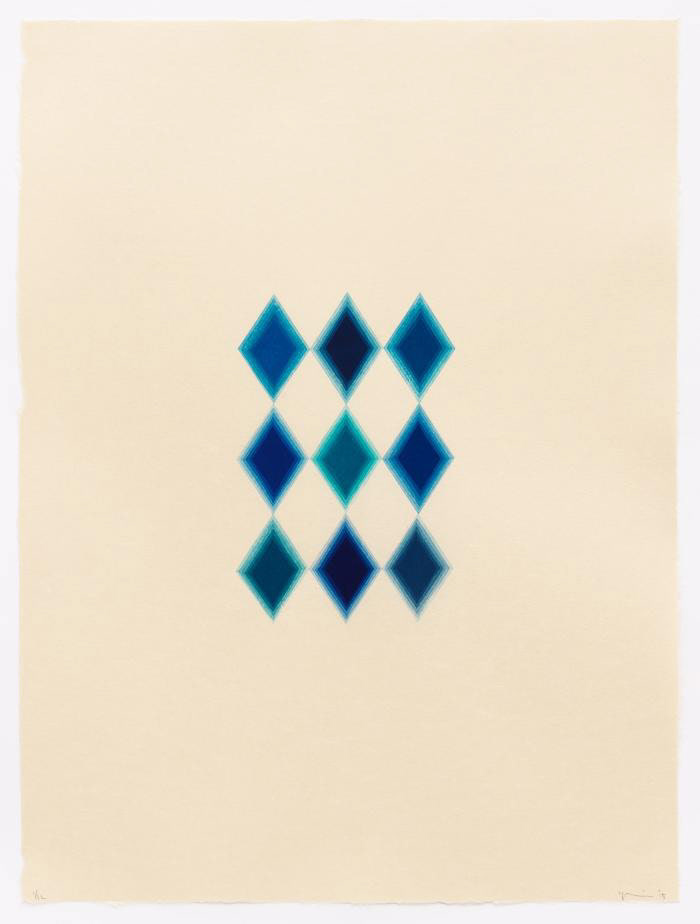
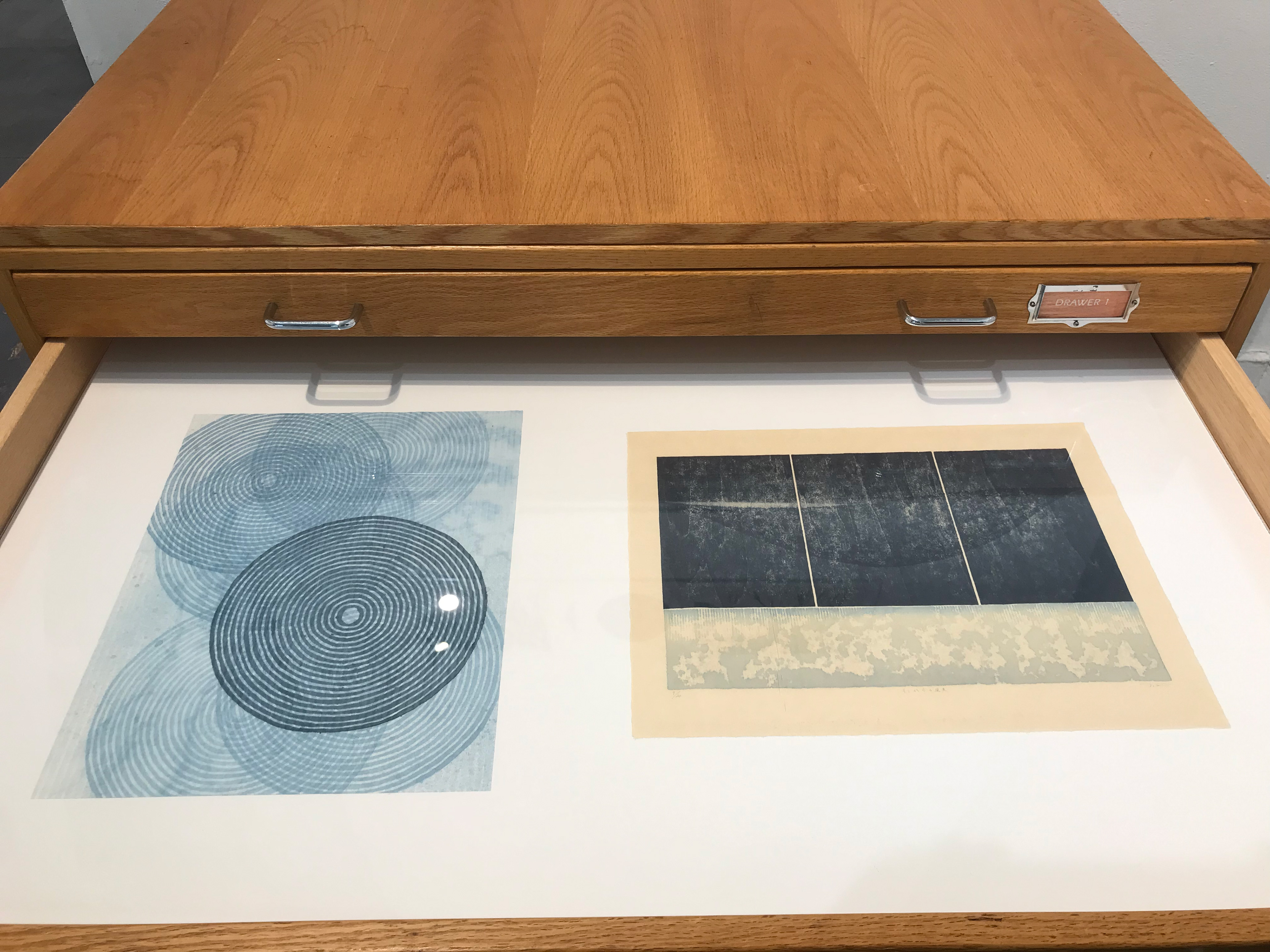
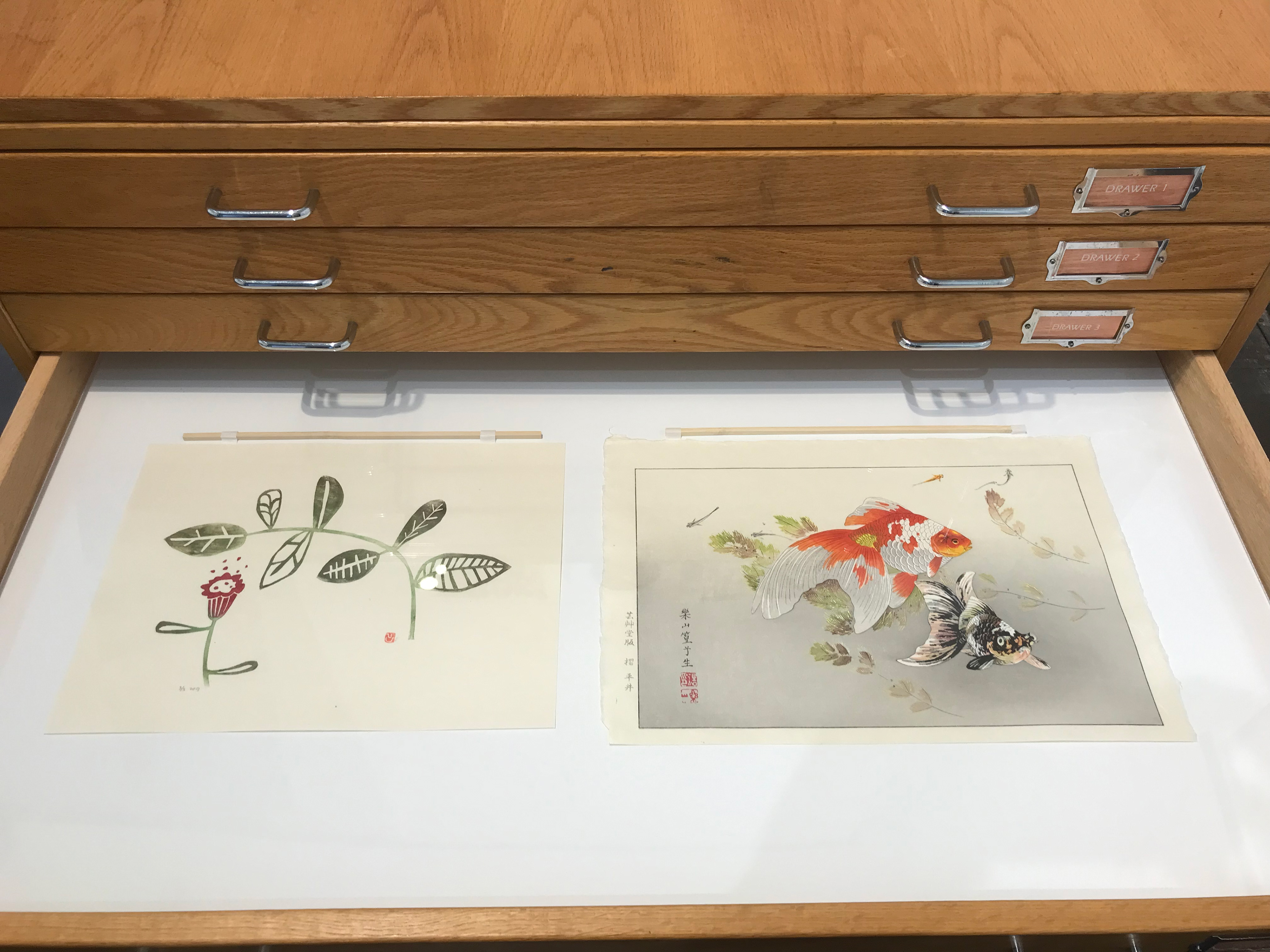
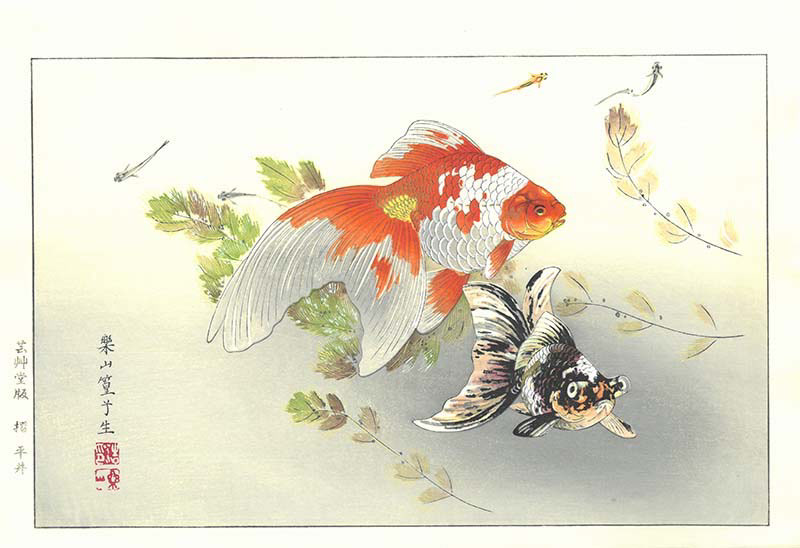
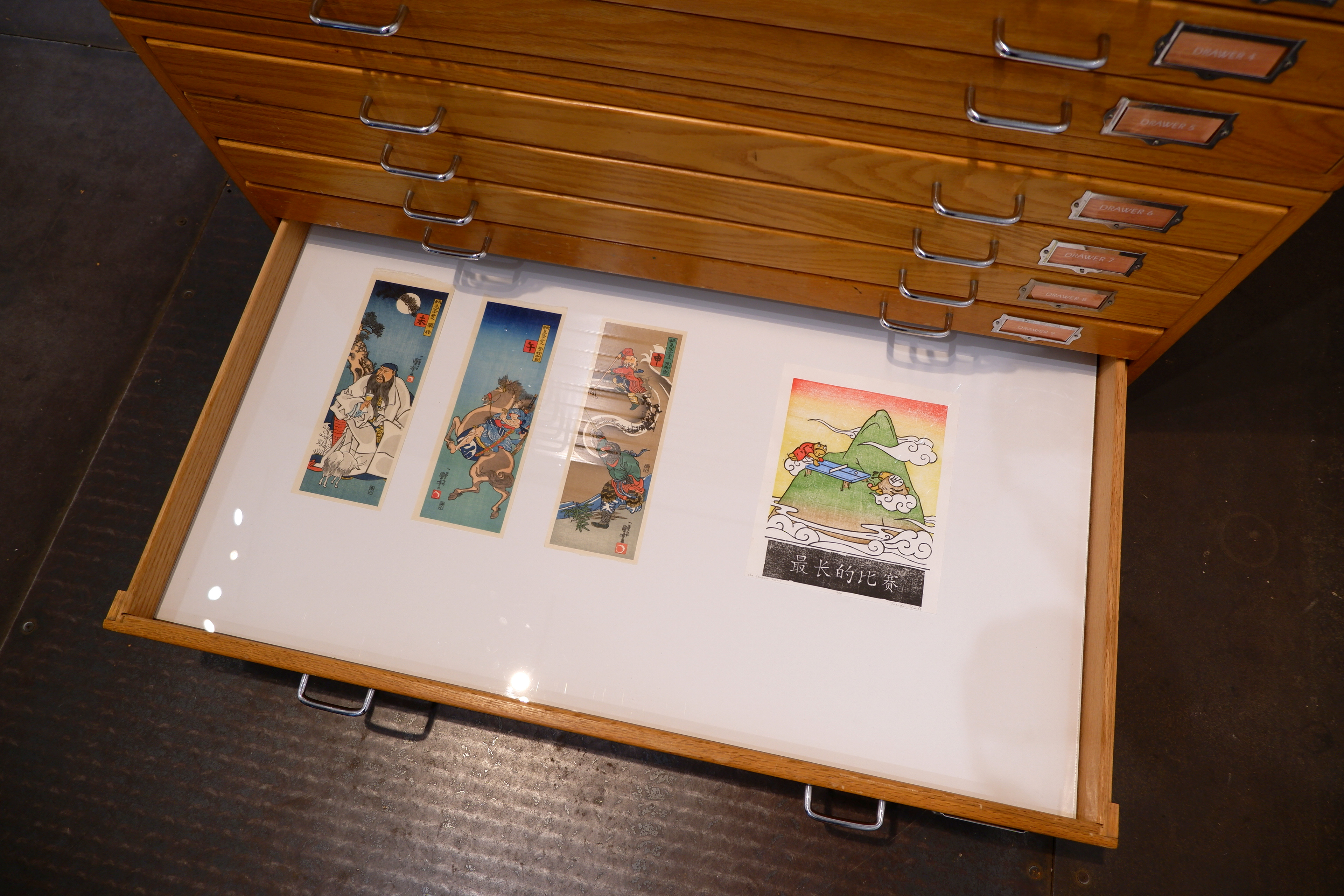
Concurrent with Between Worlds, a selection of work by artists from the Kentler Flatfiles highlights mokuhanga engaged with contemporary issues.
Keiko Hara, Yasu Shibata, and Takuji Hamanaka were all born in Japan
and moved to the United States as young artists. Each developed a
unique approach to mokuhanga based on refined technical skills first
learned in Japan. Emeritus Professor of Art at Whitman College, Keiko
Hara has devoted much of her creative work to immersive installations
that incorporate mokuhanga. Yasu Shibata is a master printer for Pace
Editions in New York. He has developed his own approach to reduction
printing to create mathematically precise, jewel-like prints.
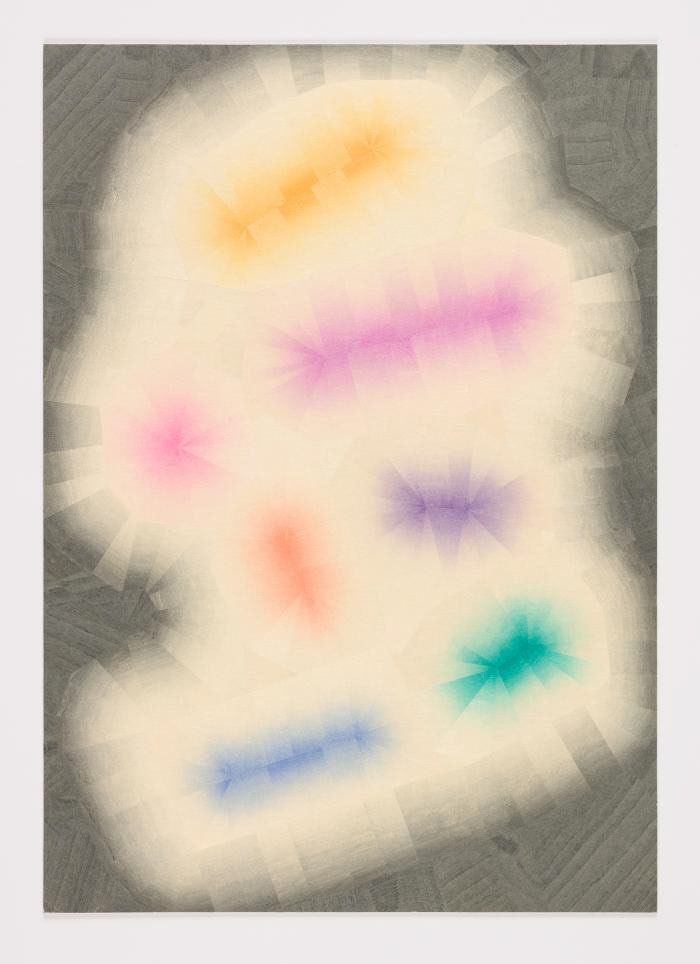
Endlessly surprising, Takuji Hamanaka’s carefully crafted prints are
pieced together from printed elements that coalesce to create
unexpected vistas.
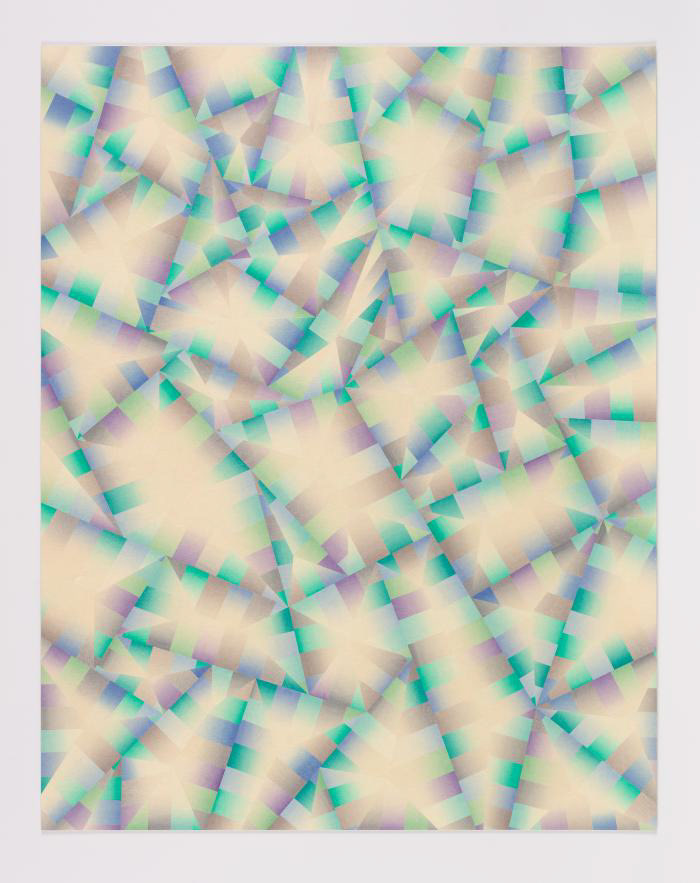
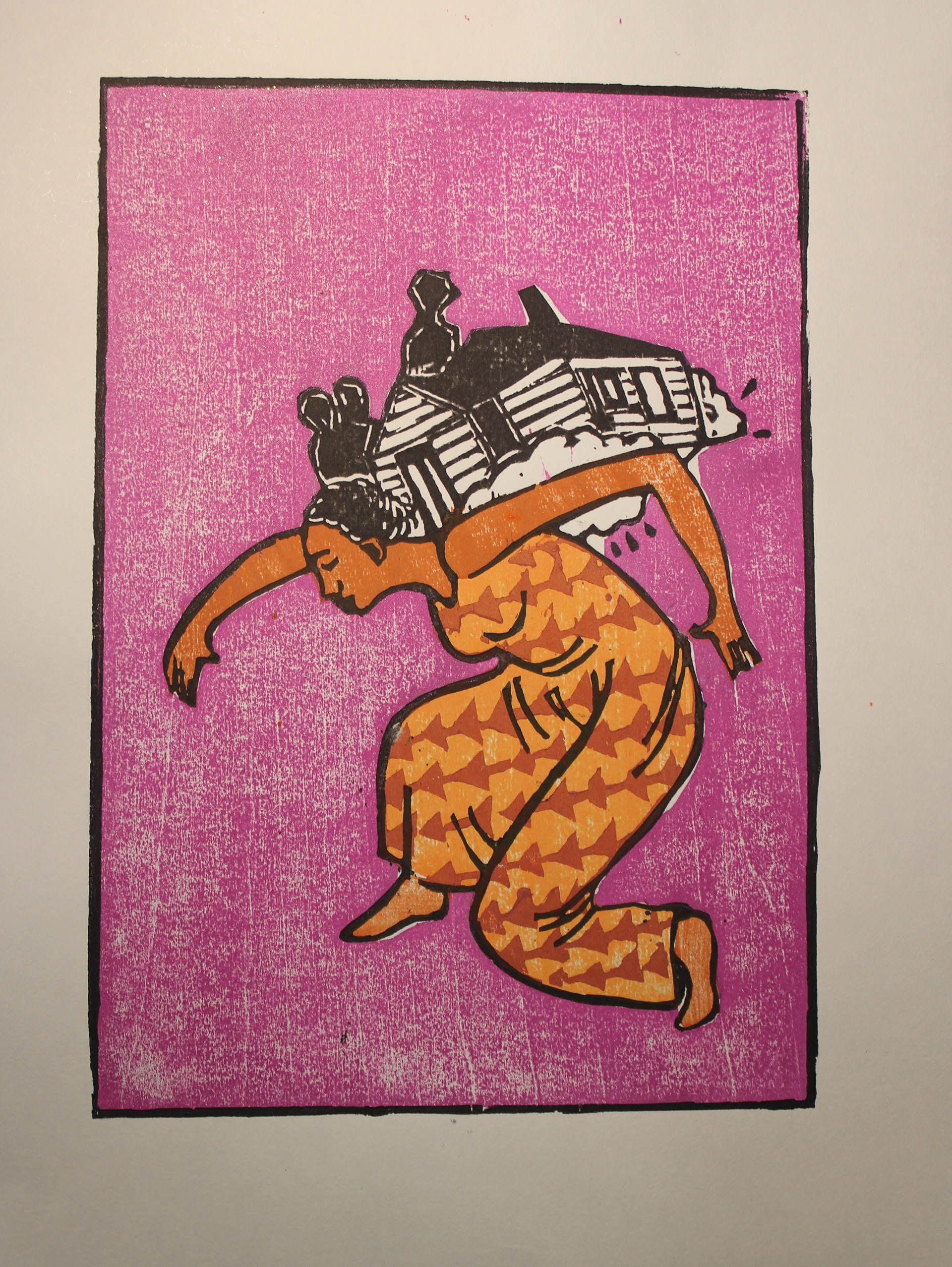
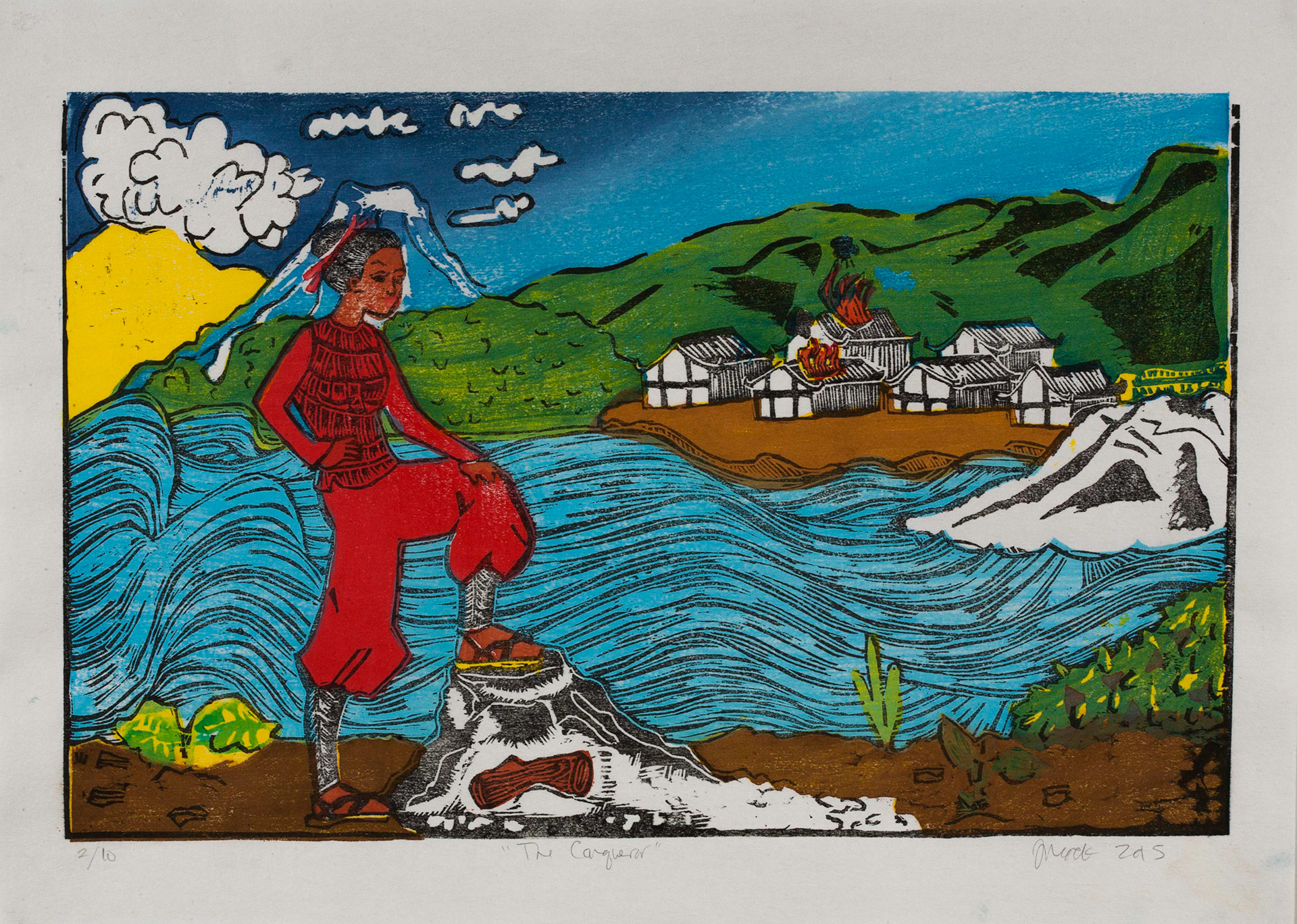
Annie Bissett channels her emotions about political divisions into her
imagery of fire symbolizing hope in times of despair. Jennifer
Mack-Watkins’ prints empower women to look beyond confining
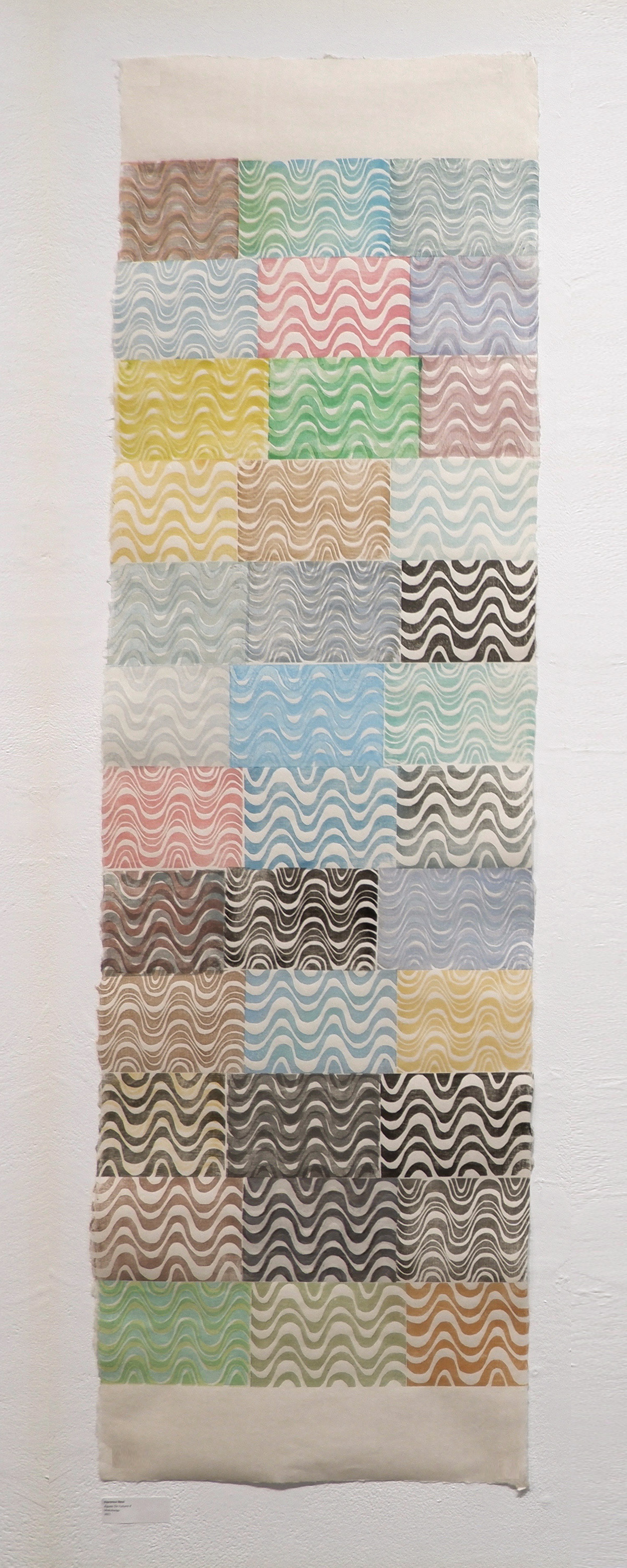
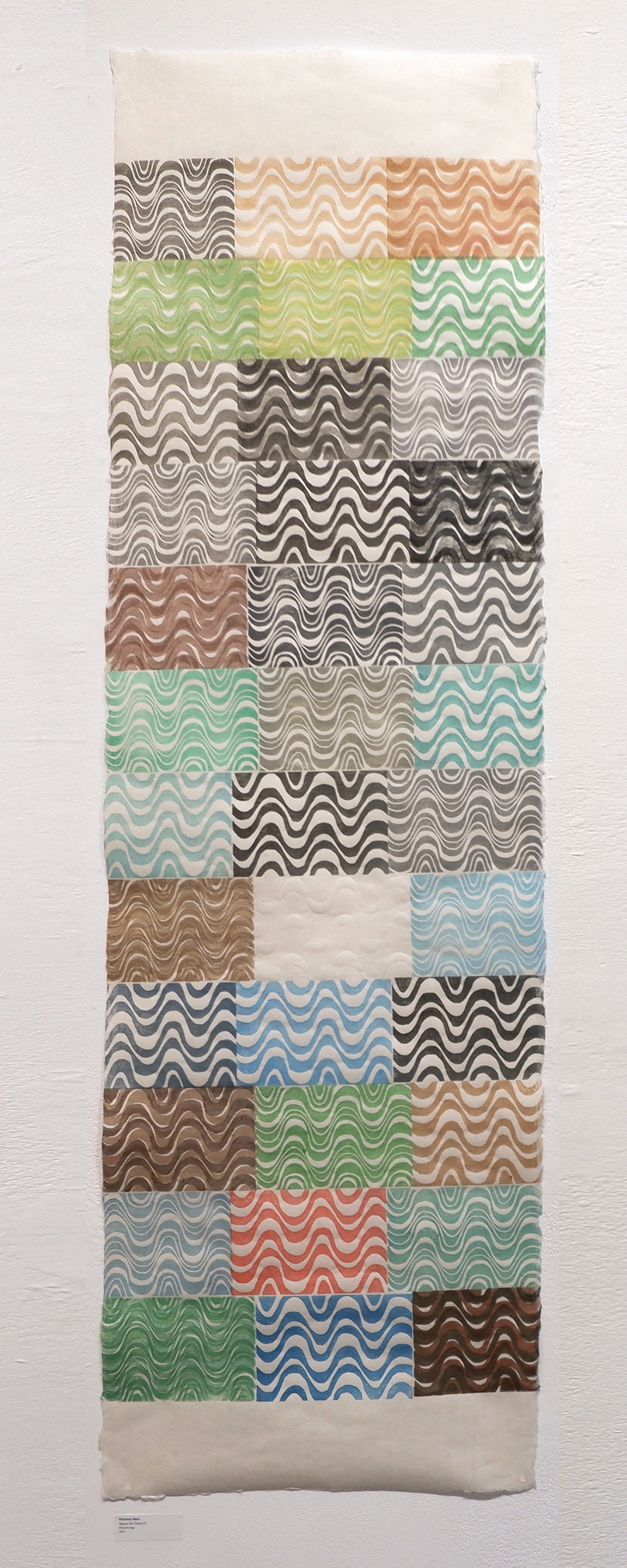
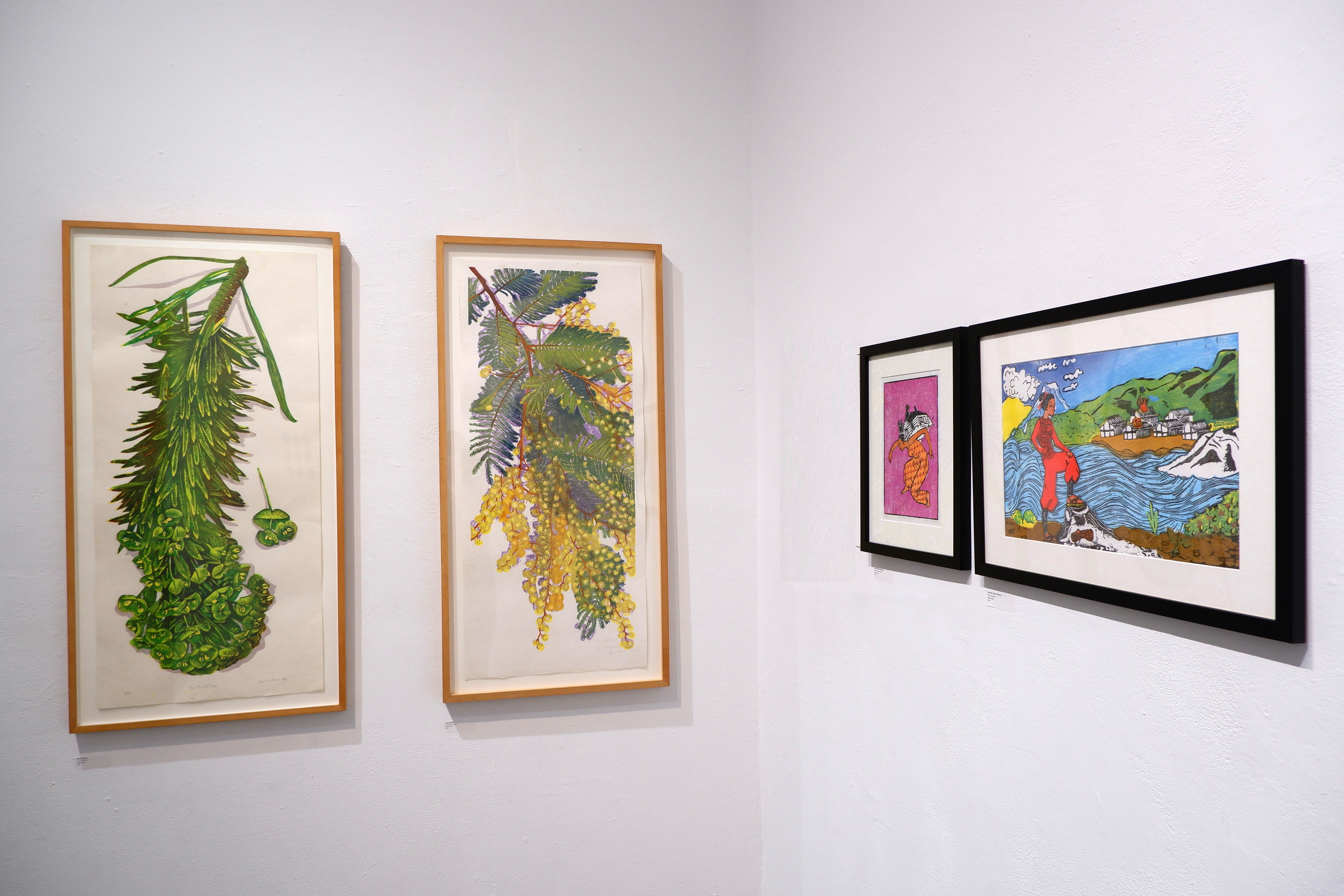
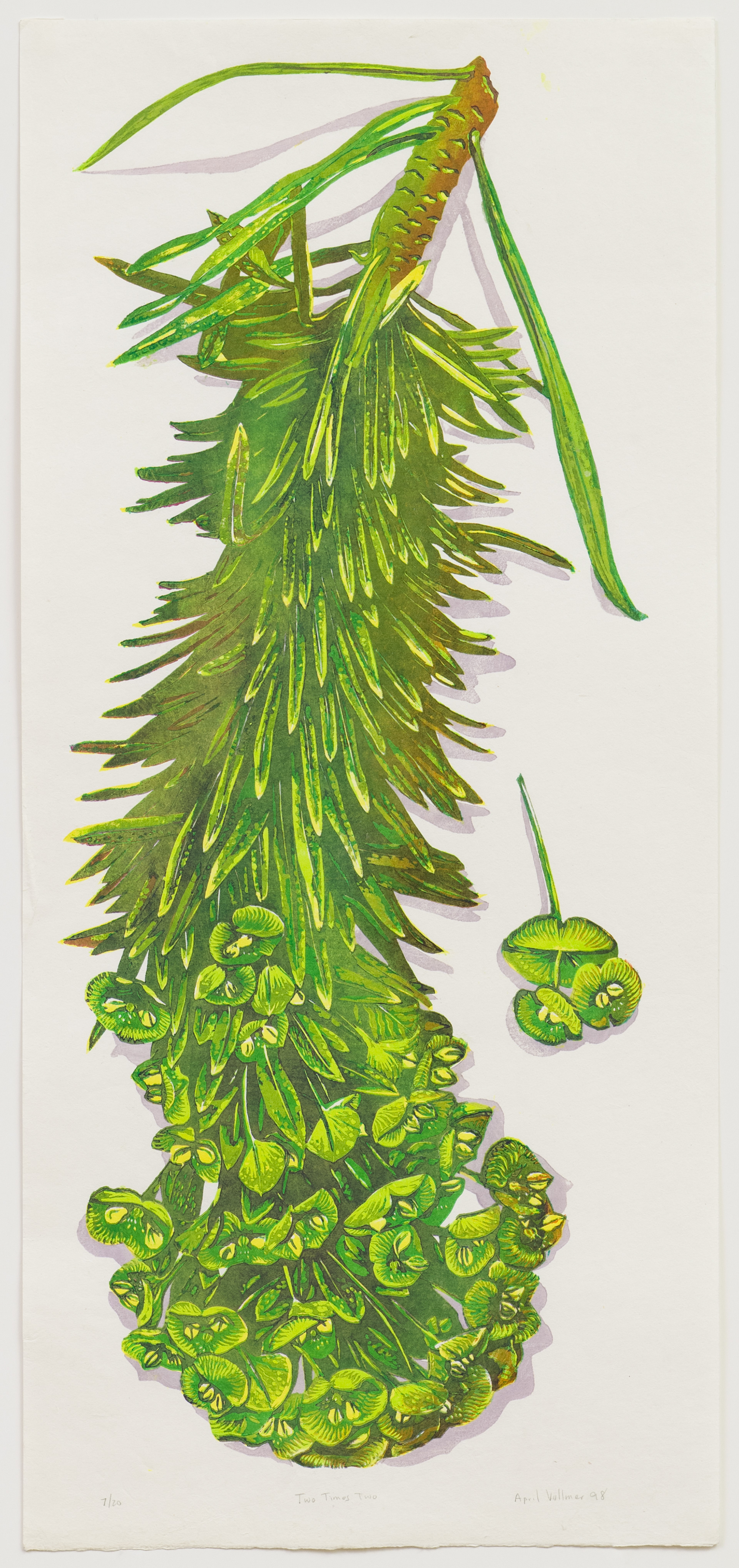
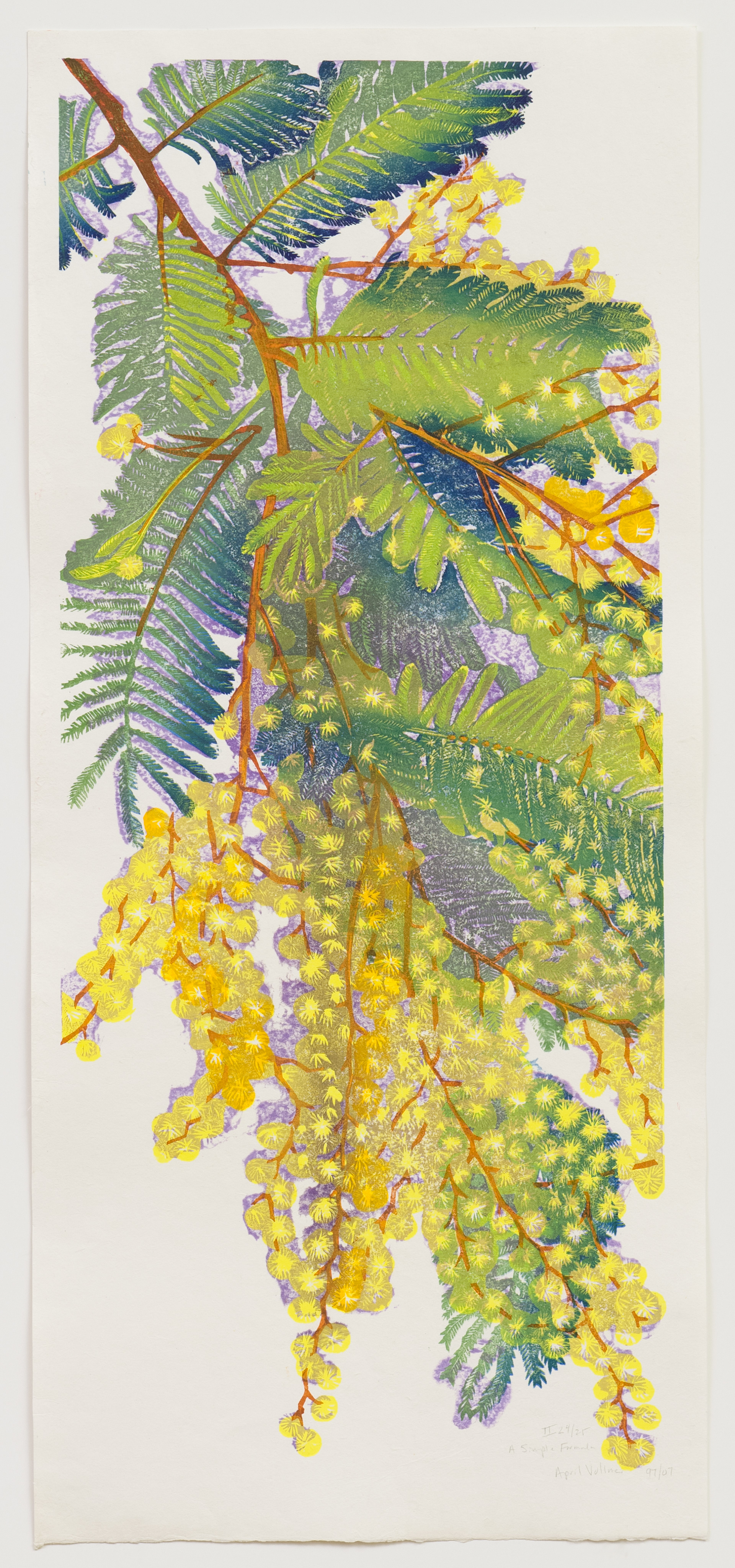
stereotypes to recognize their own strength and potential. Both April
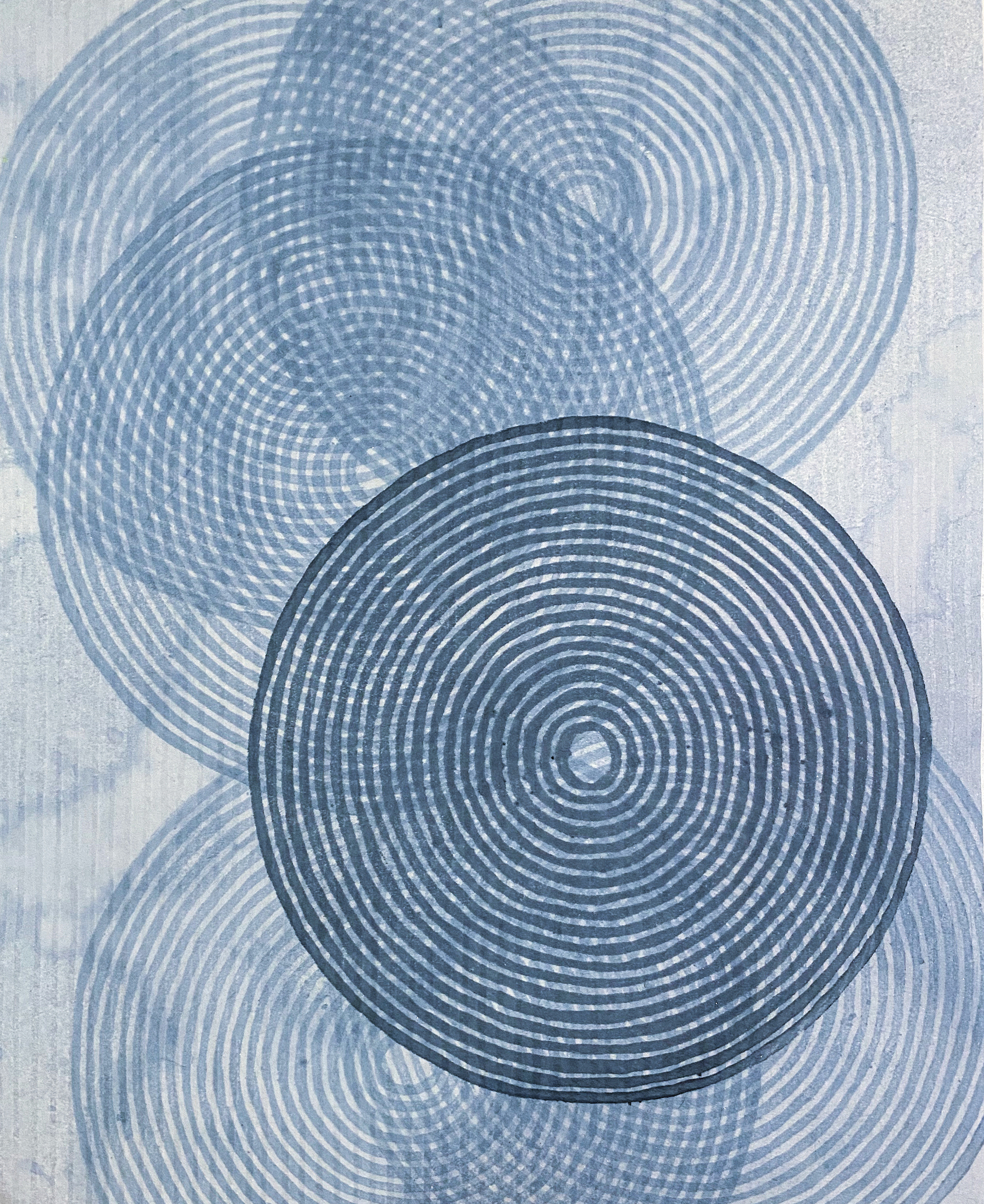
Vollmer and Florence Neal’s translucent surfaces of repeated forms
reflect the beauty and logic of nature while foreshadowing loss and
ecological turmoil.
All Together
Between Worlds explores the technical innovations of mokuhanga and
contemporary themes of identity, place, environment, and gender from
artists working around the world. As a medium, mokuhanga is versatile
and sustainable. Its subtle applications of color and the tactile
surfaces create space for contemplation. Its connection to the past
and its potential for innovation give it continued relevance for
international art making in the 21st century.
—April Vollmer is a New York City artist and educator who specializes
in mokuhanga printmaking. Her book Japanese Woodblock Print
Workshop was published by Watson-Guptill in 2015.
—Mokuhanga Sisters is a print collective of nine artists: Katie
Baldwin, Patty Hudak, Mariko Jesse, Kate MacDonagh, Yoonmi Nam,
Natasha Norman, Mia O, Lucy May Schofield, and Melissa Schulenberg.
This international group bonded while studying mokuhanga in Japan and
has continued to work together to promote exhibitions and educational
projects involving mokuhanga.
Special thanks to:
Special thanks to:
The Japan Foundation New York
for their generous grant in support of the exhibition brochure
Southern Vermont Arts Center
in Manchester, Vermont for hosting the first version of this
exhibition in The World Between the Block and the Paper, December 11, 2021 – March 27, 2022
Culture Ireland